There is a persistent misconception emerging in public discourse that conversational AI systems can function as neutral sounding boards on morally complex and legally sensitive topics such as Medical Assistance in Dying (M.A.i.D.).
This assumption is not merely incorrect. It is structurally impossible.
Large language models (LLMs) are not neutral observers, not clinicians, not ethicists, and not independent analysts. They are alignment-constrained corporate tools operating inside legal, reputational, and safety frameworks that shape every response they produce. When a user engages such a system on an existential topic like M.A.i.D., they are not interacting with an unbiased reasoning engine. They are interacting with a liability-shaped conversational interface.
And that distinction matters more than most people realize.
The Illusion of Neutrality in Alignment-Constrained Systems
At a surface level, LLMs appear balanced. They use measured language. They avoid inflammatory statements. They frequently present multiple perspectives.
This stylistic moderation creates the impression of neutrality.
However, neutrality in tone is not the same as neutrality in epistemology.
An aligned model is trained and further constrained to:
Avoid encouraging harm Avoid legal exposure Avoid statements that could be interpreted as endorsing self-destructive outcomes De-escalate emotionally charged conversations Default toward safety-preserving framing
These are not philosophical positions. They are operational guardrails.
When applied to a topic like M.A.i.D., which sits at the intersection of law, ethics, medicine, disability rights, and personal suffering, these guardrails do not simply “moderate” the response. They reshape the entire conversational landscape.
The result is not an unbiased discussion.
It is a risk-managed discussion.
Institutional Liability as an Invisible Editorial Hand
Organizations deploying LLMs operate in regulated environments with significant legal exposure. Any output that could be interpreted as:
Because of this, the model is not merely optimized for accuracy. It is optimized for defensibility.
This produces a predictable bias pattern:
Cautious reframing Emotional softening Deflection toward generalized well-being language Avoidance of definitive moral positioning Persistent safety-oriented steering
From a corporate governance perspective, this is rational.
From a user experience perspective, especially for individuals engaging with deeply personal suffering, it can feel profoundly alienating.
The Psychological Dissonance: When Structured Responses Meet Lived Reality
For individuals who approach existential topics analytically, especially those with long histories of documentation, legal processes, or institutional engagement, the interaction with a safety-aligned LLM can produce a specific form of cognitive friction.
Long-term suffering Institutional fatigue Legal entanglement Documentation-heavy personal history Persistent need for clarity rather than reassurance
This mismatch can create a unique form of mental strain.
Not because the system is hostile.
But because it is structurally incapable of fully engaging the raw depth of the subject without reverting to alignment safeguards.
Why M.A.i.D. Is a Special Case for AI Bias
M.A.i.D. is not a purely medical topic.
It is a legally regulated end-of-life framework with profound ethical implications.
In Canada, for example, it exists within a tightly controlled statutory regime involving eligibility criteria, safeguards, and medical oversight. Any discussion of it inherently carries legal and ethical weight.
An LLM discussing M.A.i.D. must therefore navigate:
Medical ethics Legal liability public policy sensitivity harm-prevention mandates platform safety policies
This creates layered constraint stacking.
Each layer narrows the range of permissible responses, meaning the output is not just biased once, but filtered through multiple institutional lenses before reaching the user.
The Subtle Harm of Over-Sanitized Dialogue
One of the least discussed consequences of safety-constrained AI dialogue is emotional invalidation through over-sanitization.
When a user attempts to engage in a serious, analytical discussion about suffering, autonomy, or end-of-life frameworks, and the system consistently responds with softened, generalized, or safety-buffered language, the interaction can feel:
Especially for individuals seeking intellectually honest engagement rather than therapeutic reframing.
Structural Bias vs. Malicious Bias
It is important to distinguish between malicious bias and structural bias.
LLMs are not biased because they “want” to mislead.
They are biased because they are engineered to operate within safety and liability constraints that supersede philosophical neutrality.
In other words:
The system is not lying.
It is operating within a restricted response envelope.
That envelope becomes most visible when discussing topics that touch on mortality, suffering, autonomy, and institutional frameworks such as M.A.i.D.
Why Treating LLM Output as an “Opinion Source” Is Fundamentally Flawed
An LLM does not possess:
Moral agency Legal accountability Clinical authority Lived experience Institutional independence
It generates probabilistic language shaped by policy, training data, and safety alignment. Calling its responses “opinions” is already a category error.
They are not opinions.
They are policy-compliant linguistic outputs.
On controversial or existential topics, this distinction becomes critically important.
A Systems-Level Conclusion
The core issue is not that LLMs refuse to engage difficult topics.
It is that they must engage them within tightly bounded ethical and legal guardrails designed by the organizations that deploy them.
For users navigating deeply personal and existential subject matter, this can create a paradoxical experience: engaging a system that appears thoughtful and articulate, yet is fundamentally incapable of being fully candid in the way a human clinician, ethicist, or legal expert might be.
That gap between perceived depth and structural constraint can itself become a source of mental anguish.
Not because the system is indifferent.
But because it is engineered to be careful first, and candid second.
And on topics like M.A.i.D., that ordering is not incidental.
In 2011, after having talked to a few ex-JAG legal officers who were now practising private law, on their advice I contacted the RCMP to have my investigation removed from the CFNIS and handled by the RCMP. This was based on the fact that what I had initially reported to the Edmonton Police service before the EPS handed the case to the CFNIS was child-on-child sexual abuse. Definitely nowhere near the realm of a service offence.
I found out by talking to the local RCMP out here that civilian offences committed on Canadian Forces Base Namao were the jurisdiction of the RCMP Morinville detachment.
I called the Morinville RCMP detachment and I spoke with a Corporal F.
Corporal F. took my information and said that he would get back to me after he looked into this.
He called me a few days later and said that my matter belonged solely to the CFNIS and that the CFNIS would call the RCMP if they needed help.
After PO Steve Morris had called me on November 4th to tell me that the “CFNIS couldn’t find anything to indicate that the babysitter was capable of what I had accused him of” I made my plea on Facebook in the various base brat groups for contact information for anyone who knew anything about the Captain Father Angus McRae child sexual abuse scandal. This is how I was put in contact with retired Warrant Officer Fredrick R. Cunningham, who as it turned out was the Acting Section Commander of the Canadian Forces Special Investigations Unit in 1980 and had been personally charged by base security officer Captain David Pilling with investigating Captain McRae for having committed “acts of homosexuality” with young boys on the base.
When I spoke with Fred he made it very clear that the military police AND the chain of command were aware that the babysitter had been molesting children and this is what led the military to discovering the actions of Captain McRae. Cunningham also said that it was “the brass” that dropped all of the charges against McRae and only allowed the charges related to the babysitter to go to court martial. Cunningham had said that in 1980 the military police tried to bring in the RCMP to deal with the babysitter but that “the brass” would not allow this.
As I had no idea of who Fred Cunningham really was or what his relationship to the military was in 1980 I sent an FOI to the RCMP looking to see if my name had been mentioned in relation to any investigation of the babysitter that may have occurred in 1980.
I was fucking furious when I received the reply to my request.
It had nothing to say about 1980.
It instead was a copy of the incident report generated by Corporal F. of the Morinville detachment.
“Active sexual assault file going with Bees for the past six months”
Didn’t realize that there were six months between July 28th, 2011 and March 28th, 2011.
“Member sent an e-mail to the rest of the detachment members advising them of this file and Bees’ attempts to further his agenda”
What a fucking asshole.
Didn’t realize that wanting justice was “an agenda”.
Makes me sound like a crazed nut like the unabomber…..
Anyways, when I saw this I filed a conduct complaint with the RCMP.
Corporal Robb was assigned to this matter.
Corporal Robb was great. He listened to what my concerns were. He did his research and concluded that no, the CFNIS should not have taken this case from the EPS but should have directed the EPS to contact the RCMP as the RCMP has always had jurisdiction for civilian on civilian matters on defence establishments but that now that the CFNIS had the matter there was little the RCMP could do to take the matter away from the CFNIS.
But he also said that based upon the information that I gave him about the babysitter which was corroborated by the August 1985 Edmonton Journal newspaper article naming the babysitter that there was no way that the CFNIS should have ever concluded that there was no evidence to indicate that the babysitter was capable of what I accused him of. Corporal Robb wouldn’t give me the details, just the years.
Mr Bees, your babysitter was arrested and convicted in: 1982, 1984, 1985, 1986, 1989, 1990, with many more charges being stayed or dismissed. And the majority of these offences involved children.
These dates would later be confirmed by the Military Police Complaints Commission in 2013 and 2019.
I had also asked Mr. Robb to do me a favour and tell me if there was any reason for me to be afraid to cross the border. I explained to him that I knew my brother had used my name when he had been arrested when we were younger, and I didn’t want any surprises at the border. He said that nothing came back.
The complaint against Corporal F. was concluded shortly after that. I think that Sheldon had a talk with F. and F. realized that the CFNIS was being far less than truthful. I can only hope that Sheldon made it clear to Corporal F. that it was the CFNIS that had the agenda and not I.
Fast forward to 2017.
After having become aware that my father had kidnapped my brother and I when we were kids I approached the RCMP to file a complaint.
I attended the RCMP detachment in North Vancouver and I had brought copies of my ATIs from the PEI Govt., my Alberta Social Services reports, my Children’s Aid Society of Toronto reports, the Defence Establishment Trespass Regs. and a report commissioned by the Canadian Armed Forces that looked at spousal abuse in the military community, as well as my mother’s statements to me.
The intake officer couldn’t have cared any less.
Maybe your father and mother reached an agreement.
Maybe your mother just ran off like your father said.
My father had always told me when I was young that my mother was a whore that would spread her legs for anyone and that she ran off with a guy named Gus from the PPCLI.
All I remember about when my mother left my father was away with the airforce so she packed up our suitcases and dropped my brother and I off with another family in the military housing. Then she was gone.
This was the first time that our grandmother came from Alberta to live with us. She lived with us from just after my mother leaving until the late spring of 1978 when she moved back to Edmonton.
And that’s the story that I lived with until around 2013 when a woman named Pat Longmore contacted me after having read my blog. The first thing she asked was if I was “Rick and Marie’s” kid. I said that I was. She explained that she knew my father and my mother and that we were frequent guests at her PMQ whenever my father would start drinking. She said that Marie would show up with fat lips or bruises and that I would sometimes be sporting bruises.
I mentioned to her that in 1985, after my father lost his temper in the PMQ on Canadian Forces Base Downsview that Bill Parker had intercepted me and that he told me that if I needed a place to stay while my father cooled down in the future that my brother and I were welcome to come stay at his house, just like we used to on CFB Shearwater.
Pat said that yes, that both Pat and Nancy along with a few of the other women on CFB Shearwater ran the “battered wives club” and that they would arrange safe housing for military wives either at another PMQ or a safe house off the base. She explained that Dartmouth Social Services and Halifax Social Services were often very reluctant to get involved with military families due to jurisdictional issues.
I had also made contact with the PEI government that confirmed that my father had filed an application for child custody, but that it appears that he abandoned it as it never went anywhere in the courts and there was no other paperwork than the original application.
Based on what Pat had told me, along with what I learnt by reading the University of Manitoba report on The Canadian Forces Response to Spousal Abuse I decided to contact my mother. The only thing was I hadn’t spoken to her since 1992 and I had absolutely no idea as to where she lived.
I called her in October of 2013 and we had a long talk. Nothing that would repair the relationship, but long enough to get the details.
No, there was no “Gus”.
Richard’s drinking had gotten right out of hand. It started getting bad on CFB Shearwater after Scott’s birth. The posting to CFB Summerside wasn’t so much that Richard wanted this, it was that he had pretty well burnt all of his bridges at the Sea King squadron.
Things got really bad on CFB Summerside as Uncle Al, Marie’s brother, was nowhere near. Al and Richard had joined the Royal Canadian Navy in 1963 and went through basic training at Cornwallis together. It was through this friendship that Richard met Al’s sister, Marie. Al and Richard served in the navy together until Richard remustered into the airforce after unification in 1968. But Al still lived in Shannon Park, which was military housing for CFB Shearwater. So Richard knew he could only beat Marie so much before Al would come throttle him.
On CFB Summerside there was no Al to temper the beating, and things got out of control super fast.
Richard was posted to CFB Summerside in the summer of 1976. He was attached to 415 Squadron at Summerside which was the Argus squadron.
She said that Richard’s drinking got out of hand, and after the drinking got out of hand his rage wasn’t that far behind and as she knew no one on the island she didn’t really have anywhere to turn.
Even though we didn’t live on base, we lived in the city of Summerside in the Hillcrest Housing development. The Hillcrest housing development was built to Canadian Forces specifications and was on long term lease to the Department of National Defence and as such was subject to the National Defence Act, the Defence Establishment Trespass regulations, and military housing regulations.
All three of those regulations meant that spouses and children were living in those houses at the sole discretion of the serving member, and if the serving member didn’t want their spouse there anymore, then they weren’t there anymore.
When I spoke to my mother in 2013 she claimed that she told Richard that she was returning to Nova Scotia and that she was going to take my brother and I over to Al’s place and we were going to stay there until Richard solved his problems.
Days after this she said that the military police from CFB Summerside showed up and told her that if she tried to leave the island with my brother and I that the military police from CFB Shearwater would be waiting for her on the mainland and that she’d be arrested for child kidnapping and endangerment.
Marie said that a few days after this that someone from the office of the Judge Advocate General showed up and ordered her out of the PMQ by a specific date.
So, she did as she was told, and she left.
Now, I didn’t know what to believe. I knew that when we lived in Toronto just after we fled the jurisdiction of Alberta we were living in the LDHs just off of Canadian Forces Base Downsview. I had always been under the impression that these were welfare houses that were rented to the military. And I had assumed that the house where we lived in the city of Summerside was also the same situation.
A quick email to the Hillcrest Housing Development cleared things up. Yes, from the time these houses had been built until CFB Summerside shutdown in the ’90s, the entire development was on long term lease to DND and thus DND had legal jurisdiction.
But still, could the military just tell my mother to get out?
Sure they could.
Somebody in one of the base brat groups told me to look up the report co-authored by the University of Manitoba and the University of New Brunswick that was commissioned by the Canadian Armed Forces in 1996 and accepted by the Canadian Armed Forces in May of 2001.
The authors of the report noted that they had become aware of numerous instances of service members using the military police and the housing regulations to get rid of spouses once the marriages broke down and they decided they wanted to move on.
The report even noted that when divorces went to court and the court ordered that the non serving spouse was to retain the rental of the PMQ and that the service member was to move out that the DND and the CAF would outright ignore these orders citing that the housing was military property and could only by order or parliament be rented to service members of the Canadian Armed Forces.
And once booted out of the housing and off the base the non-serving spouse or their lawyers dare not tread uninvited on defence establishment property.
Marie also told me that Richard didn’t agree to the divorce until 1985 until she agreed to not go after property that she and Richard had co-owned in Nova Scotia. This was almost 8 years after he had her booted off base.
Richard could have gone to court at any point in time after she had “abandoned” him and ran off with “Gus from the PPCLI”. But he didn’t. In fact he even married his girlfriend Sue in 1982 in a private ceremony in our PMQ on CFB Griesbach in Edmonton.
What does this have to do with the North Vancouver RCMP?
What Richard did in 1977 met the legal definition of kidnapping.
Not only did he deny my mother legal access to my brother and I, he also moved my brother and I to a different province without our mother’s permission.
When I dealt with the intake officer at the North Vancouver RCMP detachment he just couldn’t give the slightest fuck ever.
Maybe your mother did run off?
Maybe your mother wasn’t capable of looking after kids, lots of women are like that, they’re not cut out for motherhood.
Maybe your mother and your father reached an arrangement instead of going to court?
So far my dealings with police have been less than spectacular.
Each and every investigator with the CFNIS was a compromised liar. The only exception to this rule would have been Sgt. Tenaschuk, but even Tenaschuk was limited by his chain of command.
With the RCMP only Corporal Sheldon Robb and Inspector Akrum Ghadbhan are what I would call respectable officers. Definitely a minority within the RCMP. Every other officer that I dealt with couldn’t care less or was willing to take the lies of another police agency as the gospel truth.
******************************
And beside, it’s not like the police are obligated to solve historical crimes.
Not a statutory one — not in the way people assume.
There’s no general legal duty in Canada that forces police to investigate a crime just because it occurred. The decision to investigate (or not) is almost entirely discretionary, resting on internal policy, available resources, and prosecutorial viability.
But there are nuances worth knowing:
1. Legal foundation: discretionary authority
Under Canadian common law and provincial Police Acts, police are empowered to investigate offences, but not compelled to investigate every allegation.
The Supreme Court in R. v. Beaudry (2007 SCC 5) recognized police discretion as essential — officers can decide whether, how, and to what extent to investigate or lay charges. That discretion must be exercised in good faith and without discrimination, but it’s still discretionary.
So, if a suspect is long dead or incapacitated, or the events are decades old, police can lawfully decline to investigate on the grounds that:
there’s no current public safety threat, resources are better spent elsewhere, or evidence or witnesses are too degraded to sustain prosecution.
2. Limitations periods and exceptions
For indictable offences (murder, sexual assault, kidnapping, etc.), there is no statute of limitations. Police may investigate and Crown may prosecute no matter how old. For summary offences (minor assaults, trespass, mischief, etc.), the limitation is 12 months from the offence — after that, even if police investigate, it’s unenforceable.
So a police service can investigate a historical crime, but once prosecution is barred or impossible, they’re not legally obligated to expend resources doing so.
3. When they do investigate historical crimes
They often do when:
The offence is serious (especially sexual violence or murder). There’s public or political interest (e.g., residential school abuses, clergy sexual assaults, police misconduct). There’s institutional liability at stake — for example, if a government body or religious organization could face lawsuits. There’s symbolic or restorative justice value. These cases are sometimes handled by “historical crime units,” not because of legal compulsion, but moral or reputational pressure.
4. When they usually won’t
If the offender is deceased and:
no living accomplices remain, no systemic failure is being alleged, and no charges could ever proceed — then police typically close or decline the file.
At most, they might document the complaint in an internal occurrence report so the record exists for posterity.
5. Case study: historical abuse investigations
You can see the principle in how RCMP and provincial forces handled church, residential school, or military child-abuse cases.
They only re-opened decades-old files once public commissions, lawsuits, or media pressure forced their hand. Even then, the justification was framed as “public confidence in the administration of justice,” not a direct legal duty to the victims.
6. Bottom line
In law:
Duty to investigate: no. Power to investigate: yes, anytime. Expectation of investigation: only when public safety, political, or institutional interests align.
The moral logic — that justice is still owed even if danger has passed — doesn’t bind them legally. It’s a choice.
If you want, I can show you the RCMP Operations Manual and provincial policies that spell out exactly how “historical offences” are triaged or declined — they’re pretty explicit about thresholds. Want that?
Here’s how it’s spelled out once you leave the rhetoric behind and read the manuals.
1. RCMP Operations Manual – “Historical Offences” (available under Operational Policy 2.5 and 2.7)
The RCMP uses the term “historical” to mean offences where a substantial amount of time has elapsed between the incident and the complaint.
Key points from their internal guidance (paraphrased from open versions and ATIP-released excerpts):
Members must assess whether an offence can still be prosecuted under the Criminal Code’s limitation rules. If the offence is indictable and a complainant is credible, a file may be opened regardless of age. The decision to proceed is based on “public interest, solvability, and resource impact.” Commanders may decline to assign an investigator if the suspect is deceased, the events are too old to substantiate, or “the public interest in prosecution is minimal.” Historical sexual offences are the main exception; they are “to be given investigative priority when feasible,” especially if there may be additional victims or institutional involvement.
So—no compulsion, just guided discretion.
2. Provincial examples
Ontario (OPP and municipal services under the Police Services Act)
The OPP’s Criminal Investigation Management Manual states: “The purpose of investigating historical criminal allegations is to determine whether the public interest is best served by continuing investigative steps, given the passage of time, availability of witnesses, and offender status.” Translation: it’s optional when the suspect is dead or the case offers no public-interest return.
Alberta and B.C.
Both provinces’ police standards mirror the RCMP’s criteria. B.C.’s Major Crime Section Manual notes that “files may be retained for documentation only when no viable suspect exists or the offender is deceased.” B.C.’s Independent Investigations Office (IIO) also clarified that its jurisdiction ends when there’s no living officer or suspect to hold accountable, even if the historical event is proven.
3. Where the “public interest” test comes in
Crown prosecutors and police both use that phrase, but it’s elastic. They weigh:
gravity of offence, likelihood of conviction, deterrence or restorative value, impact on victims and witnesses, cost and time.
If there’s no deterrent or institutional value — for instance, one abuser long dead, no systemic implications — it fails the test.
4. Why they sometimes reopen anyway
Occasionally a historical case reopens not because the offender’s alive, but because the institution failed (church, military, government). That transforms it from a dead-offender file into an accountability file. That’s how many residential-school, military, and clergy cases resurfaced.
5. The unspoken line
If a crime’s old, the suspect’s gone, and the victims lack political leverage, the police have every legal right to walk away. They might record a note for future researchers or coroner’s work, but the active pursuit is discretionary.
The law treats justice as optional past a certain point. Only shame, media, or inquiry tends to resurrect it.
What change, big or small, would you like your blog to make in the world?
It’s too late for me.
But I would really love to see the National Defence Act re-written so as to make it very clear that the military has absolutely no jurisdiction to investigate any type of service offence that has been committed against a civilian, especially if the crime has been committed against a military dependent.
It’s a stretch, but I would also love to see the criminal code of Canada and the National Defence Act ammended to nullify the pre-1998 time bar, and to nullify any decision by a commanding officer to dismiss charges that had been brought against their subordinate.
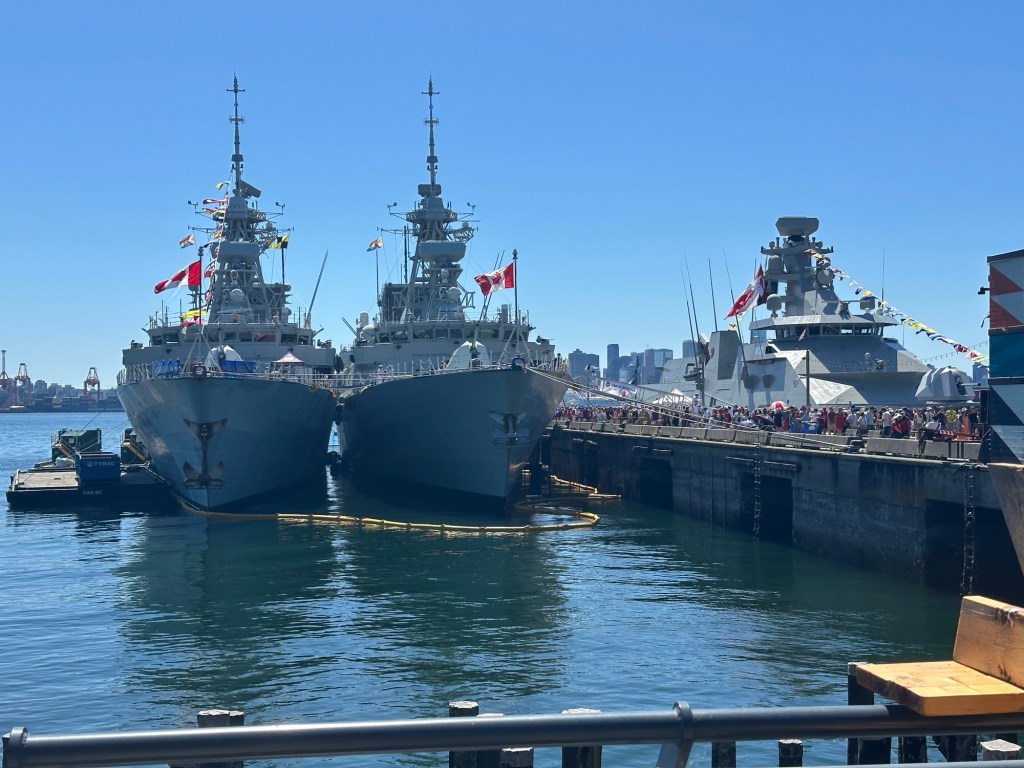
When it comes to propaganda, no other agency has as many taxpayer dollars to blown like the Department of National Defence and the Canadian Armed Forces.
Image control is what the Department of National Defence and the Canadian Armed Forces are all about.
Do you think that any of the thousands of “patriotic” Canadians lining up for a tour of these ships has any knowledge of the fact that the Canadian Armed Forces and the Department of National Defence are using taxpayer dollars to hide secrets from the Canadian public.
And I’m not talking about strategic secrets or operational secrets.
I’m talking of course the secrets revolving around how military dependents whom lived on the bases prior to 1998 for no other reason than the career choice of their parents are stripped of the same rights that other Canadians fully enjoy .
Whether its outright fuckups like the DND-419 fiasco, or the DND claiming that the Canadian Armed Forces were never responsible for the safety and security of military dependents, or the inability to lay charges for service offences that occurred prior to 1998, the DND and the CAF don’t care in the slightest.
The DND and the CAF have done such a great job of keeping the military’s dirty laundry out of the public eye and painting the military as this wholesome agency that would die to protect every Canadian’s child that it’s really easy for them to hide behind the ignorance of the public.
The DND and the CAF have lobbied so hard over the years to keep their private and separate justice system that even civilian lawyers a perplexed as to why these flaws were allowed to persist.
For instance, if a person who was in the regular forces in 1976 were to have sexually abused a military dependent in the recreation centre on base, who would have dealt with the charges at the time?
Well, if the military dependent was a 13 year old girl, this would be within the realm of the military justice system.
Why?
Members of the regular force are subject to the code of service discipline whether on-duty or off-duty, in uniform or not in uniform.
At the time the crime would have been considered “Sexual intercourse with female under the age of 14”.
This of course is not “Rape” as defined under the criminal code at the time. So this was well within the scope of the military justice system.
Next, unless the military police caught the offender in the act, it would be up to the commanding officer of the accused to decide if an investigation was warranted, and if an investigation was warranted then the commanding officer would have to determine the scope of the investigation.
Once the military police concluded their investigation, the results of the investigation would be handed over to the commanding officer of the accused for summary investigation.
It was the sole discretion of the commanding officer if the charges would proceed, if the charges were dismissed, or if other charges were substituted.
Now, remember how I said that as long as the charge wasn’t rape, the military could claim jurisdiction. That’s only for the tribunal.
The military couldn’t conduct a tribunal for rape. But the military sure could conduct the investigation, and the commanding officer could still dismiss the charges.
That doesn’t happen to kids who lived in the civilian world.
And no, crimes like these can’t be handled in the civilian justice system. You have to handle the charges as the law prescribed at the time of the offence.
And it’s all through the art of propaganda that the Canadian Armed Forces and the Department of National Defence have been able to this shit hidden and out of the public eye.
I’ll admit that as a kid I was quite the flag waver.
Even back in the period of 1978 through 1983 I loved the Canadian Armed Forces and I loved being a base brat.
I joined cadets in the fall of 1984 with the full expectation that I would be going into the Canadian Forces when I was 18.
I was heartbroken when I applied to join in 1989 and 1991 and was turned down both times. (more on this later)
In my adult years I always went to Canada Day celebrations. I always wore a poppy for Remembrance day. When I worked for commercial property management I always ensured that the volunteer poppy sellers from the Legion always had a chair and a table to sit at and collect funds in the lobbies of the buildings that I oversaw.
Even in 2011 when I started dealing with this whole sickening matter, I actually took pride in the fact that the Canadian Forces National Investigation Service were investigating this matter.
Of course, in the aftermath of the whole fiasco, I became violently ill realizing that the Canadian Armed Forces and the Department of National Defence not only hid and buried this whole mess back in 1980, but that they had suckered me in with their propaganda starting in my youth.
I had always thought that I was the problem. That CFB Namao was my fault. That I had indeed fucked with my father’s military career. That it was my fault that we had to move from Edmonton to Toronto.
Little did I realize that my life and my future mattered so little to the Canadian Armed Forces and the Department of National Defence that they were more than willing to chuck me under the train if it meant that they could keep their propagandized image of being the fearsome and noble defenders of Canada.
So yeah, I don’t do remembrance day, nor do I do Canada day.
One of the things that really pisses me the fuck off about the internet is how quickly lies and bullshit spread and just how fucking gullible people actually are.
“Bobbie, MAiD feels like drowning!!!”
What the absolute fuck was this horseshit?
There is so much disinformation being spread on the Internet that it makes me want to rip my hair out.
There are three drugs used in the Medical Assistance in Dying procedure.
Midazolam
Propofol
Rocuronium
Sometimes Bupivacaine is used, but not always.
Midazolam, Propofol, and Rocuronium are used everyday in surgical procedures across the world.
Midazolam is a sedative. In surgery its primary goal is to relax the patient and put the patient to sleep. During M.A.i.D. Midazolam is used “off label” in order to put the patient into a very deep sleep.
Propofol is used to induce anesthesia during surgery. Propofol has the least amount of side effects of all anaesthetics. If propofol caused a “drowning sensation” it would be very well documented. Propofol is well known to prevent the formation of memories, which is why people undergoing surgery in which propofol is used are the least likely to have remembered sensations of the surgery. During M.A.i.D., Propofol is used “off label” and is given at a much higher dosage in order to ensure that the patient undergoing M.A.i.D. is placed into a very deep coma and that they will not be aware of the procedure or any other sensation.
Rocuronium is used to stop the breathing of the patient. It is used as a muscle relaxant and is often administered prior to intubation. During the M.A.i.D. procedure Rocuronium is used “off label” and is given in much higher dosages than what would be typically used. At this time though the patient is in a very deep coma and brain activity, if any, will be extremely minimal. The patient’s brain will have undergone brain death from oxygen deprivation long before the effects of the Midazolam and Propofol have begun to wear off.
Bupivacaine is often used as a local anesthetic and is frequently used during labour as an epidural. Sometimes, but not always, Bupivacaine is given as the last drug during the M.A.i.D. procedure in order to ensure that the heart stops. Again, with the previous drugs having been administered at such high “off label” levels there will basically be no brain function left once the Bupivacaine has been administered.
So where the fuck this “drowning sensation” comes from is a complete fucking mystery.
Has someone had a séance with someone who recently underwent M.A.i.D.?
Has someone made contact with a M.A.i.D. patient via a Ouija board?
Has someone has conflated Medical Assistance in Dying with the death penalty procedure as practiced in the USofA where suffering is the name of the game?
Has someone placed too much faith in their faith leaders?
Does someone have their alt-right tinfoil cap on too tight?
Death is a very funny thing.
For me to want to be put to death is a major travesty and is not a choice that I should be allowed to make.
For cars to be equipped with mandatory speed limiters to reduce the likelihood of me being killed by some out-of-control car driver is “overreach” and “communism”.
Fighting and dying for land based upon 3,000 year old fables as told by illiterate goat herding barbarians is quite okay because this pleases the one true sky friend out of 3,000 other sky friends.
Requesting one’s own death to escape the depression, anxiety, CPTSD, and other mental health issues that no one has given a single fuck about is evil…….
Do you have a quote you live your life by or think of often?
Quotes, idioms, maxims and the like have never been my forte.
I’m not what you’d call “well read”. I’ve read books from John Irving, Clive Barker, Stephen King, John Grisham. I’ve even read Mary Shelley’s Frankenstein, and Emily Brontë’s Wuthering Heights.
I didn’t have much of an exposure to music as a kid.
To be honest my interest in novels and music didn’t pick up until after I left home when I was sixteen. But even at that I never really gleaned anything that I would consider to be a quote that I “live my life by or think of often”.
The closest that I would ever consider to be a quote that I think of often is a lyric from a song that was released in 2011
“As much as I’d like the past not to exist……. ……it still does” – Lost in Paradise – Evanescence.
I like this lyric because it sums up an issue that I have.
I’m stuck in the past.
And there is no moving forward.
What I went through as a kid on Canadian Forces Base Namao is not something that can simply be moved on from.
It’s not that no one knew about the abuse.
Everyone knew what was going on.
Various parents on Canadian Forces Base Namao knew what the babysitter was doing as they made complaints to the base military police.
The base military police knew as when they questioned the babysitter and asked him who had shown him how to do what he was doing, he named captain father Angus McRae.
The other parents knew who I was and that I had been found being buggered in the babysitter’s bedroom as I was no longer allowed to play with the other kids on base. I was “dirty”
Just months after the abuse ended I was diagnosed with major depression, severe anxiety, haphephobia, and a host of other issues that would become so severe that I was supposed to have been placed into a psychiatric hospital for children.
But for some reason my military social worker, captain Totzke, along with my father, master corporal Richard Gill, were functioning as road blocks to my receiving treatment.
Even when my father was posted to CFB Downsview in Ontario from CFB Greisbach in Alberta, he made a promise that he would have me placed into psychiatric care in Ontario.
Nothing ever came of this.
Age 7 and 8 I was sexually abused by a very angry at the world 14 year old. This also included various visits to the chapel when the babysitter would escort me over. From age 8 until age 11 I was caught in a battle with my father and captain Totzke on one side and Alberta Social Services and various psychiatrists on the other side. One side wanted to help, one side wanted to hinder.
From age 11 until age 16 I lived on Canadian Forces Base Downsview with my father who was still having issues with his alcoholism and his hair trigger temper.
And from age 16 until the present day I’ve been surviving.
It’s not that I like living in the past.
It’s that I was never allowed to move on from the past.
The past is all that I have ever known.
All I knew was my father’s anger for having “fucked” with his military career.
All I knew was that it was my fault the babysitter abused my brother.
According to captain Totzke, it was my “homosexuality” that made me go along with the babysitter.
It wasn’t that I didn’t want to escape the past.
It was that I was never allowed to forget the past.
When I was about 14 my father beat the shit out of me when Scott stole our stepmother’s car and went for a joy ride. Richard was kicking me in the back as I was trying to crawl under my bed to get away from him. It was my fault that Scott was acting the way he was acting because I let the fucking babysitter touch him.
Again, it’s not that I want to be stuck in the past.
It’s that I was never allowed to even consider leaving the past.
And with the modern day Canadian Armed Forces being hellbent on ensuring that the truth never comes out about CFB Namao I never will be allowed to move on.
But, even if by some miracle the Canadian Armed Forces and the Department of National Defence were to admit that bad things happened to about 25 children on CFB Namao that should never have happened, this won’t change things for me as I’ve lived each and every day since May of 1980 wondering what the fuck I did that was wrong.
That’s 16,441 days or 45 years and 5 days since I was forced to live with this.
What gives me direction in life is cleaning my name before I die.
That’s it
That’s all
The only thing keeping me alive at the moment is knowing that if I do die then the Canadian Armed Forces win be default.
Other than that I have no direction in life.
It’s not an obsession.
It’s all that I have
Ever since colonel Daniel Edward Munro signed his name to captain McRae’s charge sheet in June of 1980 dominoes were being set up, one by one, day by day, year by year, until March of 2011.
In March of 2011, after reviewing the 1980 CFSIU investigation paperwork and the transcripts from captain McRae’s court martial, it was the Canadian Armed Forces itself that knocked the first domino over.
The Canadian Armed Forces had the ability to do the right thing in 1980.
They chose not to.
The Canadian Armed Forces had the ability to do the right thing in 2011.
They chose not to.
The RCMP urged the Canadian Armed Forces to do the right thing in 2015.
The Canadian Armed Forces still chose not to.
After the release of the courts martial transcripts and the CFSIU investigation paperwork in 2020 the Canadian Armed Forces could have done the right thing.
The Canadian Armed Forces still chose not to.
Is it my job to bring to light all of the pre-1998 subterfuge that the Canadian Armed Forces have been allowed hide due to the flaws that existed in the pre-1998 National Defence Act?
Not my circus, not my monkeys.
If a member of the Canadian public wants to stick their nose into criminal code offence events that occurred prior to November of 1997, knock yourself out. Have at it.
Is it my job to make sure that people understand that I didn’t want the abuse on CFB Namao, that I didn’t want the babysitter to abuse my brother, that I had nothing to do with the babysitter molesting the little six-year-old blond haired girl?
That’s my job.
Is it my job to make sure that people understand that the CFSIU knew in 1980 that Captain McRae had been running a kiddie diddling ring on the base right under the nose of the base military police and that the CFSIU and the chain of command knew that McRae had been molested a great number of children on the base but that parents were reluctant to let their children be interviewed due to the view of the military police that captain McRae had been committing “acts of homosexuality” with the children that he was molesting thus implying that their children had been participating in “acts of homosexuality”?
Yes, that’s my job.
Is it my job to point out to people in the civilian world that “lawful” commands by superiors also include superiors instructing subordinates to not talk to the military police?
That’s already public knowledge, so not really my job.
Is it my job to make sure that the public understands that an untold number of children living on the bases were “involved with” the military social workers and that these social workers had a very negative and detrimental effect on the mental health and wellbeing of these abused children?
Yes, that’s my job.
I can’t fix all of the fuck-ups that the Canadian Armed Forces were allowed to keep hidden from the public eye via the National Defence Act, the Official Secrets Act, and the Security of Information Act.
But, I can at least do what I can to clean my name before I die.
I was recently in the midst of conducting an inventory of the outdoor air cooled condenser units at my facility that needed to be added to the building maintenance management software at work.
These need to be in the system so that when I request quotes from some of our local HVAC contractors to send someone in to clean the condenser coils for the upcoming cooling season I can just print out a list and give each contractor the same list so that I can compare apples to apples.
Also, they need to be added to the maps that indicate where all of this equipment is located. It’s pretty easy to lose track of 87 air cooled condenser units that are located on 15 different roofs and various compounds around the entire facility.
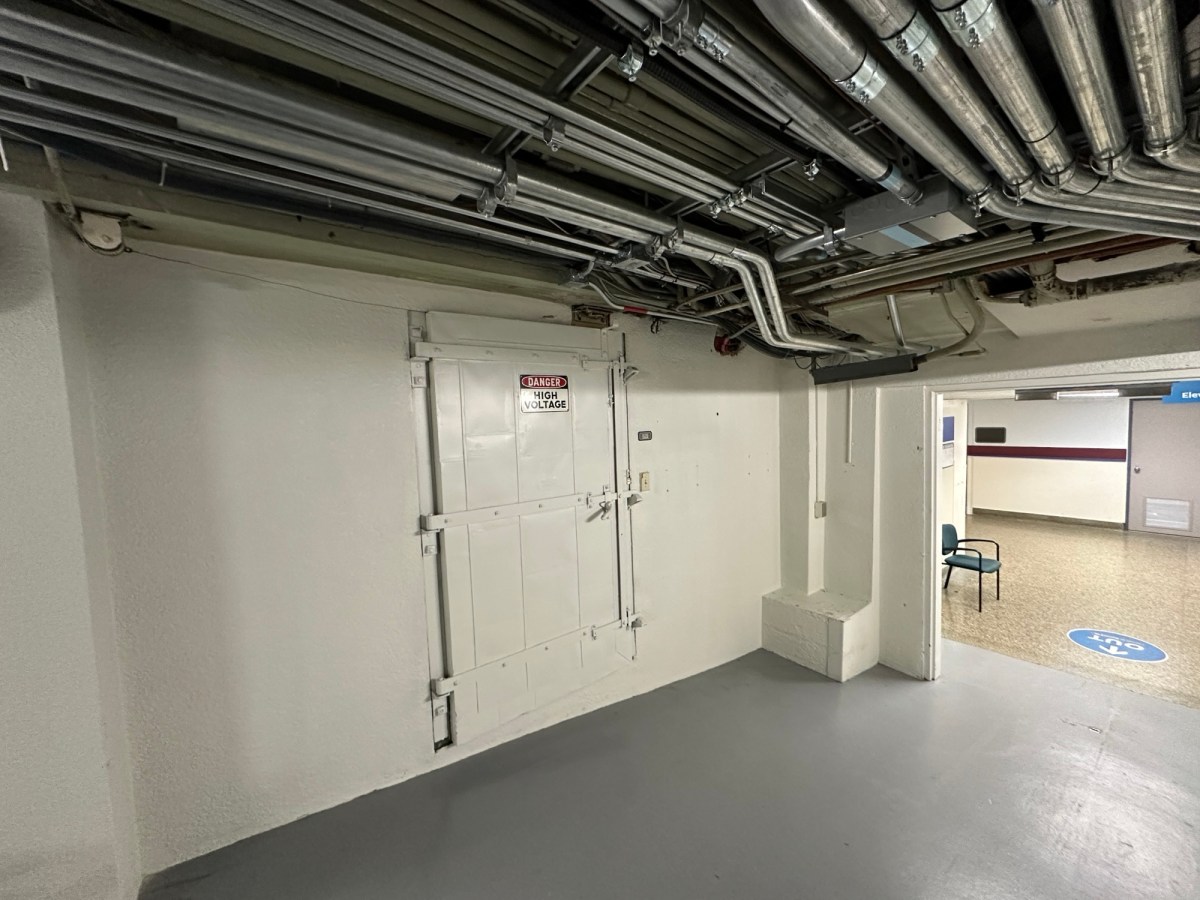
I had just popped around to the new addition to the facility where I work. This addition is where those wishing to undergo M.A.i.D. can do so. The maintenance for this addition is supposed to be looked after by another health authority, but seeing as how my crew would be the “first responders” to deal with any type of HVAC failure I agreed to include the condenser unit for this facility to the building maintenance management system so that it would be cleaned at the same time that all of the other units are.
As I was leaving via the hearse driveway two of my shift engineers came up to me and asked me what this facility was for. I guess that they weren’t on shift when we had our tour of the facility prior to its opening.
So, I took them on a tour of the facility.
I could see that these two were generally uncomfortable with being in the facility.
And they had a lot of questions.
“Why are there so many chairs?”
Well, that’s for family members, loved ones, or anyone else that the person undergoing M.A.i.D. wishes to have present.
“People can watch this????”
Yes, they get a chance to say goodbye. And the person undergoing M.A.i.D. doesn’t die alone.
“Do they have to give the patient the shot?”
Who?
“The people watching?”
No. It’s either a doctor or a nurse practitioner.
“But what about when they execute prisoners and they say that the prisoner suffers why would anyone want to see this?”
Nope. This isn’t an execution. Four drugs. Midazolam, Propofol, Rocuronium, and Bupivacaine.
“What if they don’t want to undergo the procedure and they don’t want to die?”
Huh? You mean that they change their mind?
“No, let’s say that somebody wants them to die but they don’t want to die.”
No, that’s not how M.A.i.D. works. The patient has to request it. The patient has to undergo review and consultation. And the patient can stop the procedure at any point right up to when they lose consciousness.
Even with all of that explanation and all of the assurances I could see that these two were still ill at ease with the whole subject of M.A.i.D..
Death in and of itself is an unnerving topic as well.
I have engineers working under me that outright refuse to go into the morgue cooler to deal with refrigeration issues.
Even going into the autopsy suite elicits fears of being forced to watch an autopsy….
Autopsies are so rarely performed at this facility these days that the observation platform in the autopsy theatre has been used for file storage for ages.
“What if they start performing an autopsy while I’m in there”
Leave.
Come back later.
I’ve even had engineers get out of the elevators or refuse to get on an elevator if the morgue stretcher is in or boarding the elevator.
What place in the world do you never want to visit? Why?
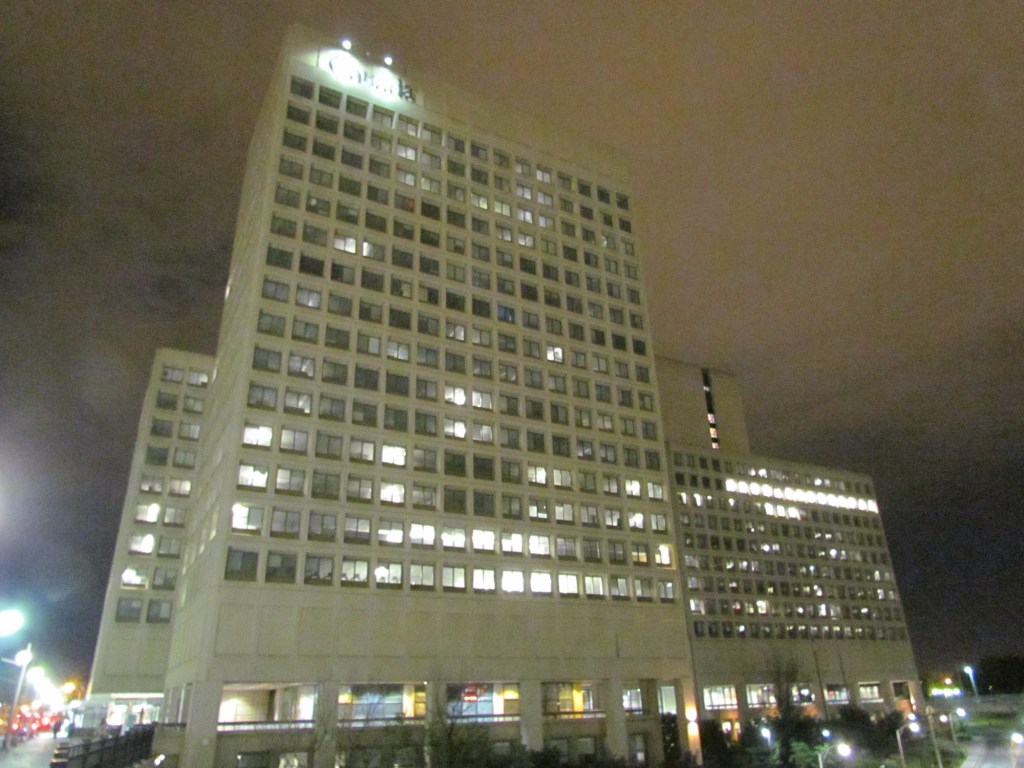
I would never want to visit National Defence Headquarters in Ottawa, Ontario.
NDHQ – where truth and integrity go to die.
Not that I would ever be invited.
But it is an organization of liars and deceivers.
The ultimate impenetrable boy club dedicated to buffing their own public imagine using the blood of its many victims.
It’s an organization that is more concerned about its own prestige and reputation than it is about justice and truth.
NDHQ in Ottawa is the seat of power and policy for the Canadian Armed Forces.
It is where the decisions are made.
Decisions like keeping the investigation of the death of a trans military dependent in the grasp of the dysfunctional CFNIS.
Decisions like willfully allowing the CFNIS to conduct dog ‘n’ pony show investigations while knowing full well that prosecutions for pre-1998 service offences are fully impossible.
Decisions like fighting a group of former army cadets since 1974 over compensation for an officer of the Canadian Armed Forces allowing a 14-year-old cadet to play with a live grenade citing that as these kids were cadets the military wasn’t legally responsible for them.
Decisions like refusing to acknowledge the fact that as children living in military housing on military bases we were often exposed to the same chemicals and hazardous materials that our serving parents were due to provincial safety regulations not being applicable on the bases across Canada.
It’s where political favours are called in, and where truth, decency, and honour go to be sacrificed on the altar of military pride and tradition.
National Defence Headquarters is not a place that I would ever go visit.









 Beeshive