The Canadian Forces Provost Marshal and the fine art of Bending the Truth.

Unless you’ve had first hand experience with the Canadian Forces Provost Marshal, or even the Canadian Armed Forces Military Police Group for that matter, you will never truly understand the ability of agencies such as the Canadian Armed Forces to define what the truth actually is.

Under the rules governing complaints about the Canadian Forces National Investigation Service a person wishing to make a complaint against the CFNIS must first submit the complaint to the provost marshal.

This would be the same provost marshal that oversaw the CFNIS investigation in the first place. Remember, no matter how the Canadian Forces, the provost marshal, or the CFNIS like to spin things, everyone within the Canadian Forces Military Police Group are subject to the Code of Service Discipline. Each and every member of the Canadian Forces Military Police Group must obey the “lawful” command of their superiors.

As a retired JAG practicing in Victoria BC told me to remember, members of the CFNIS are Soldiers First and police officers second.

So far as the provost marshal goes, the provost marshal has the sole discretion to control which documents the Military Police Complaints Commission receives and which documents are withheld from the Military Police Complaints Commission.

And during a review the MPCC cannot subpoena documents from the CFPM, the CFMPG, or the CFNIS. The MPCC literally has to reach their conclusions based upon the documents that were skillfully selected and submitted to the MPCC.

As there are absolutely no oaths administered during an MPCC review, the provost marshal has absolute free reign to lie to and feed bullshit to the MPCC and there are no penalties or sanctions that can be applied for this deceptive behaviour.

What information did the provost marshal intentionally withhold from the MPCC?

  • Canadian Forces Special Investigations Unit investigation investigation paperwork DS 120-10-80 which indicated that it was the babysitter’s sexual abuse of children on the base that initiated the investigation of captain McRae
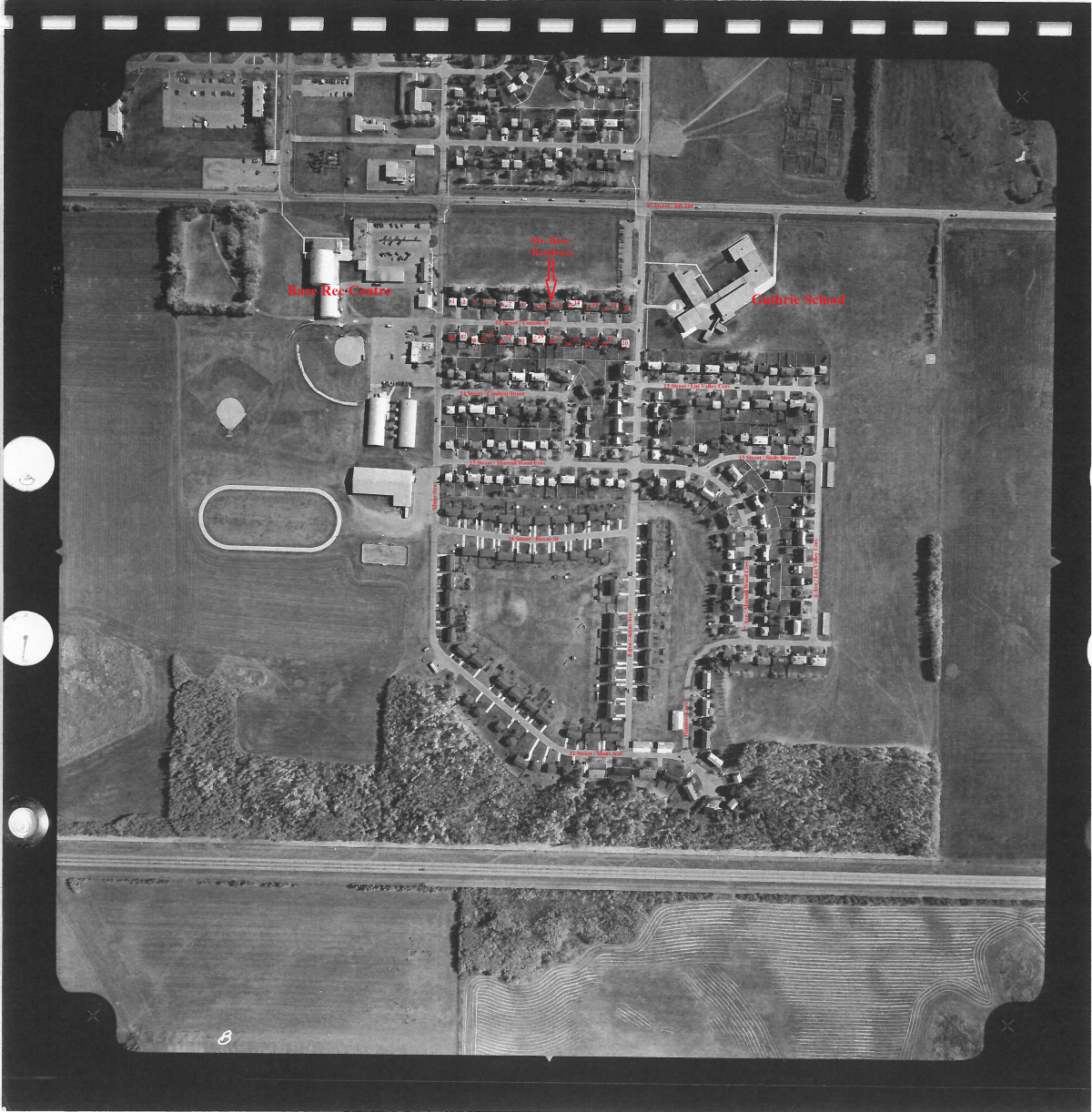
  • The court martial transcripts from McRae’s court martial that described in detail one the penetrative assaults the babysitter committed on a trio of ten-year-old boys behind the rec centre.
  • I’d also bet the the CFPM also wouldn’t explain to the MPCC that their investigation was stymied by the fact that while they could lay charges against the babysitter, they wouldn’t be able to lay charges against Angus McRae due to the summary-investigation-flaw and the three-year-time-bar flaw.
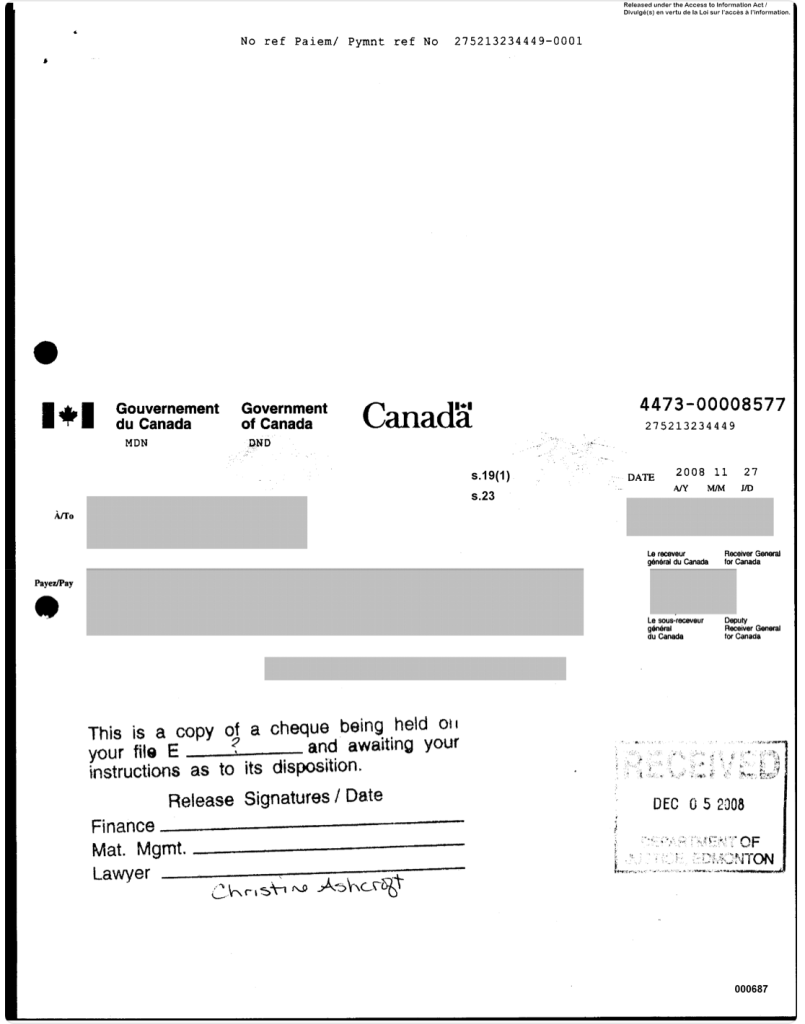
  • The existence of the out-of-court settlement reached between the babysitter, the DOJ, the CAF, and the DND in November of 2008 which appears to have implications for any subsequent investigation of the babysitter.
  • The fact that a senior officer within the CFNIS Western Region told a member of the Royal Canadian Mounted Police that the investigation of my complaint “was likely to go nowhere due to a complete lack of evidence”. This was weeks before the CFNIS contacted my father, my brother, the babysitter, and the babysitter’s family. One of the babysitter’s replies to the CFNIS in 2011 was that “anything he had been involved in as a youth has already been handled by the military” and that if charges were brought against him “a lawyer would handle that”.
  • My social service records that indicated that I started having problems in school on CFB Namao. Behavioural problems are nothing unheard of with sexually abused children and dysfunctional households.
  • My social service records which also indicated that my grandmother was living with us on base and raising my brother and I. This was important as my father’s statement to the CFNIS in 2011 made it sound as if grandma popped in for a visit one weekend.
  • My social service records also indicated that my father was having anger issues and often had anger outbursts. My social service records also indicated that my father blamed my issues on my grandmother whom he viewed as “being cruel to his children, especially when she was intoxicated, which was quite frequently”, he would also tell social services that “his mother refused to seek treatment for her alcoholism”

And it wasn’t just the MPCC that the CFPM and the CFNIS lied to. The CFPM and the CFNIS had also lied to the Alberta Attorney General and the Alberta Crown Prosecutor. When the CFNIS submitted their summary to the Crown, they left out all of the above bullet points. However, in their summary to the Crown the CFNIS also “forgot” to mention to the Crown that I had tried twice before to report the sexual abuse to the military police.

All of this resulted in Mr. Weribiki observing that it was very significant that I had never told anyone about the abuse and that I had never tried to report the abuse in the previous 30 years. Who was I going to tell? My father who was frequently absent either on training exercises or living off base with his girlfriends? My “frequently cruel and intoxicated” grandmother who had an insane attachment to the catholic church? And I did try to report the abuse in 1984 and 1991.

My father’s statement was so detached from reality that when the CFNIS received a copy of my social service paperwork you would think that they would have gone back to my father and asked him to explain the horrific and glaring differences between his statement and the contents of my paperwork.

Nope, the CFNIS never approached him to explain the differences. Which leads me to believe that my father had been told what to say. Why would my father go along with what the CFNIS wanted? More than likely he had received some favour back in 1980 for agreeing to not make a fuss about his two sons being sexually abused. After all, if Mr. Gill had been at home on base with his kids instead of bringing his alcoholic mother on base to raise his kids in his absence, then his sons never would have been abused. So, I can see my father parroting whatever the CFNIS wanted him to say. Just like colonel Munro, captain McRae, and the various other men of ill intent, I don’t see why my father wouldn’t be willing to lie to save his own ass.

I know that at least one investigator with the CFNIS lied through his teeth when interviewed by the MPCC in 2012. This one investigator claimed that he had flown out to Victoria, BC to meet with me in person. The MPCC cited this as showing how the MPCC went above and beyond standard practice. The only problem is that I never net this investigator, nor have I ever met anyone from the CFNIS in person other than when I was interviewed in late March of 2011 by two investigators who had come to see me at the Vancouver Police Department Headquarters.

The sad thing is the members of the Canadian Forces Military Police group couldn’t tell the truth if they wanted to. They can only tell what the chain of command allows them to say. And the chain of command is full of sad sacks who believe that their primary function is to protect and shield the Canadian Armed Forces from outside scrutiny and criticism.

In 2006 the Canadian Forces Chaplaincy Branch issued a directive related to the release of baptismal records for military dependents that had been baptized by Canadian Forces chaplains on defence establishments. This memo indicated that the reason the rules for access to the baptism records was being restricted was due to the increasing number of child sexual abuse cases being brought against chaplains of the catholic church.

No fucking shit, you don’t say!

The one thing that I’ve learnt in my life is that the Canadian Armed Forces and the Department of National Defence are so full of fucking shit that National Defence Headquarter in Ottawa must smell like a fucking latrine and the office of the provost marshal must smell like a port-a-potty that’s overflowing..

The sole job of the Canadian Forces Provost Marshal it seems would be to concoct lies and bullshit to feed to the Military Police Complaints Commission.

The Canadian Forces National Investigation Service and the Military Police seem to serve absolutely no other purpose than to ensure that the Canadian Armed Forces are never held to account for the actions of their members.

In 2011, even before I was interviewed by master corporal Robert John Hancock at Vancouver Police Department Headquarters, the CFNIS already had the May 1980 base military police paperwork, the June 1980 CFSIU investigation paperwork, and the 1980 courts martial transcripts of captain McRae in their possession. The 2011 investigation was doomed right from the start. The entire chain of command from the CFNIS commanding officer right on up to the Chief of Defence Staff would have known about the implications of the 1980 courts martial transcript.

However, the provost marshal willingly and intentionally withheld these documents from the Military Police Complaints Commission in 2012.

There is absolutely no way that the Canadian Armed Forces, the Department of National Defence, or the Judge Advocate General would have allowed the CFNIS to conduct an investigation that would have violated the terms of the NDA that exists between the babysitter and the DOJ, the DND, and the CAF. But how could the CFNIS outright refuse to conduct an investigation they knew they could never allow to come to fruition? They couldn’t refuse. What they could do though is a “Dog-n-Pony show” investigation.

Did the provost marshal forward to the Military Police Complaints Commission a copy of this out of court settlement so that the MPCC could review the settlement to ensure that the terms of the settlement didn’t violate my rights to receive justice?

Nope, instead the provost marshal willingly withheld the existence of the out of court settlement, the existence of an NDA, plus the existence of CFSIU DS 120-10-80 and the CM62 courts martial transcripts.

This way, the provost marshal could simultaneously blow sunshine up the asses of the MPCC while at the same time ensuring that the MPCC would never learn the truth about the 2011 investigation and how it was doomed even before it started.

The Supreme Court of Canada has already rendered decisions that speak to the inappropriateness of police agencies conducting investigations that may subject their superiors to either civil or criminal actions if the investigation were to uncover actions that could be expected to lead to civil or criminal actions. This is why when there’s an officer involved shooting or traffic collision, the police from other municipalities are called in to investigate.

The simple existence of a civil action against the Canadian Armed Forces by my babysitter and the existence of a subsequent settlement between my babysitter and the CAF and the DND means that the CFNIS should have handed this matter over to the RCMP.

If the 2011 investigation had indicated that the babysitter had in fact molested me and my brother, and that the CFSIU investigation paperwork from 1980 indicated the military police in 1980 were aware of this and either did nothing to stop it or were ordered by the chain of command to limit the 1980 investigation, initiating a civil action against the office of the Minister of National Defence would have been a very simple matter.

But, as the Military Police Complaints Commission itself indicated in one of the periodic reviews of Bill C25, the MPCC noted that the Vice Chief of Defence Staff functions as the de facto Chief of Police due to the chain of command. The Vice Chief of Defence staff has the ability to direct CFNIS investigations. The Vice Chief of Defence Staff also reports to the Minister of National Defence.

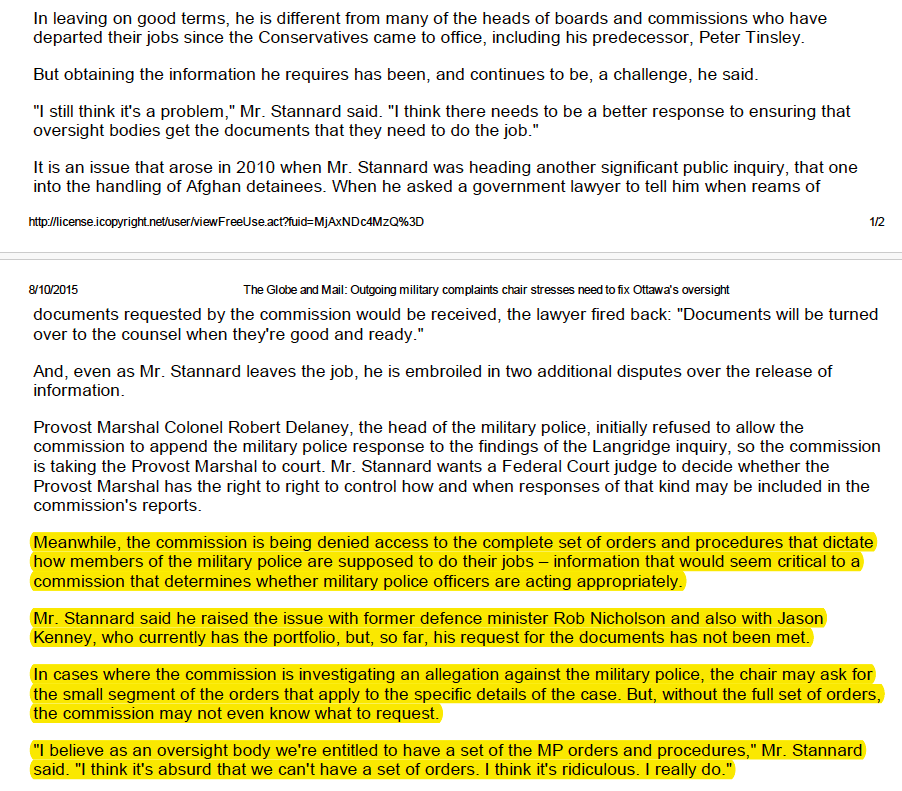
The way the Military Police Complaints Commission is structured it cannot subpoena documents during a review. And in fact, in 2015 it was revealed by then MPCC Chairperson, Glenn Stannard, that the Military Police Complaints Commission has never been briefed on how exactly the CFNIS or the Military Police function and how their chain of command is structured. As Mr. Stannard said, the MPCC wouldn’t really know what documents it could ask for if it was allowed to.

So, in 2011, the CFNIS conducted a “Dog ‘n’ Pony Show” investigation. An investigation meant to make me feel like the Canadian Armed Forces gave a fuck when the Canadian Armed Forces chain of command wanted the entire captain McRae matter to stay buried in the past.

What’s even worse is the Department of Justice assisted the Canadian Armed Forces with stick handling their lies past a federal court judge.

In 2013 when I stood pleading my issue before a federal court justice, the Military Police Complaints Commission was represented by the Department of Justice. This is the same Department of Justice that represented the Canadian Armed Forces and the Department of National Defence when both agencies were being sued by my babysitter in a civil action he filed in March of 2001. The DOJ knew full well what the DND, the CAF, and the CFPM were doing, but the DOJ just stood back and did nothing as doing nothing ensured that the terms of the settlement with the babysitter would not be violated.

The DOJ could have done the right and proper thing back in 2013 and informed the courts that the CFNIS and the provost marshal had intentionally and wilfully withheld documents from the Military Police Complaints Commission that would have shown that the CFNIS in 2011 was very well aware that it was the acts of the babysitter sexually abusing children on the base that brought the babysitter to the attention of the base military police which in turn initiated the investigation that uncovered the fact that Canadian Armed Forces officer captain father Angus McRae had in fact been molesting numerous children at the base chapel and was known to be giving the children he was molesting alcohol before “fooling around with them” in the rectory of the base chapel.

But, we now know that the provost marshal has the ability to blow sunshine up the ass of the Military Police Complaints Commission and that even if the DOJ is well aware of the wrongdoings of the Canadian Armed Forces, the DOJ would rather turn a blind eye to the truth in order to shield the government from responsibility and liability.

Now, I can hear you thinking to yourself “But Bobbie, why wouldn’t the CFNIS want to get you justice in this matter?”

As I’ve said previously, the Canadian Armed Forces cannot prosecute for service offences that occurred prior to 1998. And service offences that occurred on defence establishments could only be tried via the military justice system unless the accused specifically requested a civilian trial. Back in the day everything on the base was the jurisdiction of the military justice system.

The simple matter is that due to the 3-year-time-bar that existed prior to 1998, no matter of child sexual abuse that occurred on the bases and was committed by a person subject to the code of service discipline could ever be prosecuted in the modern day.

Think back and try to remember how many successful prosecutions there have been in civilian courts for service offences that occurred prior to 1998.

“But Bobbie, your complaint was against the babysitter, not military personnel”.

Again, the CFNIS knew of the direct connection between captain McRae and his altar boys, one of whom was my babysitter. And captain McRae was still alive at the commencement of the 2011 investigation. As the CFNIS had full access to the base military police paperwork and the CFSIU investigation paperwork, they would have known that the babysitter had been molesting various children on base.

Sure, there was nothing stopping the CFNIS from bringing charges against my babysitter. But in doing so the CFNIS, the CAF, the DND, and the DOJ would possiby be violating the terms of the settlement reached between my babysitter and the aforementioned parties when the DOJ moved to settle in November of 2008.

What were the provisions of the settlement?

The settlement is covered by a Non-Disclosure Agreement.

I’ll bet you one-thousand dollars that the provost marshal in 2011 didn’t tell the military police complaints commission in 2012 that the 2011 investigation conducted by the CFNIS of the babysitter was hampered by a settlement and subsequent non-disclosure agreement that protected the babysitter from further investigation and prosecution for his actions on CFB Namao which he committed after his 14th birthday on June 20th, 1979. After all, the babysitter wasn’t just going after my brother and I. The babysitter abused children on subsequent bases that his father was transferred to.

There had to be a reason why petty officer Steve Morris told me on November 4th that the CFNIS “just couldn’t find any evidence that the babysitter was capable of what I accused him of”

There also had to be a reason why the CFNIS told an RCMP officer that my complaint against the babysitter “was likely to go nowhere due to a complete lack of evidence”. This was months before the CFNIS talked to my father, my brother, or even the babysitter.

Oh, there was evidence. There was tons of evidence. It was all there in the CFSIU paperwork and the courts martial transcripts.

But the provost marshal knew that they could hide this information from the Military Police Complaints Commission.

And the Canadian Armed Forces and the Department of National Defence both knew that the Department of Justice had locked this matter down securely with an iron clad NDA.

And both the Official Secrets Act and the Security of Information Act ensure that anything anyone wants to say is kept a secret.

Everyone knows the truth, nobody wants to tell the truth, the MPCC can’t discover the truth, and the media doesn’t care about the truth.

The Military Police Complaints Commission

Flying under the radar of the public was the 2023 Annual Report written by the Chairperson of the MPCC Madame Tammy Tremblay.

The full report is available here:
https://www.mpcc-cppm.gc.ca/corporate-organisation/reports-rapports/annuel-report-rapport-annuel/annual-report-rapport-annuel-2023-eng.html

From the report:
“Our most significant challenge this year was the erosion of the MPCC’s ability to exercise civilian oversight of the military police. The MPCC used a great deal of resources and effort to obtain relevant documents from the CFPM to enable it to conduct fair and fulsome investigations. In too many instances, we have seen resistance or refusal to disclose information the MPCC needs to investigate complaints; a reduction in the number of recommendations accepted by the CFPM; a refusal to respond to recommendations; a refusal to provide updates on files currently being reviewed by the Office of Professional Standards of the CFPM; and restrictive and unilateral interpretation of the MPCC’s jurisdiction. The MPCC has been forced to turn to the Federal Court to obtain the documents it is legally entitled to review as part of its mandate. These unfortunate barriers dilute the will of Parliament in setting up a strong oversight system for the police and must be addressed.”

The MPCC was created in 1998 as part of the passing of Bill C-25 in 1998 and the restructuring of the military police in the aftermath of the fallout from the failures of the military police to conduct proper criminal investigations in Bosnia and Somalia when the Canadian Forces were on “peace keeping” missions there but ended up with members of the CAF conducting illegal activities.

The Military Police Complaints Commission was created with input from the Canadian Armed Forces and the Department of National Defence, meaning that the CAF and the DND knew how they wanted their new police forces to operate and that through careful consideration the MPCC would be relegated to the status of toothless hound dog.

The issues that Madame Tammy Tremblay raised above are nothing new. In 2015 then outgoing MPCC chairman Glenn Stannard has this to say in his interview with Gloria Galloway of The Globe and Mail.

The Canadian Forces Provost Marshal has the ability to control the findings of the Military Police Complaints Commission.

During a review, the MPCC cannot subpoena documents or witnesses. The MPCC also cannot administer oaths.

Without the ability to administer oaths the members of the CFNIS subject to the complaint can utter falsehoods all day long and there will be absolutely no repercussions.

If a person such as myself wishes to make a complaint against the base military police or the Canadian Forces Special Investigations Unit we have to first submit our complaint to the Provost Marshal. The Provost Marshal then knows what the complaint is about and can then tailor the documents released to the MPCC to paint the narrative that the Provost Marshal or the Vice Chief of Defence Staff which for the MPCC to see.

Even if the MPCC suspects that something is off and not right, there’s nothing the MPCC can do as the MPCC cannot demand the release of documents from the Provost Marshal. Sure, they can go to Federal Court to ask the court to instruct the Provost Marshal to hand over the records, but that would mean that the MPCC would have to know what documents to request.

As I learnt during the 2012 review of my complaint against the 2011 CFNIS investigation, the complainant cannot simply supply the MPCC with all the documents in their possession. The MPCC can only consider documents that are relevant to the documents supplied to the MPCC by the Provost Marshal.

And as the Provost Marshal is under no obligation to tell the complainant what they’ve supplied and what they’ve withheld from the Military Police Complaints Commission, following through with a MPCC review is almost 100% a waste of time.

This is why when I was interviewed by Claude Bergeron and Peter Cicalo of the MPCC in July of 2012 they were practically popping the champagne and cheering for the CFNIS.

I’m on the left….. the MPCC is on the right.

Peter and Claude were very impressed with the CFNIS investigation even though the Provost Marshal had actually withheld all of my email communications between myself and Master Corporal Christian Cyr detailing the 5 visits to the chapel.

After my interview with Peter and Claude I was so fucking nauseated that I just wandered around the city aimlessly until about 03:00 in the morning trying to work up the courage to jump off the Granville Street bridge.

The Provost Marshal withheld the fact that the CFNIS had in its possession the 1980 CFSIU investigation paperwork and the 1980 courts martial transcripts from the MPCC.

Both of these sets of documents indicated that in 1980 the military police and the CFSIU were very well aware of the babysitter’s abuse of young children on the base and the fact that it was the investigation of the babysitter that exposed the actions of Canadian Armed Forces officer Captain Father Angus McRae.

This of course ran counter to was I was told by Petty Officer Steve Morris on November 4th, 2011 when he stated that the CFNIS could find absolutely no evidence that the babysitter was capable of what I accused him of.

Well, if you don’t like the findings of the MPCC, file an application for Judicial Review.

Don’t think that the Federal Court will be of any relief. The Federal Court can only render judgements based upon the documents that the Provost Marshal submitted to the MPCC. Anything else is considered “New Evidence” and the Department of Justice will fight tooth and nail to have all “new evidence” dismissed.

When I entered all of my emails between myself and Master Corporal Christian Cyr detailing the visits to the chapel the DOJ demanded that these be struck from the proceedings as they were “new evidence”. Because the Provost Marshal failed to notify the MPCC about these emails, I couldn’t introduce these emails at Federal Court level.

And it gets goofier than this.

In 1998, the Provost Marshal issued CFPM 2120-4-0 to the commanding officers of the new CFNIS, and all of the detachments across Canada. This document was further reissued in 2006. This document stated that matters involving civilian victim are to be handed over to the outside civilian authorities having jurisdiction. This document further stipulated that the CFNIS could only conduct an investigation of offences involving civilian victims if the outside civilian authorities outright refused to conduct the investigation.

I introduced this document into my applicant’s records for my application for judicial review.

The Department of Justice requested this document be struck from my hearing as this was also “New Evidence”. New evidence even though this was a standing operating procedure of the Canadian Forces Military Police. But it appears that the Military Police Complaints Commission was never given a copy of this document even though this document has guided military police and CFNIS operations since 1998.

I can’t help but wonder if the Provost Marshal’s new found energy to fight the MPCC over documents has to do with the fact that the MPCC went around the firewall that the CFNIS and the Provost Marshal had constructed around the investigation into my complaint of sexual abuse on Canadian Forces Base Namao and accesses a parallel investigation being conducted into the sexual assaults on CFB Namao and discovered the CFSIU investigation paperwork and the 1980 courts martial transcripts in the possession of the CFNIS.

Militaries like the Canadian Armed Forces really don’t like outside civilian agencies and do-gooders sticking their noses into the military’s business. Militaries view themselves as being the saviours of their respective country, and therefore they should never be questioned.

The Catholic church did the exact same thing that the Canadian Armed Forces are doing. And that’s using their immense power and prestige to place themselves above examination by pesky civilians.

The only difference between the Catholic church and the Canadian Armed Forces is that the Catholic church is subject to civilian laws and the civilian courts. The Canadian Armed Forces are a law unto themselves.

The Military Police Complaints Commission

A police review agency that takes its directions from the agency that runs the police agency that the MPCC reviews.

I’m not going to get too involved with the Military Police Complaints Commission in this blog other than to point out some important findings from the Final Review released in 2020.

After Sgt. Tenaschuk informed me in July of 2018 that the 2nd portion of CFNIS investigation GO 2011-5754 I gathered up all of my evidence and all of my paperwork. Unlike my 2012 complaint to the MPCC, this time I was aware of what documents I would need and how I would obtain those documents.

During the 2015 to 2018 portion of the CFNIS investigation I made sure to audio record phone calls between myself and the investigators. I sent all communications to the CFNIS via email that also went to a cc: address. Important information was sent to the CFNIS via certified courier.

All the stuff that I didn’t do in my first go-round with the MPCC.

I also knew that the MPCC’s hands were tied. The Canadian Forces Provost Marshal, by way of the National Defence Act has an extreme amount of control over the MPCC by way of controlling which documents are released to the MPCC and which documents are.

Unlike the Canadian Forces Ombudsman, the MPCC cannot compel DND, the CF, nor the Provost Marshal to hand over documents to the MPCC.

The MPCC did fault the CFNIS for telling the Alberta Government that no crime had occurred when the MPCC found that internal communications within the CFNIS back in 2011 indicated that my complaint against P.S. was in fact FOUNDED. The MPCC said that the CFNIS had erred when it relied on the Alberta Crown to determine if a crime had occurred. The MPCC said the internal communications within the CFNIS had in fact indicated that a crime had occurred but that the Alberta Crown has a very high bar set before it will lay charges. That bar is determined by the age of the offences, the benefit to society by trying those charges, and the cost of trying those charges.

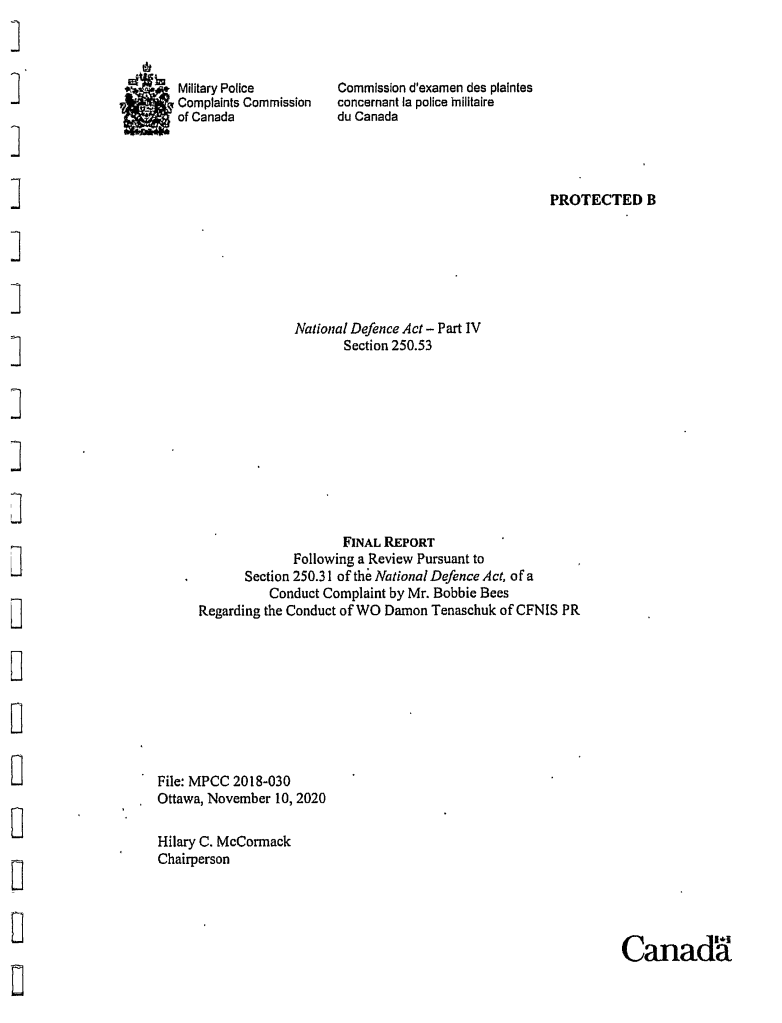
Here are some really interesting pages from the MPCC final report:

Mr. X is my former babysitter, P.S.

What is interesting about this is that the CPIC check doesn’t show this.

P.S. is noted as being 20 years old on August 27th, 1985.
This would put his as being 15 years old at the time of Captain McRae’s Court Martial on July 18th, 1980
This would also go along with what and RCMP Constable told me in August of 2012, that P.S was born on June 20th, 1965 and that the boy in Manitoba was only 8 years old.

So, five charges of child sexual assault between 1982 and 1985?

How many children does a child molester usually abuse before they get caught?

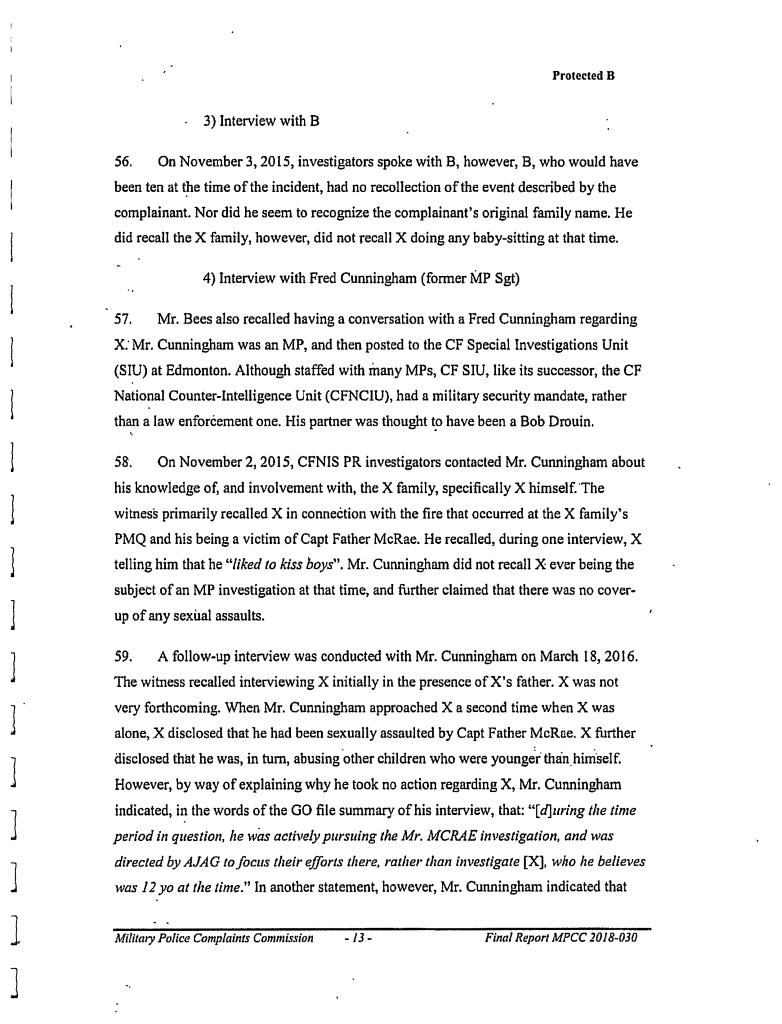
X is my former babysitter from CFB Namao
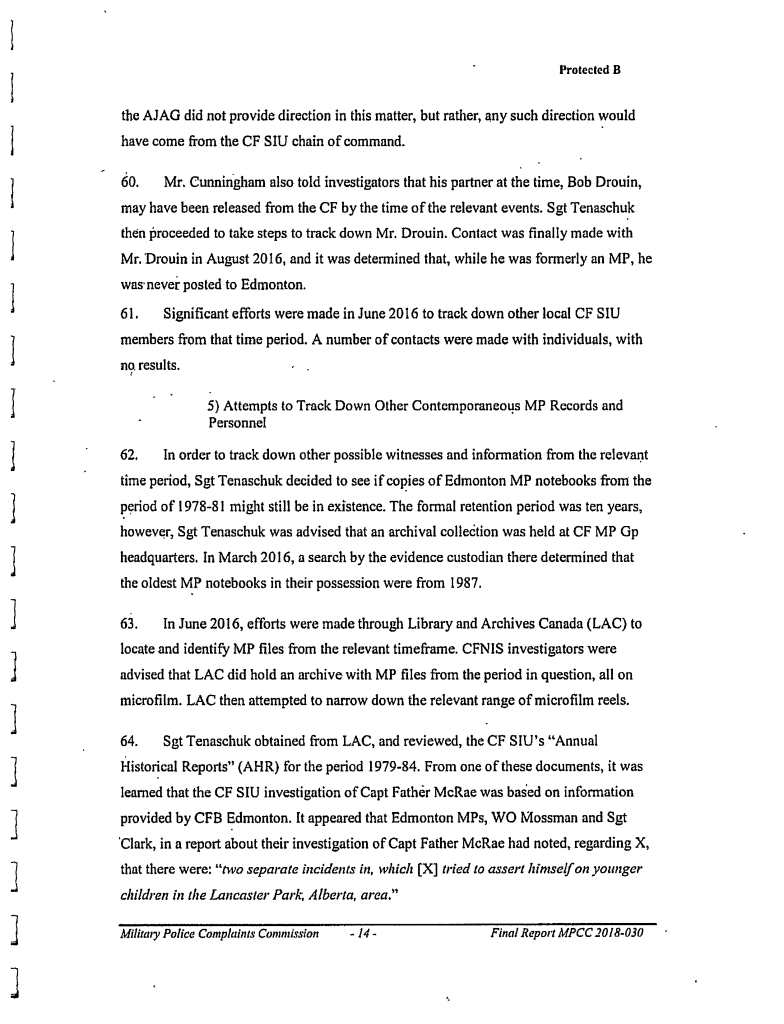
X is P.S., my former babysitter from CFB Namao

Page 13 and Page 14 from the MPCC Final Report are quite interesting.

  • I initially spoke with Fred Cunningham on November 27th, 2011 in this conversation he mentioned the following:
    • P.S. was not 12 or 13 in 1980 as Mcpl Christian Cyr had told me on May 3rd, 2011. P.S. was 15 years old at the time of Captain McRae’s court martial on July 18th, 1980
    • “There definitely was something wrong with P.S. and he should never have been allowed to babysit children”
    • It was because of complaints to the base military police about P.S.’s sexual behaviour to younger children that Captain McRae came to be investigated.
    • Captain McRae was facing charges related for not only molesting P.S., but for molesting a boy named Fred Aitken and one other boy that Cunningham couldn’t name.
    • At the last minute the “brass” dropped all of the charges related to Fred Aitken and the other boy and as a result of this there was a very serious falling out between P.S. and Fred Aitken with Fred under the false impression that P.S. had stabbed Fred in the back. Cunningham insisted that it was the “brass” that made the decision.
      • In the 2015 to 2018 portion of CFNIS investigation GO 2011-5754 Fred Cunningham stated to a CFNIS investigator that the “AJAG threw the CFSIU to the dogs”
      • In the 2015 to 2018 portion of CFNIS investigation GO 2011-5754 Fred Cunningham refused to participate in any type of a recorded interview. He would only talk “off record”.
    • Fred asked me to never mention to anyone what he had told me as he was afraid of getting into trouble as the court martial had been moved in-camera and the evidence sealed and no one was supposed to talk about it.

In December of 2011 I sent a letter to the Canadian Forces Provost Marshal detailing some of my conversation with Cunningham. In January of 2012 I received a telephone call from the Provost Marshal himself assuring me that Fred Cunningham didn’t know what he was talking about, that Fred couldn’t have had access to the court martial, and that Fred might be repeating information that he heard second or third hand.

As I would learn in February of 2018 when I received Canadian Forces Special Investigations Unit report CFSIU DS 120-10-80, Fred Cunningham was Warrant Officer Fred Cunningham in 1980. He was the Acting Section Commander of the CFSIU. And he had been personally tasked by the base security officer Captain David Pilling with investigating Captain McRae for having committed “Acts of Homosexuality” with young boys on the base.

Also, this is quite interesting in the sense that it proves that the CFNIS had access to all of this paperwork in 2011. When Mcpl Christian Cyr kept trying to tell me that P.S. was only 12 or 13 at the time of the abuse in 1980, Cyr was obviously going by what was contained in CFSIU DS 120-10-80. So even in 2011 the CFNIS knew full well what P.S. had done.

Again X and Mstr X are P.S., my babysitter from CFB Namao
Again X is P.S., my babysitter from CFB Nama.
X is P.S., my former babysitter from CFB Namao

Well, there you have it.
It’s all in Section 80.
“From all of this information, there can be little question that, at the very least, base military police were well aware of P.S.’s abuse of other children at the time of the investigation and prosecution of Captain Father McRae. Indeed, it appears to have been P.S.’s behaviour with other younger children, which led the military police’s pursuit of Captain McRae in the first place”.
Doesn’t get any plainer that that, does it?

THEY FUCKING KNEW IN 1980 WHAT P.S. WAS DOING.

And yet I’m the piece of shit that allowed P.S. to molest his younger brother.
I received 2-1/2 years of conversion therapy at the hands of military social worker Captain Terry Totzke.
I’m the homosexual that enjoyed what P.S. was doing to me because I let the abuse go on for so long according to Captain Totzke and my father.
And you wonder why I so desperately need to die.

Why were they so desperate in 1980 to paint P.S. as being only 12 or 13.

Under the Juvenile Delinquents Act, 14 was the minimum age that one could be held criminally responsible. As long as the brass on CFB Namao claimed that P.S. was only 12 or 13 they could justify not bringing in the RCMP to deal with P.S..

Why is this important?

The Canadian Forces had pulled out all of the stops to move the court martial of Captain Father Angus McRae “in-camera” thereby ensuring that the public would never discover that McRae and P.S. had molested well over 25 children on CFB Namao.

If P.S. had been investigated by the RCMP and the RCMP had laid charges, P.S. would have gone to Juvenile Court to be dealt with. And this would have negated all of the work that the CF and the DND had put into moving McRae’s court martial “in-camera”.

In Juvenile Court the court had the power to try any adult who had contributed to the delinquency of a minor. The DND and the CF would have been unable to move a civilian tribunal “in-camera” and thus the doings of Captain McRae and P.S. would have been available for the public to see.

The public would have learnt the McRae was bringing children over to the chapel and “fooling around” with them after giving them alcohol.

The public would have learnt that McRae was suspected of molesting well over 25 children.

The public would have learnt that during his ecclesiastical trial with the Catholic Church he admitted to having molested children for years wheich meant that he probably molested children on Canadian Forces Station Holberg, Canadian Forces Base Portage La Prairie, and Canadian Forces Base Kingston.

The Public would have learnt that Captain McRae had been investigated for “Acts of Homosexuality” at Royal Military College Kingston which is directly adjacent to Canadian Forces Base Kingston.

So the Canadian Forces stood to lose a lot if they allowed the Royal Canadian Mounted Police to deal with P.S..

Instead the R.C.M.p. were not called in and P.S. would go on to have a very lengthy criminal record for child molestation. In addition to the charges and convictions in his CPIC file, there are many more charges that were either dismissed or dropped.

How many of these instances of child sexual abuse didn’t need to occur if the RCMP had been called in as they should have been.

There is no moving on from this.

This isn’t just a slight “hiccup” or a tiny “boo-boo”

The Canadian Forces chain of command may not have intended to my life to have been affected in so many ways by the decisions made in 1980.

But it was.

And it’s not as simple as not thinking about it, or moving on from it.

The damage is done.

There’s no erasing it.

There’s no moving on from it.

It’s like you see those guys who were wrongfully convicted, and they spent 30 or 40 years in prison. And when they get out everyone just expects them to move on with their life even though they were sent to prison on lies, their friends long since abandoned them and their families have moved on, technology has moved on, the life they had was long since obliterated. There’s nothing for them to go back to. No matter how many apologies they get or they receive it won’t undo what was done.

That’s where I am. Due to my dealings with Captain Totzke and the 1-1/2 years of abuse at the hands of Captain McRae and P.S. I have absolutely no idea of what I am.

Am I gay?

Am I queer?

Am I a homosexual like Captain Totzke called me?

Am I straight?

If Captain Totzke hadn’t fucked with my brain would I be married?

Would I have had a wife?

Maybe a husband?

A boyfriend?

A girlfriend?

Now that I know the truth about 1980 it doesn’t make things any better.

As an adult I fully understand that I didn’t make P.S. abuse my younger brother, I didn’t allow P.S. to abuse my younger brother. P.S. abused my brother because my grandmother was a piss tank alcoholic and my father was living off base chasing skirts.

From August of 1980 until the last time I spoke with my father in September of 2006 he made sure that I understood that my brother’s issues were because I let the babysitter touch him.

You don’t get over that.

“But death was sweet, death was gentle, death was kind; death healed the bruised spirit and the broken heart, and gave them rest and forgetfulness; death was man’s best friend; when man could endure life no longer, death came and set him free.”

― Mark Twain (Letters From the Earth)