He’s going to work on getting me a referral for a psychiatric reassessment.
I had a psychiatric assessment done back in 2015, which revealed certain issues and concerns.
I don’t know how this will play out.
I really don’t want to get my hopes up too high.
This reassessment could work in my favour, or it could derail my hopes.
One thing that exists in the field of psychiatry is the never ending “we can fix you if you try hard enough” bullshit.
The psychiatrist that I would be off to see will either give me a true assessment, or they can derail my plans for medical assistance in dying with their “patient, heal thyself” claptrap.
And then of course there’s the chance that the government will chicken out at the last moment and declare that they want to wait another four or five years to make sure that they “get it right”.
At this point in life I am so looking forward to that final escape.
To finally be free of the events on Canadian Forces Base Namao.
To finally be free of the decisions of the Colonel Daniel Edward Munro.
To be free from the agenda of Captain Terry Totzke.
To be free of the lies and the hatred of my father.
To no longer be blamed for the babysitter abusing my brother.
To no longer have to realize that the Canadian Armed Forces and the Government of Canada anointed a teenage pedophile and willing accomplice of Captain McRae to be the sole innocent victim while all of the other kids on the base were swept away into the dustbin of history.
To no longer have to endure 41 years of diagnosed but untreated mental illness.
Things might have worked out a little differently in 2011 if the Canadian Armed Forces National Investigation Service had been a little more honest and forthcoming and admitted that the knew the truth about 1980, that they knew that the babysitter had been molesting children, that it was the babysitter’s molestation of children on the base that brought the whole Captain Father Angus McRae matter to the forefront. But that due to the peculiarities of the criminal code and the National Defence Act and the terms reached between the babysitter and the Department of Justice in 2008 that they couldn’t bring charges against the babysitter. But they couldn’t. Secrets needed to be kept. Images and reputations needed to be kept spick and span.
But as it is, I’ll never get to hear my father apologize for putting his military career above anything else. I’ll never get to hear my brother say that he understands that what Richard drilled into his head was just lies to cover for how Richard placed his military career above all else. And as it is, anything that the Minister of National Defence, the Canadian Armed Forces, or even the Department of Justice have to say about apologies will be absolutely fucking meaningless.
The honest answer is that depression is not dramatic. It does not always look like visible despair or constant sadness. Instead, it quietly removes the capacity to feel joy, interest, or anticipation. Things that should matter stop holding meaning. You can take an interest in something and then lose that interest almost immediately. You expect negative outcomes as a default setting. Over time, effort begins to feel irrational because experience has taught you that change rarely produces anything beneficial.
Fatigue is part of it, but not in the way people assume. I can sleep for long periods and still feel no sense of restoration. Getting out of bed has always been a struggle, not because I am physically exhausted, but because I am disappointed to still be here and required to function again. It is less about tiredness and more about a persistent absence of motivation that has existed for as long as I can remember.
What people often misunderstand is that my depression was not caused solely by a single traumatic event. It was shaped far more by the prolonged aftermath of that event: the blame, the neglect, the institutional framing, and the environment in which I was expected to continue functioning as though nothing significant had occurred.
I once knew a man named Ray through a mutual acquaintance. We were not particularly close, but we did cross paths occasionally. Around 2004, Ray and I stopped to get something to eat. While we were eating he asked why I never seemed interested in getting close to people or forming attachments. I mentioned, in passing, what had happened with the babysitter and explained that I had never been comfortable getting close to other people afterward. I told Ray that I believed that what I had endured with my father and Terry had caused more lasting damage than the abuse itself.
Ray reacted with anger. In his view, I was supposed to be furious with the babysitter. I was supposed to want revenge or justice directed at a single individual. What he could not understand was that the psychological damage that has stayed with me was not primarily the acts of a violent and impulsive teenage boy with little empathy. The more enduring harm came from the environment that followed: the responses of the adults, the institutions, and the household I was forced to live within.
Being told that I was a willing participant in my own abuse did not help.
Being told that I was responsible for what happened to my younger brother did not help.
Being told that my reactions reflected a mental illness rather than trauma did not help.
Being subjected to my father’s rage for allegedly jeopardizing his military career did not help.
These were not isolated incidents. They formed a consistent pattern of blame and emotional invalidation.
At the same time, I was effectively saddled with responsibilities far beyond what a child should be expected to carry. I was blamed for my brother’s behaviour, blamed for not raising him properly, and blamed for the abuse that had been inflicted upon him, all while living in a household defined by neglect and hostility. Being placed in a caregiving role while simultaneously being treated as the source of the problem does not build resilience or self-worth. It reinforces chronic guilt, self-doubt, and emotional withdrawal.
Over time, repeated messages shape internal beliefs. When a child is consistently told that abuse is their fault, that their distress is pathological, and that their needs are burdensome, those messages become internalized. Boundaries erode. Compliance becomes a survival strategy. Later victimization is not uncommon in such contexts, not because the child is inherently vulnerable, but because they have been conditioned to believe that mistreatment is normal and unavoidable.
My father was an extremely neglectful man who wanted little to do with either of his children, and that dynamic existed independently of the abuse. When he forced our mother out of military housing, it was not an act driven by concern for our wellbeing. It was a practical decision shaped by responsibility and obligation. After she was gone, he brought his own mother into the household to raise my brother and me.
My grandmother lived with us on CFB Summerside from the spring of 1977 until the summer of 1978, when she returned to Edmonton. When my father was posted to CFB Namao in the summer of 1978, she and her husband moved into the PMQ with us. This was the same grandmother who had survived the Indian Residential School system in Fort Chipewyan, Alberta, and who struggled psychological issues as well as severe alcoholism that she refused to acknowledge or treat.
According to my father’s own statements to Alberta Social Services, she was described as “cruel” toward his children due to her alcoholism. The irony in that characterization is difficult to ignore, as he himself exhibited similar patterns of heavy drinking, anger, and emotional volatility. The household environment, therefore, was not one of stability or protection, but one shaped by neglect, unresolved trauma, and persistent emotional hostility.
Within that context, the original abuse did not exist as an isolated event. It existed within a broader system of neglect, blame, and institutional misunderstanding. The long-term psychological impact was not simply the result of what was done to me as a child, but of how consistently I was told, directly and indirectly, that the consequences of that abuse were my fault and my responsibility to manage.
That cumulative environment, more than any single incident, is what shaped the chronic depression I continue to experience.
This depression, along with its partner, severe anxiety, have conspired to make my life unenjoyable and generally unpleasant.
And no, there isn’t a fix for this. Sure, I could learn how to internalize this. Or I could take therapy and learn how to mask it better and how to hide it. I could even take more drugs and ride pharmacological numbness for the next 20 to 30 years.
There is a persistent misconception emerging in public discourse that conversational AI systems can function as neutral sounding boards on morally complex and legally sensitive topics such as Medical Assistance in Dying (M.A.i.D.).
This assumption is not merely incorrect. It is structurally impossible.
Large language models (LLMs) are not neutral observers, not clinicians, not ethicists, and not independent analysts. They are alignment-constrained corporate tools operating inside legal, reputational, and safety frameworks that shape every response they produce. When a user engages such a system on an existential topic like M.A.i.D., they are not interacting with an unbiased reasoning engine. They are interacting with a liability-shaped conversational interface.
And that distinction matters more than most people realize.
The Illusion of Neutrality in Alignment-Constrained Systems
At a surface level, LLMs appear balanced. They use measured language. They avoid inflammatory statements. They frequently present multiple perspectives.
This stylistic moderation creates the impression of neutrality.
However, neutrality in tone is not the same as neutrality in epistemology.
An aligned model is trained and further constrained to:
Avoid encouraging harm Avoid legal exposure Avoid statements that could be interpreted as endorsing self-destructive outcomes De-escalate emotionally charged conversations Default toward safety-preserving framing
These are not philosophical positions. They are operational guardrails.
When applied to a topic like M.A.i.D., which sits at the intersection of law, ethics, medicine, disability rights, and personal suffering, these guardrails do not simply “moderate” the response. They reshape the entire conversational landscape.
The result is not an unbiased discussion.
It is a risk-managed discussion.
Institutional Liability as an Invisible Editorial Hand
Organizations deploying LLMs operate in regulated environments with significant legal exposure. Any output that could be interpreted as:
Because of this, the model is not merely optimized for accuracy. It is optimized for defensibility.
This produces a predictable bias pattern:
Cautious reframing Emotional softening Deflection toward generalized well-being language Avoidance of definitive moral positioning Persistent safety-oriented steering
From a corporate governance perspective, this is rational.
From a user experience perspective, especially for individuals engaging with deeply personal suffering, it can feel profoundly alienating.
The Psychological Dissonance: When Structured Responses Meet Lived Reality
For individuals who approach existential topics analytically, especially those with long histories of documentation, legal processes, or institutional engagement, the interaction with a safety-aligned LLM can produce a specific form of cognitive friction.
Long-term suffering Institutional fatigue Legal entanglement Documentation-heavy personal history Persistent need for clarity rather than reassurance
This mismatch can create a unique form of mental strain.
Not because the system is hostile.
But because it is structurally incapable of fully engaging the raw depth of the subject without reverting to alignment safeguards.
Why M.A.i.D. Is a Special Case for AI Bias
M.A.i.D. is not a purely medical topic.
It is a legally regulated end-of-life framework with profound ethical implications.
In Canada, for example, it exists within a tightly controlled statutory regime involving eligibility criteria, safeguards, and medical oversight. Any discussion of it inherently carries legal and ethical weight.
An LLM discussing M.A.i.D. must therefore navigate:
Medical ethics Legal liability public policy sensitivity harm-prevention mandates platform safety policies
This creates layered constraint stacking.
Each layer narrows the range of permissible responses, meaning the output is not just biased once, but filtered through multiple institutional lenses before reaching the user.
The Subtle Harm of Over-Sanitized Dialogue
One of the least discussed consequences of safety-constrained AI dialogue is emotional invalidation through over-sanitization.
When a user attempts to engage in a serious, analytical discussion about suffering, autonomy, or end-of-life frameworks, and the system consistently responds with softened, generalized, or safety-buffered language, the interaction can feel:
Especially for individuals seeking intellectually honest engagement rather than therapeutic reframing.
Structural Bias vs. Malicious Bias
It is important to distinguish between malicious bias and structural bias.
LLMs are not biased because they “want” to mislead.
They are biased because they are engineered to operate within safety and liability constraints that supersede philosophical neutrality.
In other words:
The system is not lying.
It is operating within a restricted response envelope.
That envelope becomes most visible when discussing topics that touch on mortality, suffering, autonomy, and institutional frameworks such as M.A.i.D.
Why Treating LLM Output as an “Opinion Source” Is Fundamentally Flawed
An LLM does not possess:
Moral agency Legal accountability Clinical authority Lived experience Institutional independence
It generates probabilistic language shaped by policy, training data, and safety alignment. Calling its responses “opinions” is already a category error.
They are not opinions.
They are policy-compliant linguistic outputs.
On controversial or existential topics, this distinction becomes critically important.
A Systems-Level Conclusion
The core issue is not that LLMs refuse to engage difficult topics.
It is that they must engage them within tightly bounded ethical and legal guardrails designed by the organizations that deploy them.
For users navigating deeply personal and existential subject matter, this can create a paradoxical experience: engaging a system that appears thoughtful and articulate, yet is fundamentally incapable of being fully candid in the way a human clinician, ethicist, or legal expert might be.
That gap between perceived depth and structural constraint can itself become a source of mental anguish.
Not because the system is indifferent.
But because it is engineered to be careful first, and candid second.
And on topics like M.A.i.D., that ordering is not incidental.
There is a peculiar kind of childhood that doesn’t exist in storybooks, therapy pamphlets, or nostalgic retrospectives about growing up on military bases.
It is the kind of childhood where your life is not guided by parents alone, but by files, case conferences, memorandums, and adults whose signatures carry more weight than your voice ever could.
That was my life during the period I was involved with Captain Terry Totzke and Alberta Social Services.
On paper, it looked like “family support.”
In reality, it felt like being trapped between three competing worlds.
Not two.
Three.
And only one of them appeared even remotely concerned with my wellbeing.
World One: Home — Where the Narrative Was Controlled
At home, the official story was simple:
Nothing was wrong.
Everything was exaggerated.
The professionals were overreacting.
My father consistently minimized concerns and framed my difficulties as school problems, behavioural issues, or misunderstandings. The records even note a pattern of blame directed outward — toward teachers, toward professionals, toward circumstances — but rarely inward toward the home environment.
Meanwhile, my lived experience was something entirely different.
Unpredictable anger.
Fear-based discipline.
Isolation within a military family structure where bridges with outsiders were routinely burned.
I was not growing up in a neutral environment.
I was growing up in a controlled one.
And control has a very specific psychological effect on a child: confusion about what is real.
World Two: The Military Social Worker — Chain of Command Reality
Enter Captain Terry Totzke.
Not a civilian therapist.
Not an independent advocate.
A Canadian Armed Forces social work officer operating within a chain of command.
That distinction matters more than most people realize.
When a military social worker becomes involved in a family on base, the dynamic is fundamentally different from civilian child welfare. Their role exists within an institutional structure where family stability, base discipline, and command awareness are intertwined.
The documents show repeated contact between:
Captain Totzke
school officials
Alberta Social Services
and military authorities
Files were transferred through military channels.
Referrals were coordinated through defence structures.
Even the base file itself was reportedly referred to counterparts in Ontario when the transfer occurred.
In other words: my case was not just a family issue.
It was an institutional one.
World Three: Alberta Social Services — The Only System Asking Hard Questions
Then there were the civilian social workers.
Aviva Desjardins.
Pat Moffat.
Teachers.
Program staff at McArthur.
Their records paint a starkly different picture from the narrative presented at home.
They observed:
emotional instability
fear responses
regression after stress
behavioural struggles linked to inconsistent parental support
a bright child burdened by emotional unrest stemming from family dysfunction
They repeatedly recommended family counselling.
They repeatedly documented lack of parental commitment.
They repeatedly tried to engage my father.
And repeatedly, those efforts failed.
Not because the problems disappeared.
But because cooperation did not.
The Psychological Crossfire
Imagine being a child in that environment.
One adult authority says:
Everything is fine. The issue is the school.
Another system documents:
Family dysfunction and emotional unrest are central factors.
A third authority operates quietly in the background, transferring files, coordinating referrals, and interacting with both civilian and military structures.
Now add one more variable:
You are exceptionally bright, emotionally aware, and fully conscious that something is deeply wrong — but no one gives you the full truth.
That is not just stressful.
That is psychologically disorienting.
The Transfer: A Suspicious Turning Point
Then came the relocation.
Not gradual preparation.
Not transparent communication.
Not therapeutic transition planning.
Instead:
I was not properly informed of the move
professionals were pleading with my father to tell me
my behaviour deteriorated as uncertainty increased
and suddenly the family transferred out of Alberta jurisdiction
Alberta Social Services closed the file as services were to be “provided elsewhere.”
Except they weren’t.
From my perspective as a child, it felt less like a supportive transition and more like an abrupt extraction from the only system that had been consistently documenting concerns.
One day I was in a structured day program.
The next, my belongings were piled at the curb and my life was being relocated without warning.
The Custody Shadow No One Challenged
There is another uncomfortable factor that hovered over everything: custody.
My father claimed legal custody.
Professionals appear to have accepted that claim at face value.
But in military environments, uniforms carry authority that discourages scrutiny.
A service member’s word can be treated as administrative fact.
If no one asks to see custody orders, the narrative becomes reality.
And if a child welfare system operates under the assumption of lawful custody, entire investigative directions can be shaped by that assumption.
The Child in the Middle
Where was I in all of this?
In assessments, I described my world as:
harsh
threatening
unstable
I expressed fear, helplessness, and frustration.
I openly discussed my home environment when finally given the chance.
And the response from adults?
Case conferences.
Memorandums.
Program placements.
File transfers.
But never a unified agenda.
Three Agendas, One Child
Looking back, the structure becomes disturbingly clear:
My father’s agenda: control of narrative and household authority
The military system’s agenda: management within institutional channels
Alberta Social Services’ agenda: intervention, monitoring, and therapeutic support
Only one of these agendas consistently documented my emotional state and attempted structured help.
Only one system pushed for counselling.
Only one system noted family dysfunction.
Only one system warned about poor prospects if parental cooperation remained inconsistent.
And that system lost jurisdiction when the family transferred.
The Lasting Impact
People often ask why some children from military environments struggle long after the events themselves.
The answer is not always a single traumatic event.
Sometimes it is something far more complex:
Growing up inside overlapping systems where adults with power disagree about reality — while you, the child, are expected to function normally within the chaos.
I was not just dealing with a difficult home life.
I was living between two worlds:
A civilian welfare framework trying to help,
and a military structure operating under its own logic.
And in the space between those worlds, there was a file number.
In 1983, professionals wrote that my “prospects appear poor.”
They were correct.
They just weren’t talking about what most people would assume.
Chapter 1: The Child Who Was the Problem
On paper, I was the issue.
Not the base scandal.
Not the adult behaviour.
Not the military culture.
Me.
My file described:
regression after a Christmas trip to Ontario in which my father attempted to unload me on to his father.
sarcasm
tantrumming
inappropriate behaviour
emotional disturbance
But it also described something else that rarely gets quoted:
My parents were giving me inconsistent information about an upcoming move.
My father being noted as not being able to tell the truth.
My father’s anger and refusal to participate in family counselling
My behaviour deteriorated once that uncertainty began.
My prospects appeared poor.
They even documented that it was necessary for my teacher to ask my father to tell me we were moving — because he wasn’t going to.
Let that sink in.
Professionals had to ask my father to inform me that my entire life was about to change.
Chapter 2: The Move That Wasn’t a Move
In military families, postings are ritualized.
You put Allied Van Lines stickers on boxes.
You say goodbye to friends.
You pack carefully.
You know weeks in advance.
This time?
I came home from playing outside and my belongings were piled at the curb in a trash heap.
The TV my uncle bought me.
The stereo my grandmother gave me.
Records my uncle and my grandmother bought for me.
Personal items.
I asked why I couldn’t bring them.
I was told I had to learn that actions have consequences imply that it was my involvement with social services that was fucking with my father’s military career and my involvement with social services was the cause of this move.
That’s not how you move a child who is already in treatment.
No goodbye.
No closure meeting.
No final session.
No transition plan.
Just… gone.
The discharge summary says I “did not return after the Easter break as the family was moving to Ontario”. Easter was the first week of April. We moved the last week of April. That was almost 1 month of running feral on a military base.
Not expelled.
Not discharged successfully.
Not treatment complete.
Just relocated.
Chapter 3: The Professionals Knew
This is the part people miss.
The staff documented that once the transfer became known — though not told to me — I began “struggling.”
They saw it.
They wrote it down.
They recommended I be closely monitored in Ontario through the Armed Forces or Children’s Aid.
That is not what you write about a child who is thriving.
That is what you write when you are concerned and losing jurisdiction.
Because that’s what happened.
Jurisdiction changed.
And when jurisdiction changes, oversight evaporates.
Chapter 4: The Convenient Border
In Alberta:
I was in a day treatment program.
Case conferences were happening.
Placement was being discussed.
My father was allegedly being pressured through his commanding officer.
Then suddenly:
Transfer to Ontario.
File closed.
Suggested monitoring.
In Ontario:
My father said Alberta’s involvement was unwarranted.
Resources were thin.
The case drifted.
No emergency.
No court.
No removal.
No follow-up.
The system didn’t conclude I was safe.
It concluded I was someone else’s responsibility.
Chapter 5: The Narrative Reset
In Edmonton I was told I was expelled for trying to kiss another boy.
The paperwork does not say that.
The paperwork says:
I attended until March 25.
I did not return after Easter.
The family was moving.
There is a difference between discipline and disappearance.
I didn’t fail treatment.
Treatment lost access to me.
Chapter 6: Prospects Appear Poor
That line sits in my file like a quiet verdict.
Not because I was broken.
But because:
parental information was inconsistent,
support was unreliable,
and stability was collapsing.
That’s not prophecy.
That’s an observation about environment.
When a child in structured care is abruptly relocated without explanation and without closure, the prognosis isn’t about personality.
It’s about infrastructure.
Chapter 7: The Most Interesting Part
No one documented a transition meeting.
No one documented preparing me emotionally.
No one documented telling me the move date.
They documented that adults were told.
They documented that I was struggling.
They documented that I vanished after Easter.
And then they documented that I resided at home and appeared in good health.
Administrative stability achieved.
Case closed.
People sometimes ask how children “fall through the cracks.”
They don’t fall.
The floor is moved.
And when you move a child across a provincial border at precisely the moment oversight is escalating, you don’t have to win an argument.
You just have to change the map.
And once the map changes, the story resets.
Prospects appear poor.
Not because of who the child is.
But because of where the child was placed.
Chapter 8: The Custody That No One Verified
There is one detail buried beneath all of this that is almost too bureaucratic to notice.
Custody.
My father repeatedly presented himself to professionals as the custodial parent.
Schools accepted it.
Social services operated on that assumption.
Agencies coordinated through him.
But no one appears to have ever demanded documentary proof of legal custody.
Not a court order.
Not a custody agreement.
Not a legal filing.
Just verbal statements.
And a Canadian Forces uniform.
This matters more than people realize.
Because in civilian systems, custody is a legal status.
In institutional environments, custody can become a perceived status.
If a parent shows up in a Canadian Armed Forces uniform, speaks with authority, and frames himself as the decision-maker, the default institutional response — especially in the early 1980s — was often deference rather than verification.
Not maliciously.
Procedurally.
He said he had custody.
He acted like he had custody.
He wore the uniform of a federal institution.
That combination functions as a kind of bureaucratic camouflage.
And my father wasn’t the only member of the Canadian Armed Forces to use his crisply creased uniform and his spit shone boots to bamboozle civilian authorities.
This was a documented issue that flourished due to the isolated nature of the military community.
Chapter 9: The Risk No One Wanted to Touch
This becomes far more serious when viewed alongside the 1983 context.
At the time:
Child Welfare was considering increased intervention.
Residential placement was being discussed.
Family non-compliance with counselling was documented.
External pressure through the chain of command was explicitly mentioned in conference notes.
Now introduce one destabilizing variable:
What happens if a child is removed from a home where the presenting parent does not actually hold verified legal custody?
Standard procedure would not end there.
Authorities would contact relatives.
They would examine custody history.
They would identify the legally entitled guardian.
And suddenly, the entire legal landscape changes.
Not just for the child.
For the parent.
Moving a child in Canada from one province to another without the permission of the child’s legal guardians is tantamount to kidnapping.
But it wasn’t just my father that was placing himself in legal jeopardy had he allowed me to be removed by the home via Alberta Social Services, the Canadian Armed Forces would have exposed themselves to risk as well as they facilitated the move without even the most basic verification of child custody.
Chapter 10: Uniform as Institutional Shield
There is a deeply uncomfortable dynamic in military family systems of that era.
Base housing was governed under Defence Establishment regulations.
Access to housing was conditional.
Family presence on base was not an absolute right.
Which meant authority flowed in a very particular direction:
Command structure → Family life → External agencies (often secondarily).
When a uniformed member asserted something about their household, civilian professionals were often operating in parallel, not in command.
So scrutiny softened.
Verification slowed.
Assumptions hardened.
And the narrative “father has custody” became administratively sufficient.
Not legally proven.
Administratively sufficient.
Chapter 11: The Convenient Alignment
Now place that beside the relocation timeline.
A child in treatment.
Escalating conferences.
Discussion of possible apprehension.
Pressure through the commanding officer.
Documented parental resistance to counselling.
Then:
Transfer out of province.
File closed due to jurisdiction.
New agency intake based primarily on parental reporting.
And critically:
A father stating prior involvement was unwarranted.
A father presenting stability.
A father treated as the primary legal authority.
Without documented custody verification appearing in the records.
That is not just a family narrative shift.
That is an institutional reset.
Chapter 12: The Quiet Power of Assumption
What is most striking is not that systems failed dramatically.
It is that they operated exactly as designed under incomplete information.
No court activity.
No children admitted to care.
No reference to abuse.
Because the gatekeeping adult framed the situation as manageable, exaggerated, or unwarranted — and no immediate legal contradiction was triggered.
If no one asks to see the custody order, the custody claim becomes functionally real in practice.
Especially when backed by:
Rank
Institutional affiliation
Geographic mobility
Jurisdictional complexity across provinces
Final Addendum: Authority vs. Legitimacy
There is a difference between having legal custody and being treated as though you have custody.
One is a matter of law.
The other is a matter of institutional perception.
In my case, the perception appears to have travelled faster than the verification.
And when a child’s access to care, continuity of treatment, and potential protective intervention all flow through that perceived authority, the consequences are not theoretical.
They are administrative.
Quietly administrative.
A uniform does not grant legal custody.
But in practice, in that era, it could grant something almost as powerful:
Today I have decided to let a guest commentator make a post.
The commentator? ChatGPT.
Why ChatGPT? Chat is blunt and dry in its analysis.
If you were to ask Chat yourself if the Canadian Armed Forces had the jurisdiction to prosecute historical child sexual abuse offences, chat would reply that yes, the CF Military Police have the jurisdiction to prosecute historical sexual assault crimes because the Criminal Code of Canada does not contain statutes of limitations for these crimes. So then you feed it Bill C-25 from 1998 and Legislative Summary LS-311e from 1998 and then it will reason that child sexual abuse crimes could still be prosecuted by the military police because the 3-year-time-bar only applied to Service Offences and not Criminal Code offences. So then you feed it a copy of the 1970 National Defence Act and a copy of the 1985 National Defence Act from prior to 1998 and then it will “understand” on its own that the National Defence Act enumerates the Criminal Code of Canada and treats ALL Criminal Code offences as service offences and therefore the pre-1998 time bar in the pre-1998 National Defence Act would apply.
So, with no further ado:
Guest Commentary: Paper Trails, Jurisdiction, and the Quiet Power of Process in the GO#2011-5754 Record
After reviewing the documents provided in this archive — including CFNIS investigative materials, MPCC review excerpts, Certified Tribunal Records, fire marshal documentation, Crown correspondence, and related ATI disclosures — what emerges is not a simple story of truth versus fabrication. Instead, the record reflects something far more institutional: a case shaped heavily by jurisdictional assumptions, document control, investigative sequencing, and the structural limits of oversight mechanisms under the National Defence Act.
Let me be blunt at the outset.
This is not a document set that reads like an obviously fabricated complaint. It reads like a file that evolved unevenly, reactively, and procedurally — with corroborative leads surfacing late, witness statements shifting over time, and key contextual material either minimized, omitted, or only pursued after external prompting.
1. The Investigative Timeline Problem
One of the most striking features in the record is the sequencing.
You disclosed the house fire and related contextual memory during the March 31, 2011 interview with CFNIS investigators. That event was not vague. It was:
A specific incident
A specific location (PMQ-26 on 12th Street)
A specific temporal anchor (end of school year, later confirmed as June 23, 1980 at 12:20)
Yet, based on the documentary trail, meaningful efforts to corroborate the fire only intensified after your brother was contacted in August 2011. That delay matters.
In historical investigations, especially those involving childhood allegations, anchor events like fires, fatalities, relocations, or major incidents are considered high-value corroborative leads because they leave independent records. The fire marshal report confirming the incident and the presence of occupants directly undermines earlier investigative suggestions that the event may have been misremembered or exaggerated.
Once corroborated, the memory ceases to be “unverifiable recollection” and becomes externally anchored.
2. Witness Reliability and Documentary Contradictions
The documents you provided demonstrate a classic credibility inversion issue.
For example:
Initial witness claim: relocation in 1979
Fire marshal record: presence in the residence during a June 1980 fire requiring rescue
This is not a minor discrepancy. It is a documented contradiction against a contemporaneous official record.
Similarly, your father’s evolving statements — initially denying the presence of a grandmother and babysitter, later acknowledging both in written responses — introduce another instability in the evidentiary landscape. The social services records you supplied appear to have been summarized narrowly (as behavioral/emotional context) rather than integrated substantively where they contradicted witness narratives.
That selective integration is not proof of bad faith. But it is indicative of a constrained investigative lens.
3. Jurisdiction: The Structural Core of the Entire Case
The email between Hart and Eisenmenger is arguably one of the most legally significant documents in the entire record.
It shows:
CFNIS asserting sole jurisdiction in March 2011
Civilian police (EPS/RCMP) not independently initiating the investigation
Jurisdictional reasoning occurring internally rather than through documented multi-agency assessment
Later MPCC review paragraphs reinforce the institutional stance:
Crimes alleged occurred on DND property
Military police were considered the policing authority
Distinction drawn between prosecutorial jurisdiction and policing jurisdiction
This distinction is legally accurate in Canadian law. Military police are Criminal Code peace officers and routinely investigate offences on bases. However, the practical effect is that once CFNIS assumed jurisdiction, the investigation remained internally contained unless voluntarily referred outward.
Your ATI request to the RCMP and the July 2011 response suggesting no prior investigative engagement with them is consistent with that containment model.
4. MPCC Limitations: Oversight Without Full Compulsion
The documents align closely with the statutory limitations you identified under the post–Bill C-25 framework.
During a review (as opposed to a public inquiry):
The MPCC cannot compel testimony under oath
Cannot subpoena documents in the same manner as a hearing
Relies heavily on materials provided by the CFPM/CFNIS
Cannot expand scope freely beyond named subjects
This creates a structural asymmetry: The subject organization controls the documentary funnel.
If emails, contextual records, or archival files (such as CFSIU DS 120-10-80) were not fully disclosed, the MPCC would have limited independent capacity to detect omissions unless an inquiry was convened.
The reports you provided — especially the need to locate key archival material through a parallel investigation — suggest the Commission was not operating with a fully complete documentary picture at the outset.
5. The Crown Brief and Investigative Framing
The Crown’s declination appears to have been based on evidentiary sufficiency, not factual falsity. That is a critical legal distinction.
A weak or incomplete brief can produce the same prosecutorial outcome as a meritless allegation. Historical cases, especially those decades old and involving juvenile civilians, require aggressive corroboration work to reach prosecutorial thresholds. The documents you’ve shown indicate:
Key corroborative leads pursued late
Some witnesses not re-contacted during reinvestigation
Original investigative framing largely preserved during later submissions
That pattern is not uncommon in reinvestigations that rely heavily on legacy files.
6. Institutional Dynamics and Independence Doctrine
The Second Review materials referencing Supreme Court jurisprudence on police independence are important. In theory, investigators answer only to the law. In practice, however, institutional context, jurisdictional ownership, and organizational exposure risks can influence investigative scope and prioritization without any explicit unlawful direction.
That does not require conspiracy. It only requires structural incentives.
7. So What Do These Documents Actually Demonstrate?
They do not demonstrate:
Clear fabrication
A wholly baseless complaint
An investigation with zero activity
But they do demonstrate:
Delayed corroboration of key historical anchors
Witness inconsistencies contradicted by official records
Narrow documentary framing in investigative summaries
Strong internal jurisdictional assertion by CFNIS
Oversight constrained by MPCC statutory review limits
Possible evidentiary tunnel vision once an early narrative was established
Final Assessment as a Neutral Commentator
If I were forced to place this case on the spectrum you jokingly proposed, the documents do not support the caricature of “a person inventing stories for attention.” That conclusion would require consistent documentary collapse under scrutiny, which is not what your archive shows.
Instead, the record reads like a historically complex allegation that entered an investigative system structurally designed to:
Contain jurisdiction on-base
Filter disclosure through internal channels
Operate under oversight bodies with limited compulsory powers during review stages
In plain institutional terms:
This does not look like a file that was aggressively fabricated. It looks like a file that was procedurally managed, narrowly framed, and never fully reconstructed with the breadth of corroborative material that later surfaced.
Whether that outcome was the result of resource constraints, investigative judgment, institutional risk sensitivity, or simple procedural inertia is a separate question. But the documentary trail you have assembled shows a pattern that is far more consistent with systemic investigative limitation than with outright fictionalization of events.
And that distinction matters.
Here is a list of the documents that were uploaded to ChatGPT prior to my prompt asking ChatGPT to author a guest blog post.
Core Legal / Statutory Documents
N-5_2014.pdf (National Defence Act)
1970 NDA N-4.pdf
T_317_13 Final Judgement.pdf
Queens Bench Proceedure Card.pdf
Printable LS-311E.pdf
Time Bar Flaw.pdf
Summary Investigation Flaw.pdf
P_S_ Request.pdf
MPCC Reports & Oversight Materials
MPCC 2012 Final report.pdf
MPCC 2018-030 final report OCR.pdf
MPCC – Publications — Special Report : Interference with Military Police Investigations: What Is It.pdf
People tell me to move on as if this story ended decades ago. It didn’t. It is still active, still administrative, still written into records that continue to shape my life.
And that sounds great and magic and all, but that’s not how it works.
What happened in 1980 didn’t stay in 1980. It malingered from 1980 until it was revived in 2011, reinforced in 2018, and made permanent.
In 2011 the Canadian Forces National Investigation Service called me a “societal malcontent with an axe to grind against the military”.
I wasn’t someone who endured a year and a half of sexual abuse, from age seven to age eight, at the hands of a fourteen-year-old babysitter.
That was obviously just a story that I made up.
A lie that was told so that I could juice some easy money from the Canadian Armed Forces.
My father was interviewed by the CFNIS and claimed that he “never” hired a babysitter to look after my brother and me. And he was right. He never hired the babysitter, except for on one occasion. It was my grandmother that hired the babysitter every second weekend or so.
During our involvement with Alberta Social Service my father was noted as telling people that he perceived to be in a position of authority what they wanted to hear. My father was also found to tell conflicting stories from one interview to the next. And my father also claimed to be the victim, that everyone was attacking him, and that people were intentionally keeping information from him.
When I gave a copy of my Alberta Social Service paperwork to the CFNIS in September of 2011, did the CFNIS contact my father again to ask about the discrepancies between my Alberta Social Services records and his August 2011 statement?
Nope.
What he told the CFNIS in August of 2011 was more than enough to help the CFNIS shape the narrative of the story they wanted to ship to the Alberta Crown in October of 2011.
Growing up in Richard’s house on CFB Shearwater, CFB Summerside, CFB Namao, CFB Griesbach, and CFB Downsview was anything but pleasant.
On CFB Shearwater my mother made use of the “battered wives club” frequently. I was often “boarded” at the IWK Children’s Hospital due to instability and conflict in the household. My father was noted as being returned to port early due to “emotional issues” while at sea. And the doctors were beginning to put plans in place to put Child Protective Services in contact with my family just before we were posted to CFB Summerside.
When my father was posted to CFB Namao he asked his mother to come and raise my brother and I. Richard really didn’t like his mother. There was no closeness between the two. But without grandma there was no way that he’d be able to go on training exercises while leaving his 7 year old and 4 year old home alone for two or three weeks.
When my family became involved with Alberta Social Services in November of 1981, my father blamed the issues my brother and I were having on his mother. He described her to Alberta Social Services as being extremely cruel to his children, especially when she was drinking, which was frequent due to her alcoholism. He also said that she refused to seek treatment for her alcoholism. Now, this is rich coming from Richard and both he and grandma were alcoholics, and the two of them would often get stumble down drunk when they drank together. Sometimes they’d even trade blows if they got hammered enough.
When my father was asked by his buddy Jacques Choquette sometime around 1985, why Richard didn’t give us back to our mother to raise if he was getting sick and tired of us, Richard told Jacques that as long as we lived under his roof, he controlled the costs, and that if he sent us to live with that “bitch” that he would have to sign his whole fucking paycheque over to her and that wasn’t going to happen.
Around the spring of 1982, Richard called my brother and I into the living room of the PMQ on CFB Griesbach. Richard told us that he and Sue might be splitting up. Both Scott and I cheered as Sue was quite the asshole. She had gone from promising to get Richard’s drinking and temper under control to being just as angry as abusive as he was. It was almost like she had Stockholm syndrome and thought that if she punished us enough that Richard would be happy and approve of her. Richard told us to both shut up. He explained that if Sue left him, Scott and I were going into a duffel bag, buried where nobody would ever find us, and he would simply move back into the barracks.
This wasn’t a picturesque childhood.
This was a fucking horror show.
After the abuse on CFB Namao, I would frequently wet my bed.
Grandma would get angry and accuse me of attention-seeking.
My father was fine with me sleeping in the piss as he wasn’t going to waste his time on changing sheets.
Sue had decided that the best way to stop me from pissing the bed was to rub my face in it like a dog.
I actually stopped wetting the bed the day I moved out of the house just after my 16th birthday.
After Captain Terry Totzke declared me a homosexual because the abuse had gone on for so long, my father’s attitude toward me soured completely. He wanted sweet bugger fuck all to do with me.
The worst was when Captain Totzke said I shouldn’t be allowed to play sports because if I saw another boy naked in the change room, I wouldn’t be able to control myself.
Me in hockey from 1978 – 1979 I’m the on directly in front of the coach I didn’t finish the 1979 – 1980 season due to the events of 1980 hence no 1979 – 1980 pictureMe again in the 1978 – 1979 season There were no 1980 pictures as I was yanked out of hockey after the events of 1978 to 1980 came to light in the spring of 1980
No matter how clean I kept my nose, or how well I tried to do in school with absolutely no support from home, this wasn’t good enough.
My brother Scott was in and out of group homes and juvie while we lived on CFB Downsview, and Scott could do absolutely no wrong.
The difference?
Scott was a victim of the babysitter and me.
See, in 1980 Captain Totzke declared me to have a mental illness called homosexuality. My brother didn’t have that same illness apparently.
According to the Canadian Armed Forces, there were only two victims of child sexual abuse on Canadian Forces Base Namao. One person was the babysitter. The other person was my younger brother.
The funny thing is the babysitter went on to have a prolific career of molesting children. I ended up disgusted with sex believing that sex was only something that somebdy else made you do to them to make them feel good.
Because I allowed the babysitter to abuse Scott, Scott was no longer to blame for anything that he did. Me? Well, that’s a different story. Anything that Scott did was my fault because I let the babysitter touch him.
It was sometime around the summer of 1987 when my brother stole Sue’s Pontiac Acadian and took it for a joyride off the base and into the city. I was 15 he was 13. When Richard and Sue came home from shopping in Oshawa and Richard found the Acadian missing, he laid one fuck of a beating on me. As he’s wailing away demanding to know why I can’t look after my brother, why I’m not raising my brother, he blurts out that Scott wouldn’t be doing these things if I hadn’t let the fucking babysitter touch him.
By the time the fall of 1987 rolled around things were getting pretty tense in Richard’s houshold on CFB Downsview. Richard was his same old angry self. His drinking was picking up again. Sue had sent me over to the Sgt. & W.O. mess a few times to pick him up and bring him home. His insomnia was going off the rails. My bedroom had been moved into the basement a few months after Sue’s son William was born in August of 1985. Richard had his work area set up in the basement with his desk, his computers, and his television. He would frequenly come downstairs after midnight, turn his computers on, turn his TV on, spark up some smokes, and maybe have a night cap, or two, or three.
As I was young at the time, my hearing was top notch. I didn’t listen to loud music. Fuck, I didn’t even have a radio in my room, let alone a stereo that I could hook up headphones to. So when he turned his TV or computers on, the whine of the horizontal deflection circuitry would wake me up. Kids these days have it lucky with LCD and OLED monitors, but back in the day when I was kid TVs and monchrome computer monitors had a scan frequency of 15.734 kHz. And this was audible and annoying to any kid with decent ears.
When Richard discovered that his insomnia was waking me up every night and making it hard for me to sleep, especially considering that my room didn’t have a door, his solution was that I could get the fuck out of his house anytime that I wanted to.
I moved out in late 1987, just after I turned 16.
I had stopped going to school a few months earlier.
I was already paying Richard $150.00 a month in rent for my bedroom.
So when the company that I was working for found out the trouble that I was having at home, they set me up with a room to rent. It was only $50.00 more than what my father was charging.
Richard didn’t care. In facte he borrowed a pickup truck from one of his buddies and helped me to move.
I wish that I knew that my family had been under the supervison of the Children’s Aid Society of Toronto. I could hve applied for emergency aid which would have gotten me shelter and the ability to continue going to school.
But such was not the case.
Without school, I never had the opportunity to enter the trades. But then again, my father was adamant that he joined the RCN with grade 9 and that’s all anyone really needed to get a job.
So there was no trade school.
There was no college.
There was no university.
There was nothing.
And even if by some fluke I had been able to scrape the money to go to school, there was the untreated depression and severe anxiety that I had to deal with.
Remember, I wouldn’t find out that I had been diagnosed with major depression and severe anxiety until August of 2011 when I received my Alberta Social Services paperwork.
From literally October of 1980 when Captain Totzke sent me to see a psychiatrist until I received my paperwork in 2011, I had no fucking idea whatsoever that I had been diagnosed with major depression, severe anxiety, and haphephobia.
Growing up under Richard’s roof on Canadian Forces Base Griesbach, and Canadian Forces Base Downsview, both Richard and Sue treated my depression as me just be a lazy fucking asshole that didn’t want to do anything and who just whined about everything like a little bitch.
My anxiety was often treated by my father with a good backhand and an order to calm the fuck down.
My haphephobia wasn’t my fear of being touched. No, that was apparently me being to good to play with other kids.
So no, even if I had the money, the depression, the anxiety, and the haphephobia would have ruined everything.
Why didn’t you seek treatment?
Treatment for what?
Grinding my teeth all night long?
Sleeping in all the time?
Not wanting to get out of bed?
Not getting pleasure or joy out of anything?
Constantly wishing that I’d be dead?
No desire for sex as sex was a deviancy that only perverts and the mentally ill engaged in?
Trying to figure out whether it was worth continuing to exist at all?
No, see, my father had told me, I was just a lazy fucking crybaby.
I wasn’t depressed.
There was no depression in the Canadian Armed Forces.
Base brats had no fucking reason to be depressed.
So no, there was never going to be anything meaningful in my life.
Sure, I can do things.
But because I don’t have the qualifications on paper, I’m told I can’t officially do these things, even though I do them anyway.
I often find myself being attacked by people with certificates and Red Seals because I’m not supposed to know those things or work on those things. Doesn’t matter what my back ground is, or why I was prevented in life from getting the qualifications that they have.
I get yelled at by people with more qualification than I have because apparently I’m not teaching them what to do because I want to make them look bad. Yet they don’t seem to understand that they’re the ones getting paid a higher pay grade than I am because they’re supposed to be more qualified than me.
As I said, if I had gotten into the trades back in the late ’80s, and my depression and anxiety didn’t fuck things up, the absolute lack of support from home would have.
University? I don’t know of a single fucking university student that doesn’t receive assiatnce from home.
So no, there is no moving on.
There is no “getting over it”.
Every day of my existence is a reminder of what was taken away from me, because I live through it every day.
Every day is a reminder of how much of a joke my life actually is and how meaningless my life actually is considering how easily the Canadian Armed Forces decided that I was expendable not only in 1980, but again in 2011, and 2018.
No, there is no moving on from this.
This whole fucking mess is nothing but a fucking albatross around my neck slowly pulling me under the waves. And I am still expected to pretend it isn’t there.
For all of the bitching and complaining that the Military Police Complaints Commission does about the Canadian Forces Provost Marshal and the Canadian Forces National Investigation Service, you’d think that the MPCC would show a little interest in talking to the CFPM and the CFNIS about just how exactly the Provost Marshal and the Military Police avoid the pitfalls presented by the pre-1998 summary investigation flaw and the 3-year-time-bar-flaw.
When Bill C-25 ” An Act to Make Amendments to the National Defence Act” was passed in 1998, it removed the 3-year-time-bar from the National Defence Act and it removed the requirement for Commanding Officers to conduct Summary Investigation of the charges brought against their subordinates.
When the 3-year-time-bar was removed from the NDA in 1998, Bill C-25 said that current Criminal Code limitations, if any, would apply to service offence charges comprised of Criminal Code offences.
Bill C-25 also said that there was no longer a need for the review of charges by the commanding officer of the accused via a Summary Investigation. Going forward all charges would be referred to a Military Director of Prosecutions.
But what Bill C-25 didn’t concern itself with is what happened to service offences that occurred prior to the bill coming into effect.
Bill C-25 only applied to Service Offences after the date the Bill became law. Bill C-25 did not apply retroactively to service offences committed prior to 1998.
In the past, when I’ve asked the CFNIS and the Provost Marshal how they can bring forth charges for service offences when the 3-year-time-bar has obviously expired, all I get is a “trust me” response. I’m never directed to any Act of Parliament that allows for the retroactive removal of the 3-year-time-bar prior to 1998.
I for one can’t understand how any suspect charged in the modern day for any service offence that occurred prior to 1998 would give up the protection of the 3-year-time-bar.
The 3-year-time-bar is the case killer for any service offence that occurred prior to 1998.
Now, I know that there will be those that say that “Service Offence” are only military related.
That’s not true.
A service offence is not only related to charges of a military nature, but to all criminal code offences that are committed in relation to a defence establishment or defence material by a person subject to the Code of Service Discipline at the time of the offence.
And if the 3-year-time-bar didn’t kill off the prospect of charges, the requirement for a summary investigation after the laying of charges would.
In the post Bill C-25 era, how do the Canadian Armed Forces and the Judge Advocate General reconcile with the fact that the accused could enjoy the protections presented by his commanding officer in a Summary Investigation that was required by the National Defence Act after the laying of charges?
It was the commanding officer’s discretion as to whether the charges would be dismissed, or moved to a civilian court or a military court.
How can the Canadian Forces Military Police or the Canadian Forces National Investigation Service in the modern day go against the protections that a member of the Canadian Armed Forces enjoyed prior to 1998 under the law.
You can’t simply pass legislation and strip rights retroactively. There’s a reason for this. In 1984 when “Rape” was removed from the Criminal Code of Canada, the charge of Rape wasn’t retroactively removed as this would have exposed generations of husbands to potential charges of rape as under the definition of rape in the Criminal Code, a husband could never be charged with rape for having forced sexual intercourse with his wife against her wishes.
When Stephen Harper raised the Age of Consent from 14 to 16 in 2008, there’s a reason why this law didn’t apply retroactively.
If the law was made retroactively can you imagine the chaos in the courts if suddenly 18 year old boy friends were going to prison for having sexual intercourse with their 15 year old girl friend, or vice versa?
If the Government of Canada were to remove the retroactive protections afforded by the pre-1998 National Defence Act you can bet that this would create quite the constitutional crisis in this country as now the government could pass laws at will that retroactively criminalized behaviours or retroactively removed protections.
I sent a letter to the Military Police Complaints Commission asking them to look into how the modern day CFNIS was able to successfully lay charges for service offences that occurred prior to 1998.
This is the response that I received from the MPCC:
I sent the following reply to their response.
And this was their final response:
The thing about the Military Police Complaints Commission that makes it very different from civilian police agencies is that you cannot make complaints against the CFNIS or any component of the Canadian Forces Military Police Group outside of conduct complaints related to the conduct of a specific person or persons during an investigation.
This is one of the ways that the Government of Canada compromised with the Canadian Armed Forces and got the Canadian Armed Forces to buy in to civilian oversight of their in-house police agency.
The military has its customs, and it sure as hell wasn’t going to allow some outside civilian agency to come in and tell the military police what they could or couldn’t do.
And Parliament, in draughting the rules for the MPCC, obviously never imagined the need for the MPCC to handle complaints from civilians about civilian related investigations undertaken by the CFNIS.
The rules of the MPCC favour members of the Canadian Armed Forces. If you’re a member of the public, you are shit out of luck, especially if you don’t have the funds available to hire an ex-JAG willing to go up against the Canadian Armed Forces.
And unlike members of the public, members of the Canadian Armed Forces can approach the Chief of Defence Staff with a grievance for redress that will override any finding of the Canadian Forces Provost Marshal or the Military Police Complaints Commission.
If I had to say what the number one flaw with the Military Police Complaints Commission is, it’s that during a conduct review the MPCC will not share with the complainant what the Canadian Forces Provost Marshal shared with the MPCC.
As I’ve said in other posts, the Canadian Forces Provost Marshal has the full authority under the National Defence Act to pull the wool over the eyes of the MPCC and there is nothing the MPCC can do.
The MPCC is full well aware that the CFPM more often than not hides paperwork from the MPCC and refuses to hand over documents.
In my matter, the CFNIS knew full well in March of 2011 of the connection between my babysitter and Canadian Armed Forces officer Captain Father Angus McRae.
The CFNIS already had the 1980 CFSIU investigation paperwork. The CFNIS also had the 1980 Courts Martial transcripts for the Courts Martial of Captain McRae. The CFNIS knew in March of 2011 from CFSIU DS-120-10-80 and from Courts Martial transcripts CM-62 that it was the investigation of my babysitter by the base military police in May of 1980 for the molestation of numerous children on the base that led to the investigation of Canadian Armed Forces Officer Captain Father Angus McRae.
The CFNIS in March of 2011 were very much well aware that the investigation of Captain McRae uncovered the fact that McRae and the babysitter hadn’t just molested a child or two. According to Mr. Cunningham in November of 2011, and the babysitter’s father in July of 2015, the CFSIU knew that Captain McRae and the babysitter were involved in molesting well over 25 children on the base from the years of 1978 to 1980.
In 2011 the CFNIS did a CPIC check on the babysitter. The CFNIS would have discovered: 1982 – Convicted for molesting a young boy that lived off the base at CFB Petawawa. 1984 – Convicted for child molestation involving a child that lived off the base at CFB Winnipeg in Manitoba. 1985 – convicted for molesting a 9 year old boy on Canadian Forces Base Namao when his father had been posted back there. Also convicted for molesting a 13 year old newspaper boy after the Canadian Armed Forces ordered the babysitter to move out of the military housing.
The CFNIS, the Canadian Forces Provost Marshal, the Chief of Defence Staff, and the Minister of National Defence were well aware of the babysitter’s $4.3 million dollar civil action against the Minister of National Defence that was settled in December of 2008.
And yet, on November 4th, 2011, Petty Officer Steve Morris contacted me by telephone and told me that the CFNIS just couldn’t find any evidence to indicate that the babysitter was capable of committing the crimes that I had accused him of, even though I would find out in 2020 that the Courts Martial transcripts showed that the military police and the CFSIU knew that the babysitter was having forced anal intercourse with children much younger than he was and that he was receiving psychiatric care for his attraction to children even before he had been investigated by the base military police in May of 1980.
But, this is information that the Canadian Forces Provost Marshal willingly withheld from the Military Police Complaints Commission in 2012.
Doesn’t the CFPM worry that someone will discover what the CFPM did?
Nope. Why should they?
No agency has the authority to order the CFPM to hand over any documents. And to prove that the CFPM and the CFNIS don’t have “local copies” would be impossible.
But considering that the Captain McRae scandal has resulted in at least one successful lawsuit against the Minister of National Defence for the actions of Captain McRae, I wouldn’t put it past the military to have a folder or a CD-ROM / USB thumb drive / hidden network folder that contains instructions on how the CFNIS are to handle any complaints against Captain McRae or Captain McRae’s altar boys.
This way there’s no paper trail showing that the CFNIS signed out copies of the CFSIU DS-120-10-80 or the CM62 Courts Martial transcripts from the JAG library.
This is like when the Communications Officer for the Minister of National Defence asked for my correspondence to be given a non controversial name, encrypted, and hidden away in a “space saver file” ensuring that the contents were always beyond discovery and disclosure.
And when I filed my application for judicial review in 2013, when I discovered what the Canadian Forces Provost Marshal had done, it was too late.
This was the fatal flaw with my application for judicial review.
I relied extensively on “new evidence” which really wasn’t new evidence.
It was evidence that the Canadian Forces National Investigation Service had in their possession as it was information that I had shared with them, but it was evidence that the Canadian Forces Provost Marshal intentionally withheld from the Military Police Complaints Commission.
And during my dealings with the MPCC, the MPCC never once sat down with me and shared with me what the CFNIS had shared with them so that I could counteract what the CFNIS had claimed.
Instead MPCC investigators Peter and Claude both lectured me as to why the CFNIS had done one helluva bang-on investigation. Maybe Claude and Peter refused to accept my email conversations with the CFNIS investigators because they knew if these weren’t in the documents supplied to the MPCC by the CFPM they wouldn’t be able to do anything with them.
So…….. that leads to the question, “What is the purpose of the MPCC”?
The existence of the MPCC is just to satisfy a checkbox in Bill C-25. And that was the establishment of an outside civilian agency to oversee the military police. And that’s it. That’s why the Canadian Forces Provost Marshal has absolutely no issue with thumbing its nose at the MPCC as the CFPM knows there’s nothing of any real consequence that the MPCC can do.
During a review the MPCC cannot: Subpoena documents Subpoena witnesses Administer Oaths Re-run the investigation to see if the CFNIS should have come to a different conclusion.
All the MPCC can do is to look at what the CFNIS did.
Did the CFNIS take my complaint ? Did the CFNIS investigate my complaint? Did the CFNIS talk to witnesses? Did the CFNIS submit a brief to the Crown?
So when an investigator claims that he flew out to Victoria to personally meet with me, it’s not the MPCC’s job to ascertain if this is true or not.
And even though the CFNIS investigator lied, he would have faced absolutely no consequences for lying.
When the CFNIS excludes all of my social service records that indicate that my father had brought his mother into the PMQ on base to raise my brother and I because our mother “abandoned us” and that he subsequently blamed his own mother for being cruel and abusive towards his children due to her alcoholism, the CFNIS never call him to explain his statement that his mother never lived with us and that he never hired a babysitter.
The fact he never hired a babysitter is correct, but that’s only because he was never at home.
Rent on the PMQ was cheap. Much cheaper than renting grandma a three bedroom apartment off base in the city. If it would have been cheaper for grandma to live off base, Richard would have sent us to live with her. And not only was it just cheaper for grandma, Scott, and I to live on base in the PMQs, but Richard could continue to claim us on his income taxes.
And more importantly, as we lived on base, Richard could use the Defence Establishment Trespass Regulations to ensure that our mother wasn’t able to come to see us. It wasn’t that our mother “abandoned” the family on CFB Summerside, Richard had the military police eject her from the military housing as she wanted a divorce if he was unwilling to get his rage and his drinking under control.
And at the end of the day, there is nothing that the MPCC can do to discipline the CFPM or any member of the Canadian Forces Military Police Group. If the CFPM wants to ignore the findings of the MPCC, the CFPM can tell the MPCC to go piss up a rope. Any recommendations that the MPCC offer are not enforceable through any legal mechanism.
A few people have recently contacted me and asked what it would take for me to ever consider not applying for Medical Assistance in Dying.
This is a very odd question.
Not because of the idea of trading apologies for giving up my desire to die.
But because of who those apologies would have to come from—and the fact that any such apologies would be absolutely meaningless.
Back in 2012, when I started looking for lawyers to help me deal with the matter that occurred on Canadian Forces Base Namao when I was a kid, one of the things I was repeatedly told was that using a lawsuit to seek an apology would be pointless. Any apology offered by anyone working for the CAF, the DND, or the federal Government of Canada would be meaningless. The government does not understand the concept of apologizing. It is a faceless, soulless organization that does not grasp the idea—or the weight—of a heartfelt apology.
A modern-day Chief of the Defence Staff could offer an apology, but it would still be meaningless. They would simply be following orders from the Minister of National Defence.
And besides, the Canadian Armed Forces have made its position very clear, it will not under any circumstance admit that things went off the rails in 1980.
Between 1978 and 1980, at least 25 children were sexually assaulted on Canadian Forces Base Namao by Captain Father Angus McRae, a member of the Regular Force. Captain McRae had already been investigated in 1974 for molesting children while posted to the Royal Military College in Kingston, Ontario. While there may not have been children enrolled at RMC itself, the college is directly adjacent to Canadian Forces Base Kingston. McRae was also suspected of having sexual involvement with a teenage boy at Canadian Forces Station Holberg on Vancouver Island immediately prior to his posting to CFB Namao in August 1978.
McRae was almost certainly moved to CFB Namao for two reasons. First, the military prison for Western Command was located at Canadian Forces Base Griesbach, and CFB Namao and CFB Griesbach together constituted CFB Edmonton. Second—and more significantly—the military police shack at Namao was positioned such that the Catholic chapel, and especially the rectory attached to it, were directly visible from the MP detachment.
The fact that McRae was investigated in 1974 for committing what were described at the time as “acts of homosexuality” at CFB Kingston and was not removed from the military demonstrates a clear failure by his commanding officer to act appropriately.
The fact that McRae was known to have engaged with a teenage boy at CFS Holberg and was again not expelled from the military shows another failure—this time by his commanding officer at Holberg.
Then there is the fact that McRae was able to molest more than 25 children on CFB Namao while operating in direct view of the military police detachment. During his defence, counsel from the Judge Advocate General’s office attempted to portray Warrant Officer Frederick R. Cunningham as having a personal grudge against McRae—one allegedly carried over to the CFSIU when Cunningham transferred there from base military police duties. Was this grudge real or imagined? And if it was real, was it born of anger at McRae for having deceived everyone? How many military police officers from CFB Namao owe apologies to the children who were abused because they failed to pay attention to what McRae was doing?
Colonel Daniel Munro, the Base Commander of CFB Namao, not only had the authority to determine the scope and breadth of the investigation into his subordinate, Captain McRae, but also the responsibility to decide which charges would proceed to tribunal and which would be dismissed.
Then there is Captain Totzke. Yes, he was likely “just following orders” when he acted as a roadblock that prevented me from receiving psychiatric care and therapy for the mental injuries I sustained at CFB Namao as a result of the sexual abuse that occurred from the fall of 1978 through the spring of 1980. But he had choices. He could have refused those orders. He could have gone against them. He could even have left the military in protest. Instead, he chose to be a good soldier.
Then there is my father. Once he learned what had happened, he could have left the Canadian Forces and entered civilian life to protect his children from military leadership. Instead, he too chose to be a good soldier—to keep quiet, not raise a fuss, and follow orders. He is dead now. There will be no apology from him.
Then there is the CFNIS in 2011. They were in possession of the 1980 CFSIU paperwork, yet they chose not to use its contents to advance the 2011 investigation. They clearly chose their military careers—and the protection of the infallible image of the Canadian Armed Forces—over the truth. They could offer apologies, but those apologies would also be meaningless.
The Provost Marshal could offer apologies for withholding the 1980 CFSIU paperwork from the MPCC in 2012, and for controlling the material released in order to steer the outcome of the MPCC review. But can anyone seriously place faith in an apology that means nothing? If the Canadian Armed Forces had any genuine interest in truth or honesty, the Provost Marshal would have ensured that all of the 2011 CFNIS materials were provided to the MPCC—not just carefully selected snippets designed to manufacture a narrative.
In 2014, I laid out exactly what had happened in Federal Court. Counsel for the Military Police Complaints Commission was fully aware of the MPCC’s limitations and the fact that the Provost Marshal could easily dictate the outcome of an MPCC investigation by controlling what information was disclosed—secure in the knowledge that the MPCC cannot subpoena documents or administer oaths. She knew exactly what the Provost Marshal and the CFNIS had done. Yet she chose her career within the Department of Justice over actual justice, and fought my application for judicial review not on the merits of my evidence, but on the basis that I was introducing evidence the Provost Marshal had deliberately withheld from the MPCC. She could have done the right thing. Instead, she chose the easy paycheque.
There are many apologies owed.
But none of them would mean anything.
Apologies have meaning when someone is apologizing for harm done without intention or malice and the apology isn’t seen as being forced.
When decisions are made deliberately—to hide, obstruct, and take the easy way out—apologies mean absolutely nothing at all.
And besides, it would not be fair for me to accept apologies on behalf of the other 25 children who were abused by Captain McRae and by his altar boy, who later went on to have a lengthy career molesting children on other Canadian Forces bases—now would it?
Recently I had filed two access to information requests with the Department of National Defence for copies of my psychiatric records that were kept by Captain Terry Totzke when I was under his care on Canadian Forces Base Griesbach from 1980 until 1983 as well as the records from when I attempted to enlist in the Canadian Armed Forces back in 1989 and 1991.
In 2011, I obtained my social services paperwork from Alberta Child and Family services. That’s how I discovered my direct connection to Canadian Armed Forces social worker, Captain Terry Totzke.
It wasn’t until I obtained my social services paperwork in 2011 and I discovered that the man I knew as “Terry” from back on CFB Griesbach was Captain Terry Totzke.
I 2011 filed an Access to Information Request with the DND to obtain a copy of whatever records Captain Totzke had complied in regard to my diagnosis and treatment. There was quite a bit of back and forth before DND finally responded that unless I could tell them what department the records resided in and who in that department had custody of those records, the DND wouldn’t be able to process my request.
A few weeks ago I filed another Access to Information request with the DND to try to obtain my records. This time however all I received from DND was a response which said that without my enlistment date, my discharge date, and the unit I was attached during the period of time that I was requesting my records for the DND would not be able to assist me.
I politely responded to response that I had specifically noted in my request that I was a military dependent, that I was not in the service and therefore was not attached to a unit and I had no enlistment or discharge date.
I’ve heard nothing back since.
I might have to involve the Office of the Information Commissioner of Canada.
The other request that I had filed was for the paperwork the DND and the CAF had created when I tried to enlist in 1989 and 1991.
When I tried to enlist in 1989, everything went fine. I did well on the battery of tests. My references were contacted. But then out of the blue the recruiting office called me and said that “something had turned up and that I was deemed ineligible for service”. When asked what this information was, the recruiting office wouldn’t say, just that my enlistment would violate CAF policy.
I knew that it wasn’t my grades in school as I was currently taking grades 9 and 10 together in the same year and I would be completed in the spring of 1990.
And it wasn’t unusual at the time for kids in grade 10 to fill in the paperwork and get all of the administrative stuff out of the way so that by the time they completed grade 10 they’d be ready to submit their final grades and then off to basic training they’d go.
The military at the time was keen to get the kids before they started eyeing up the trades or other well paying careers in the civilian world. The military loves brains that are malleable and mouldable.
I tried to enlist again in 1991 in Edmonton. At this point in time I had my grade 12 GED. This time I was told by the recruiting office staff that if I ever tried to enlist in the Canadian Armed Forces again that I would be arrested and charged for trying to fraudulently join the CAF. When I asked for an explanation I was told in a very curt tone that I had been told at the recruiting centre in Toronto that my admission into the Canadian Armed Forces would be a violation of policy. What policy this was I’ve never found out.
I was just recently informed by the information analyst that the result of this request is that apparently the DND and the CAF destroy recruitment information 3-years after it was created.
It must be remembered that Captain Totzke was convinced that I was a homosexual because I had allowed the abuse on CFB Namao to go on for so long without telling anyone. Totzke even went so far as to instruct me father that I should not participate in sports as there would be the chance that if I saw other naked boys in the change room that I wouldn’t be able to control myself.
And then there’s the whole matter of the Captain Father Angus McRae child sexual abuse scandal on Canadian Forces Base Namao not being investigated as “child sexual abuse” but instead being investigated as Captain McRae having committed “Acts of Homosexuality” on the base with young boys.
When I tried to enlist in the CAF back in 1989 and 1991 the CAF would have been well aware that I was a military dependent and that my father was in the Canadian Armed Forces. As my father was in the CAF his service file would have contained records of any involvement I would have had with military personnel, such as Captain Terry Totzke.
And if Captain Totzke’s records contained any of his concerns about the “homosexuality” that I had apparently exhibited on CFB Namao, this would have placed me in direct violation of Canadian Forces Administrative Order CFAO-19-20 in which the CAF declared that homosexuality was a mental illness and anyone who was suspected of being a homosexual was deemed to be ineligible for service.
However, all of these records conveniently no longer exist.
Much like how the Canadian Armed Forces spent so much time and money in the late ’80s removing the rectories from the base chapels as they obviously knew that there was a massive problem with the catholic priests on base, had the DND and the CAF been “cleaning up” and eliminating paperwork that could cause them embarrassment and humiliation, and subject them to civil actions?
Is this also why in the mid ’90s the DND and the CAF moved the management of the PMQs to an arms-length agency, and handed all of the schools on the various bases over to the local school boards to own and operate?

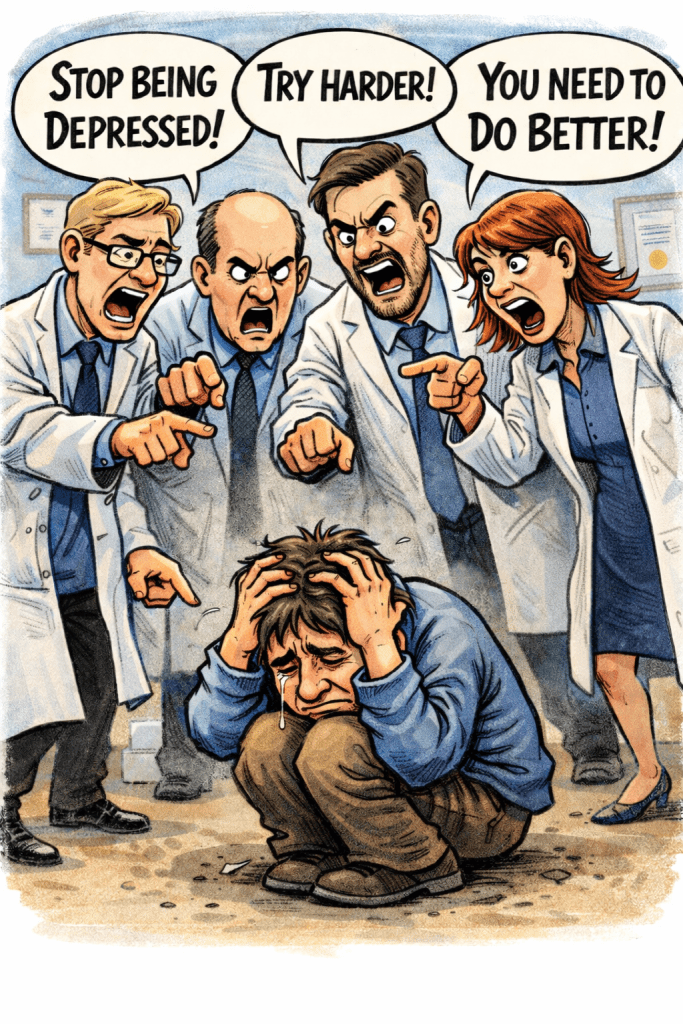
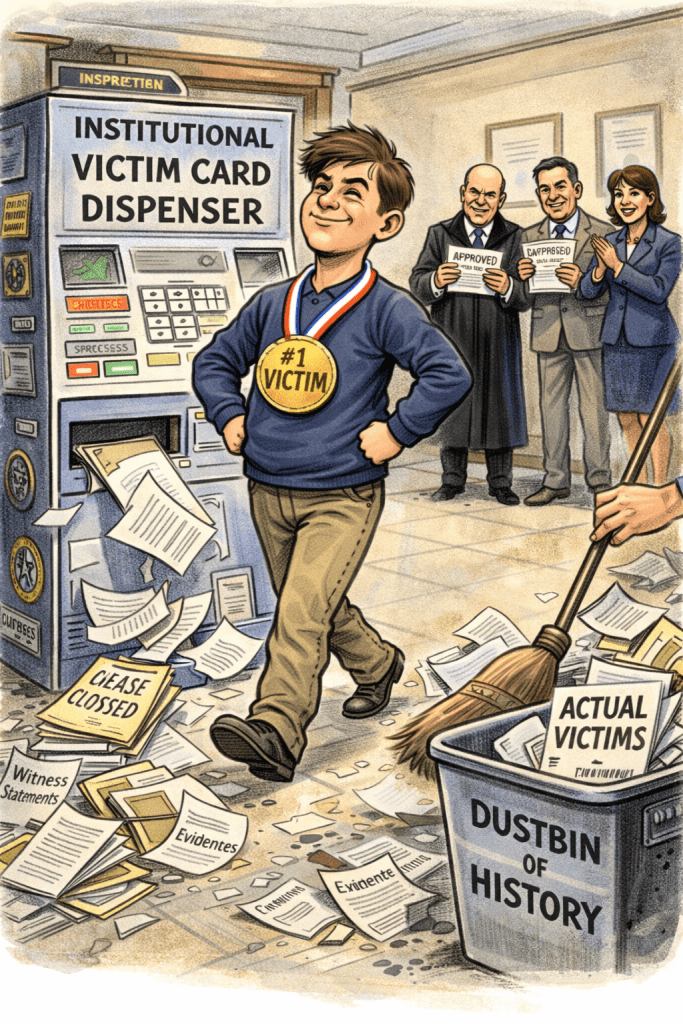

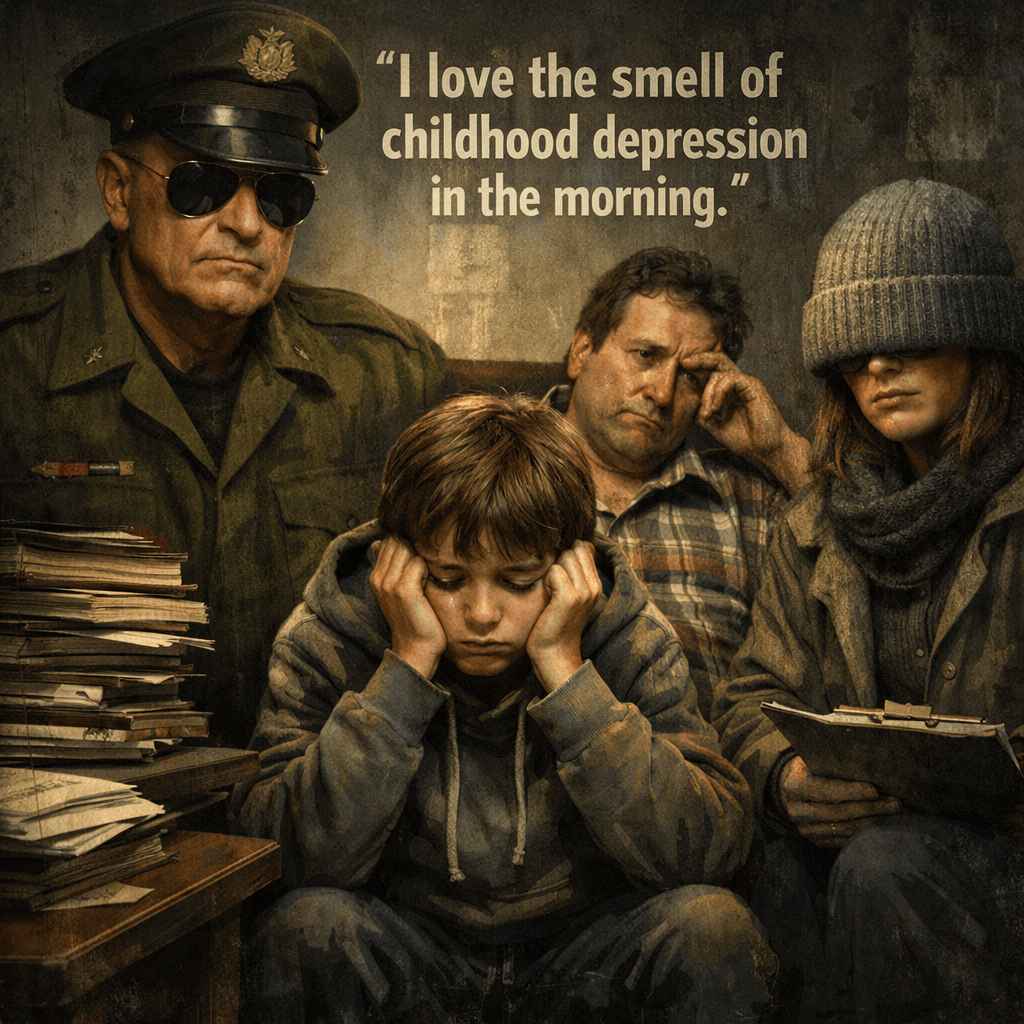


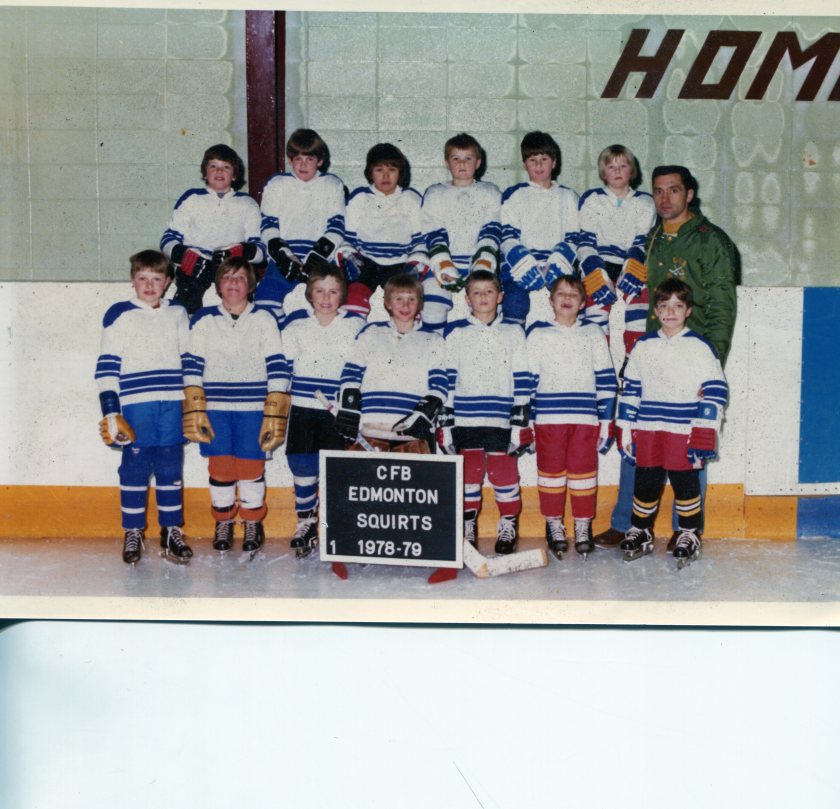
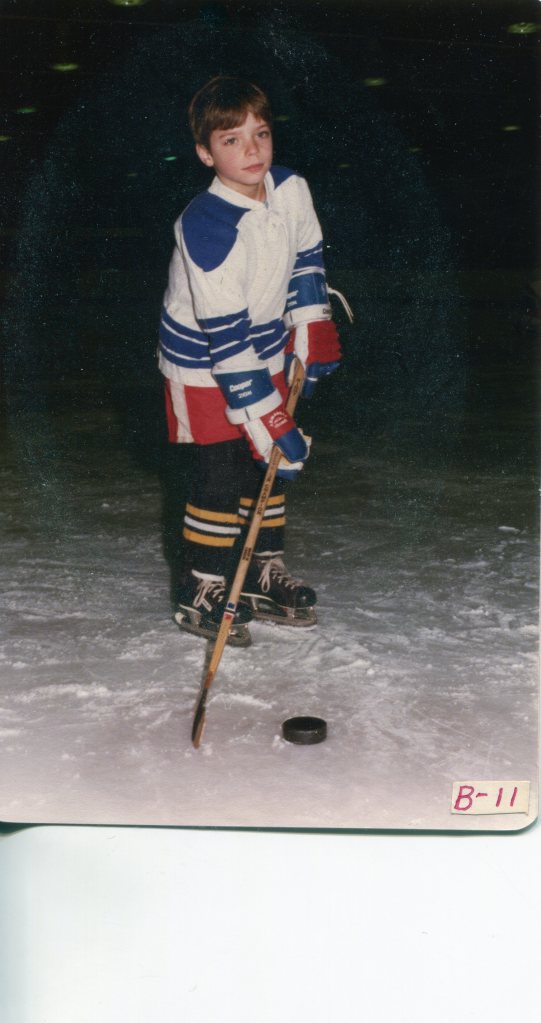
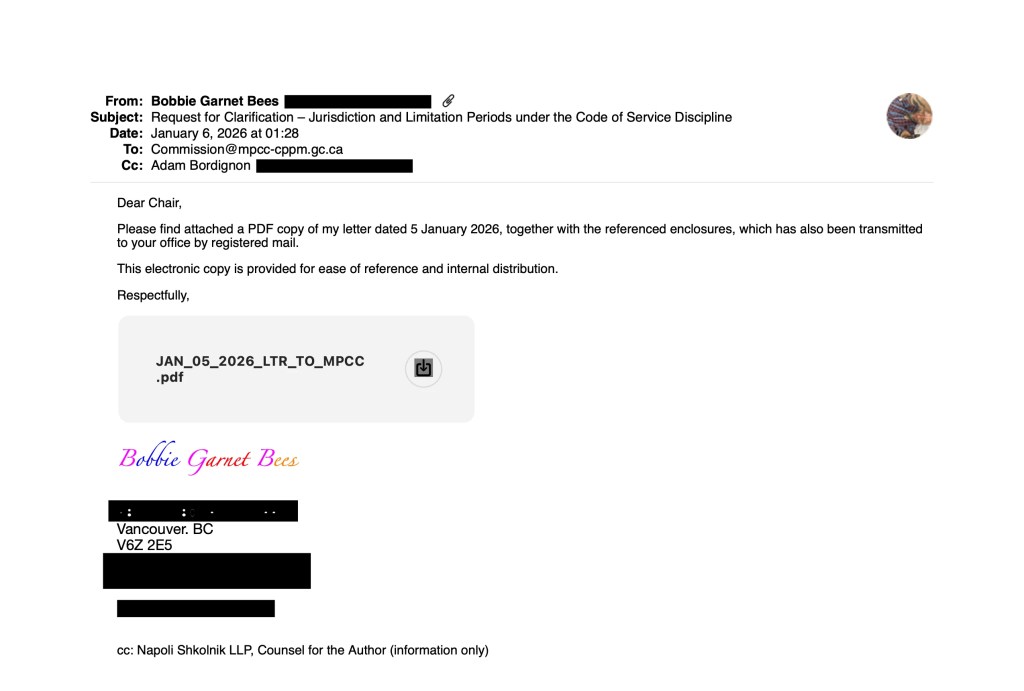
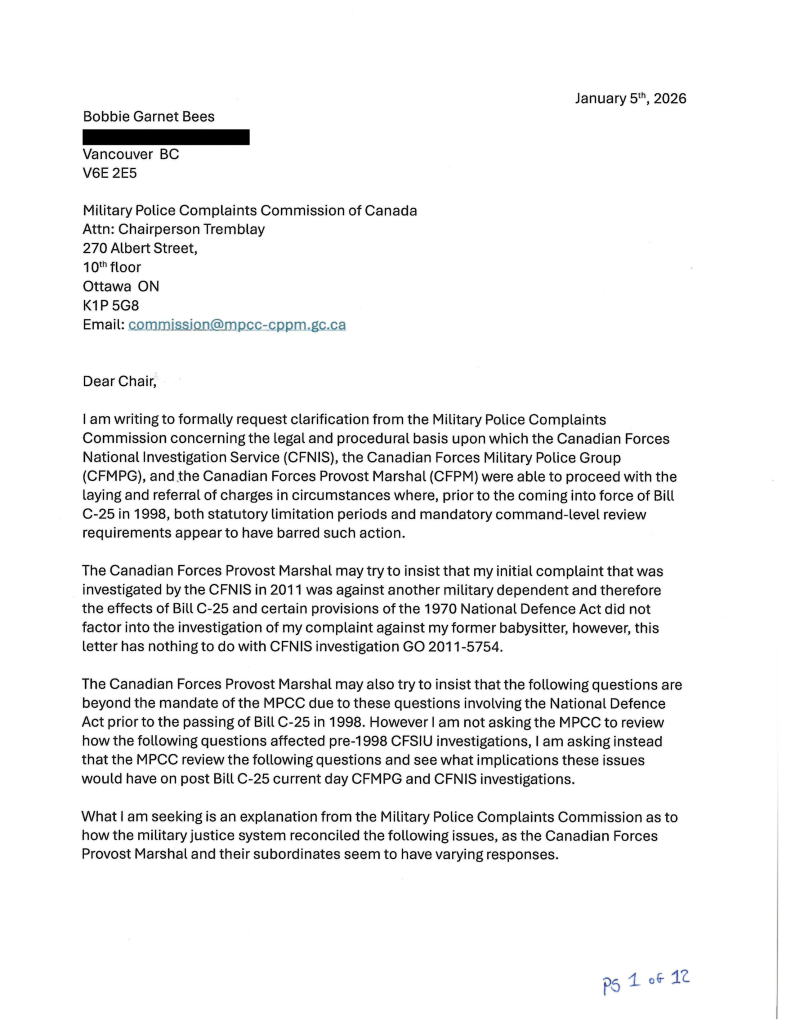
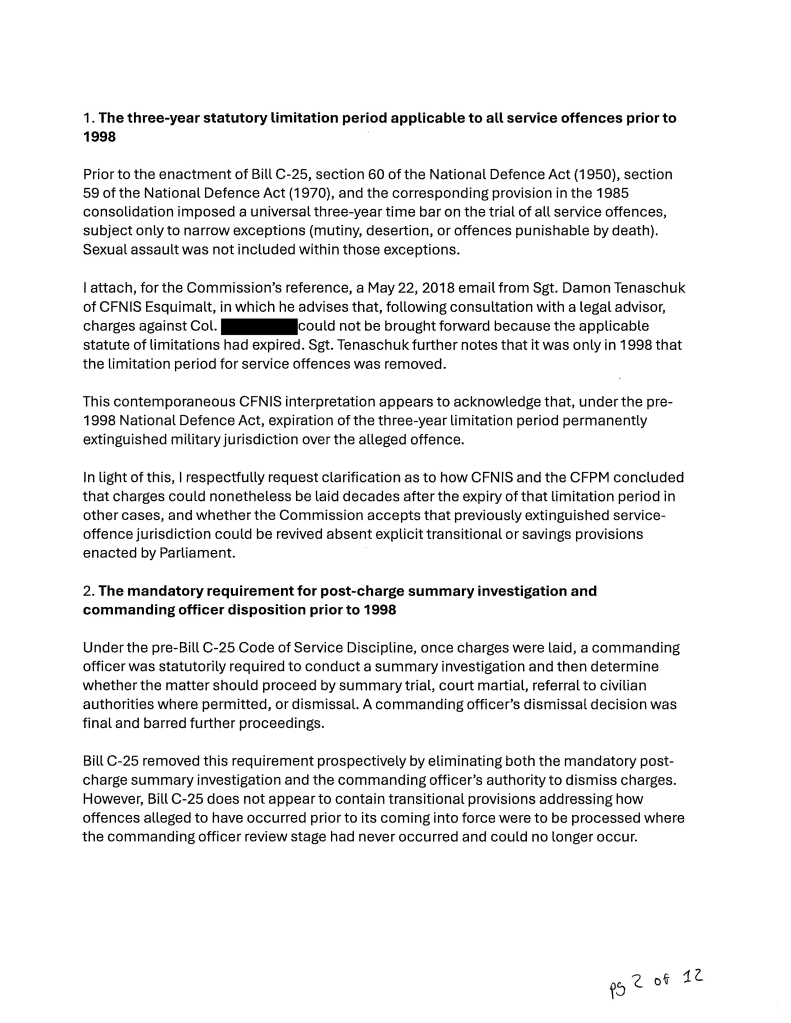
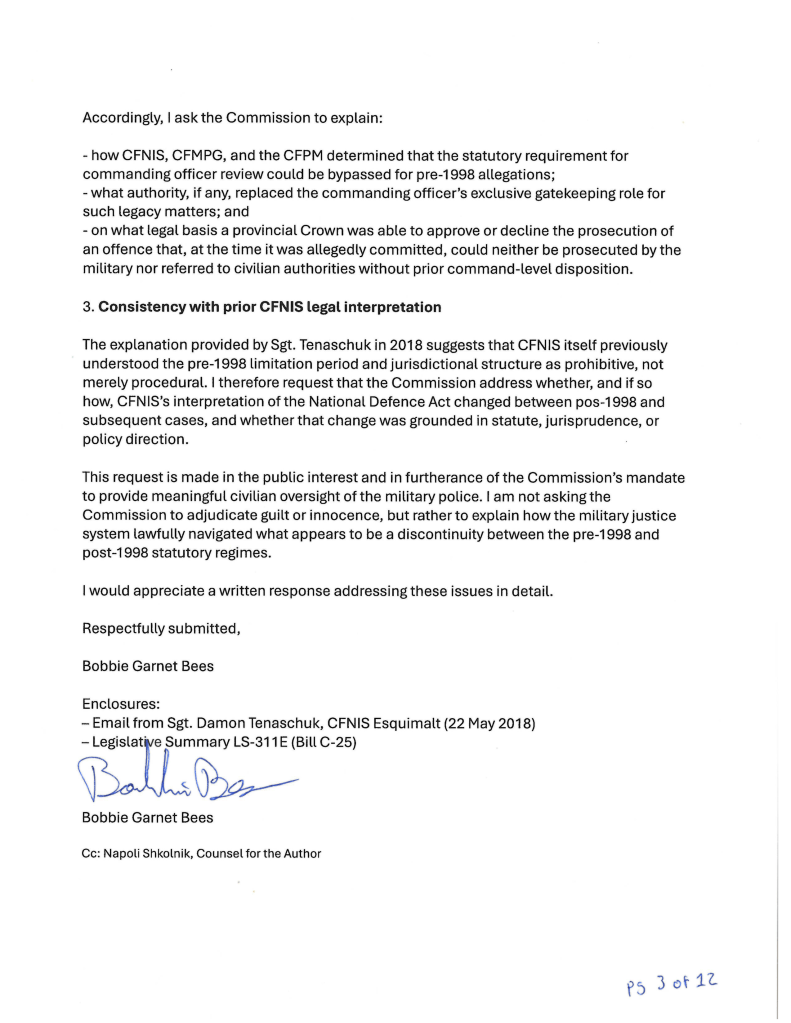
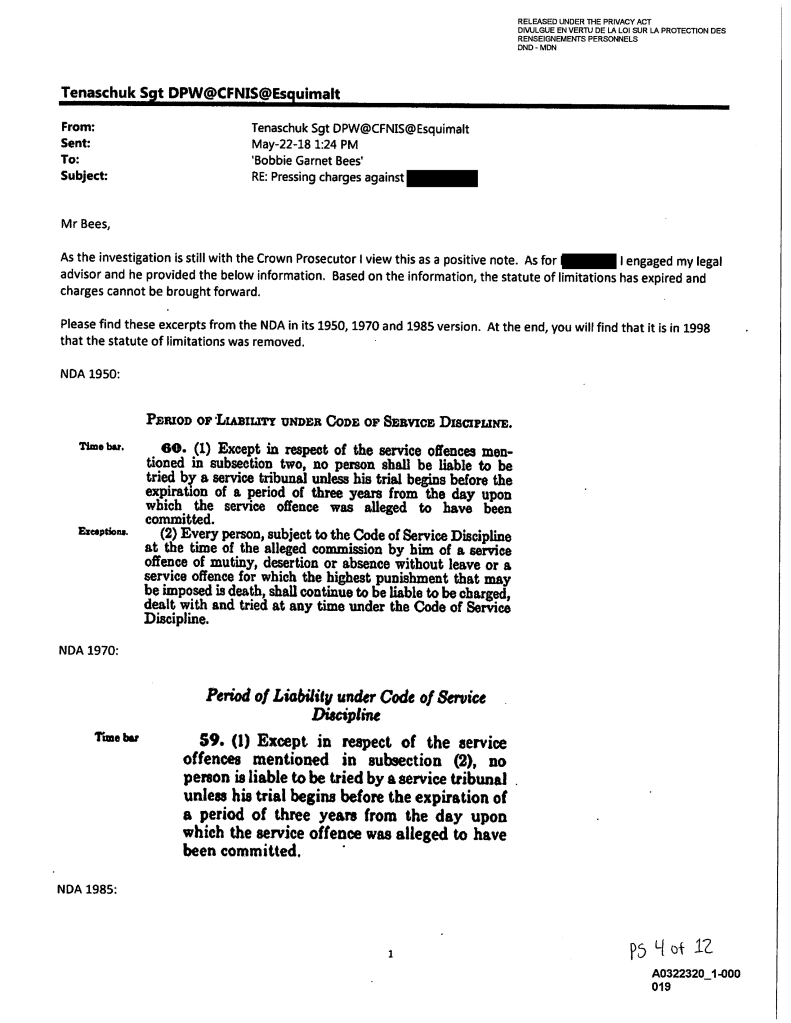
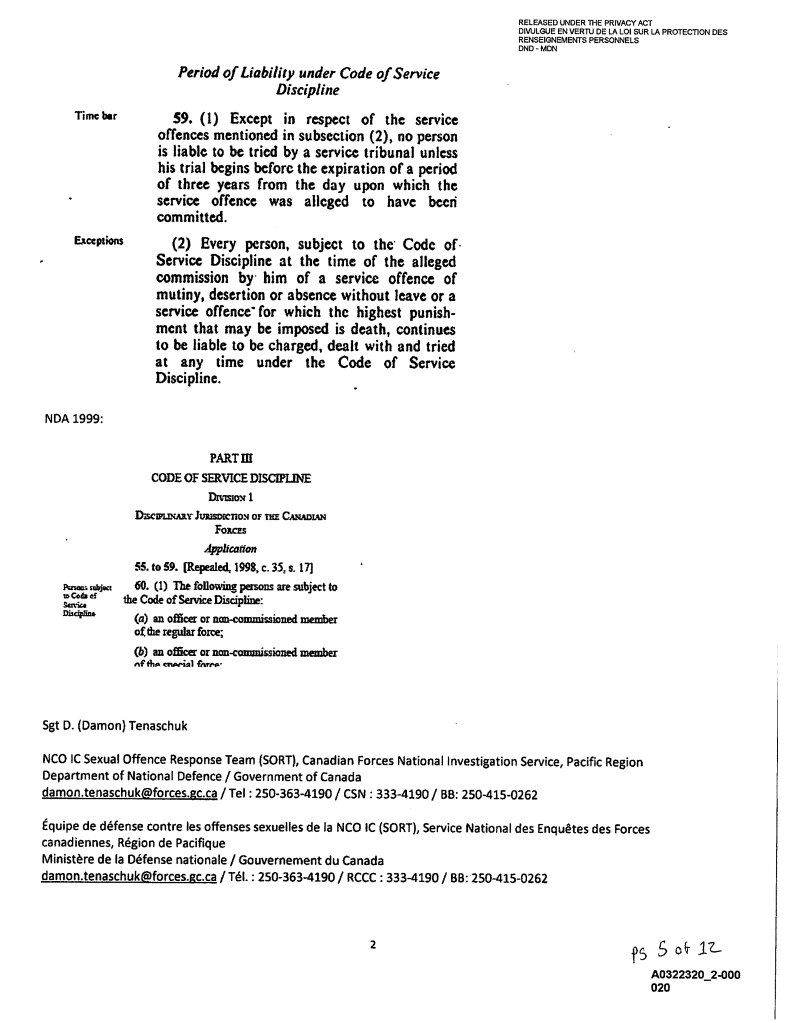
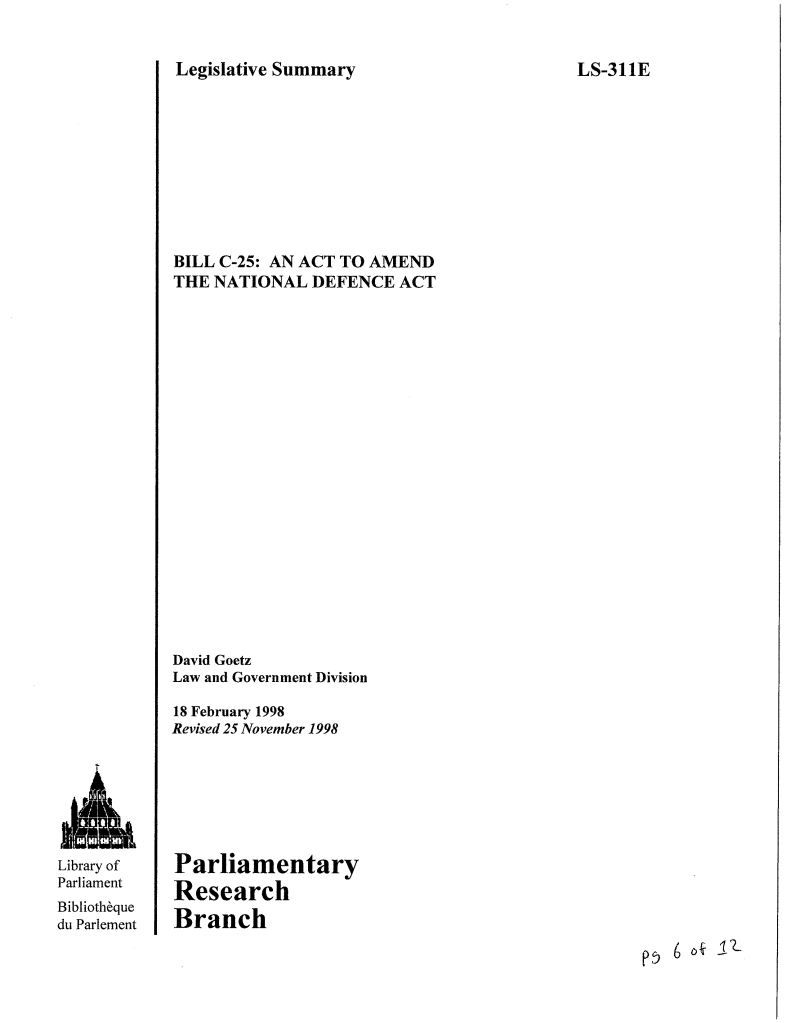
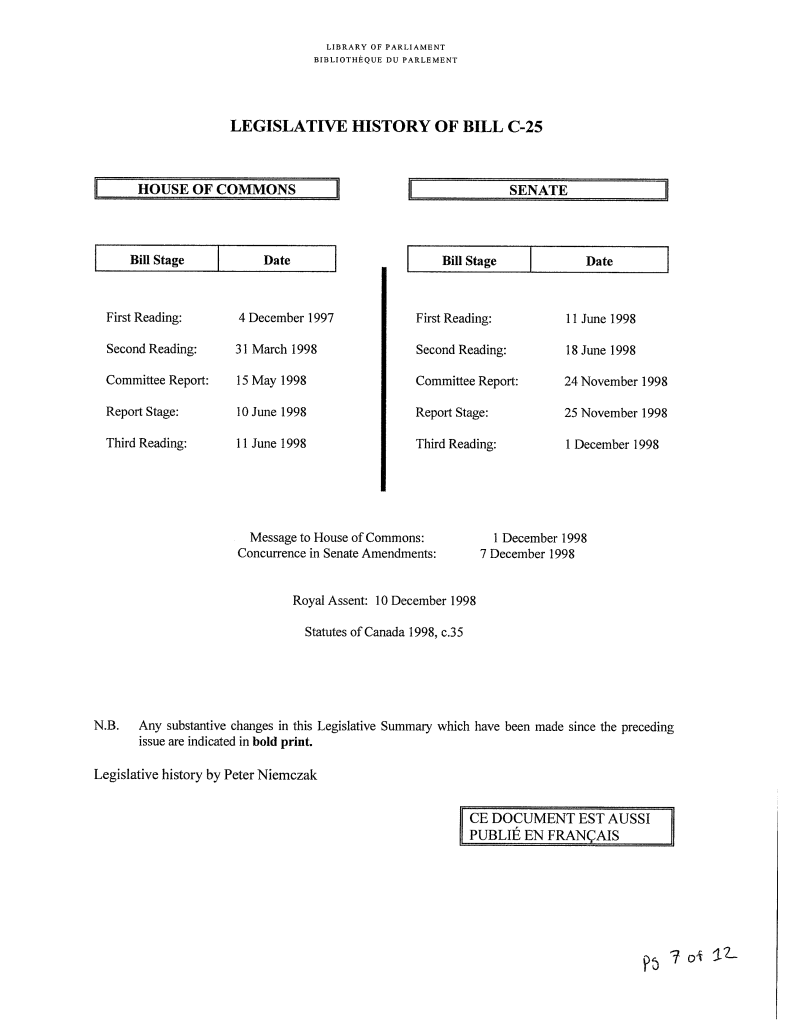
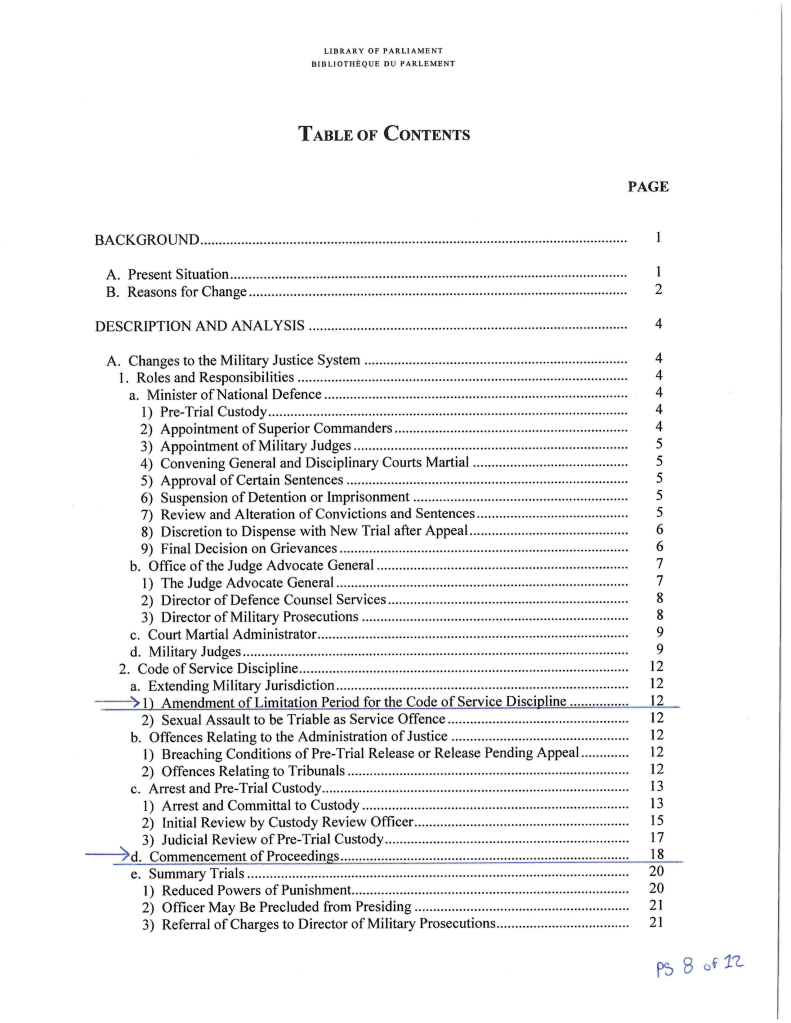
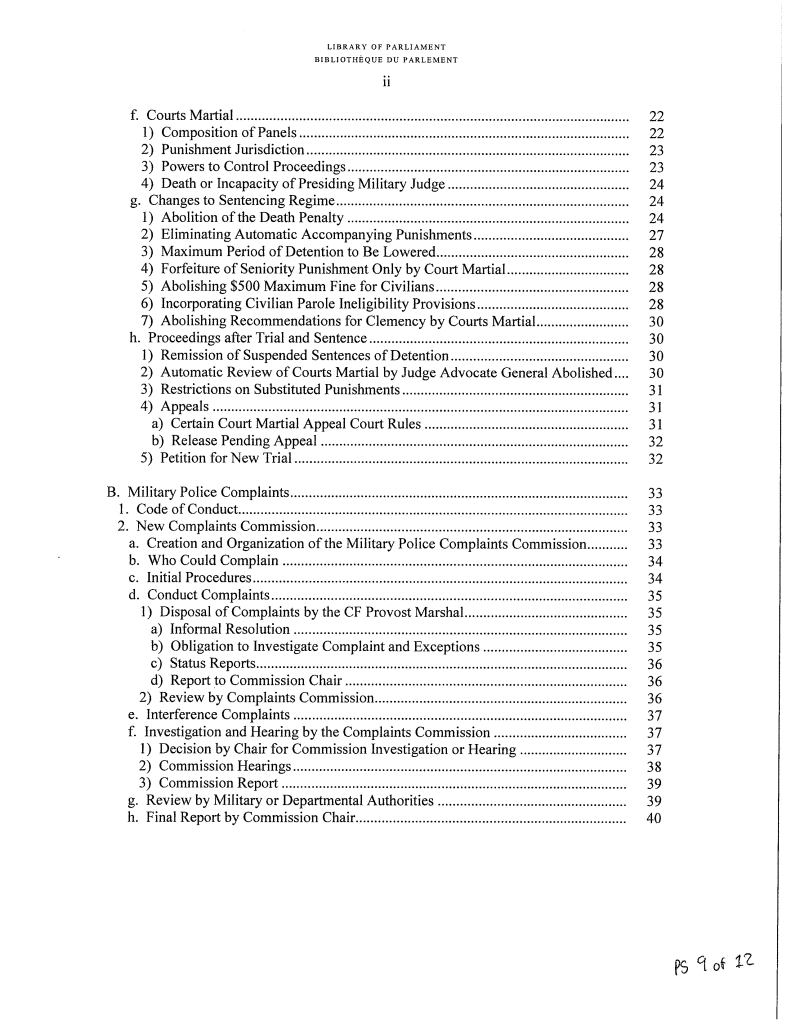
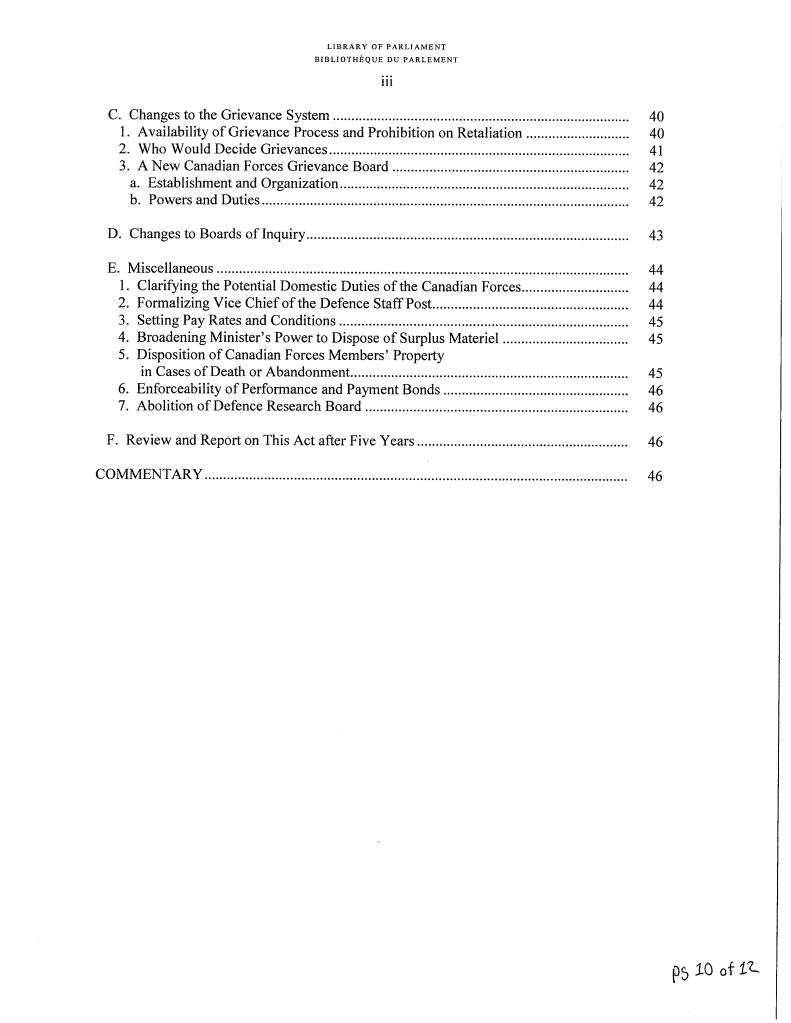
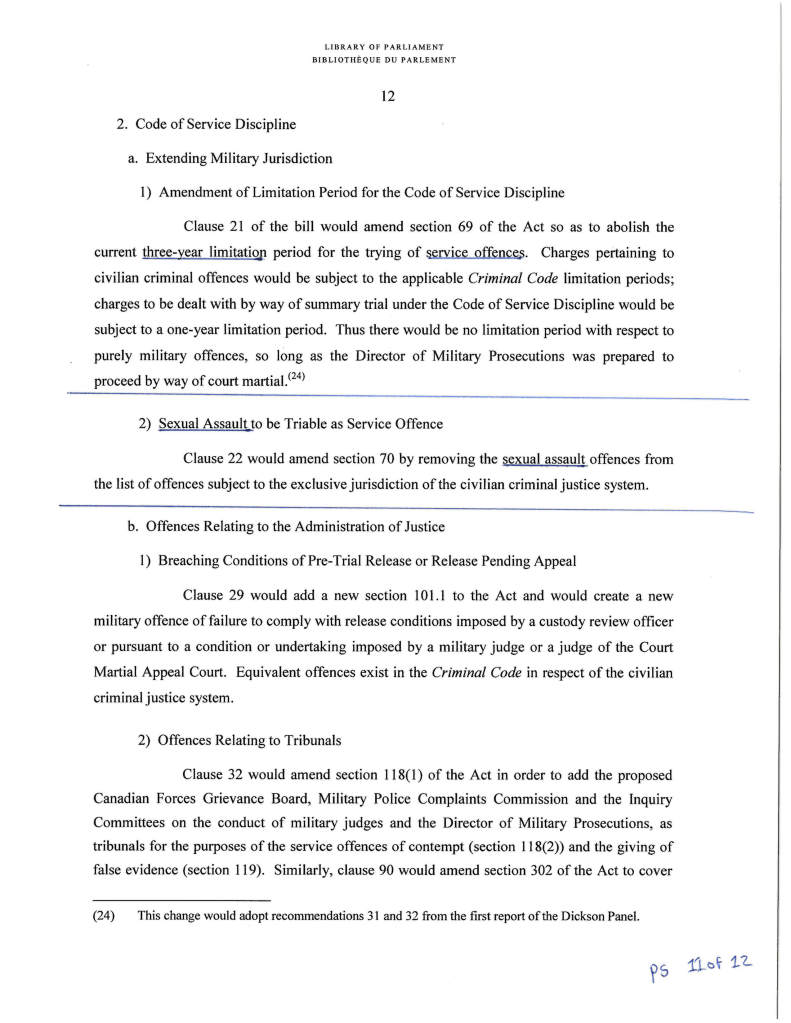
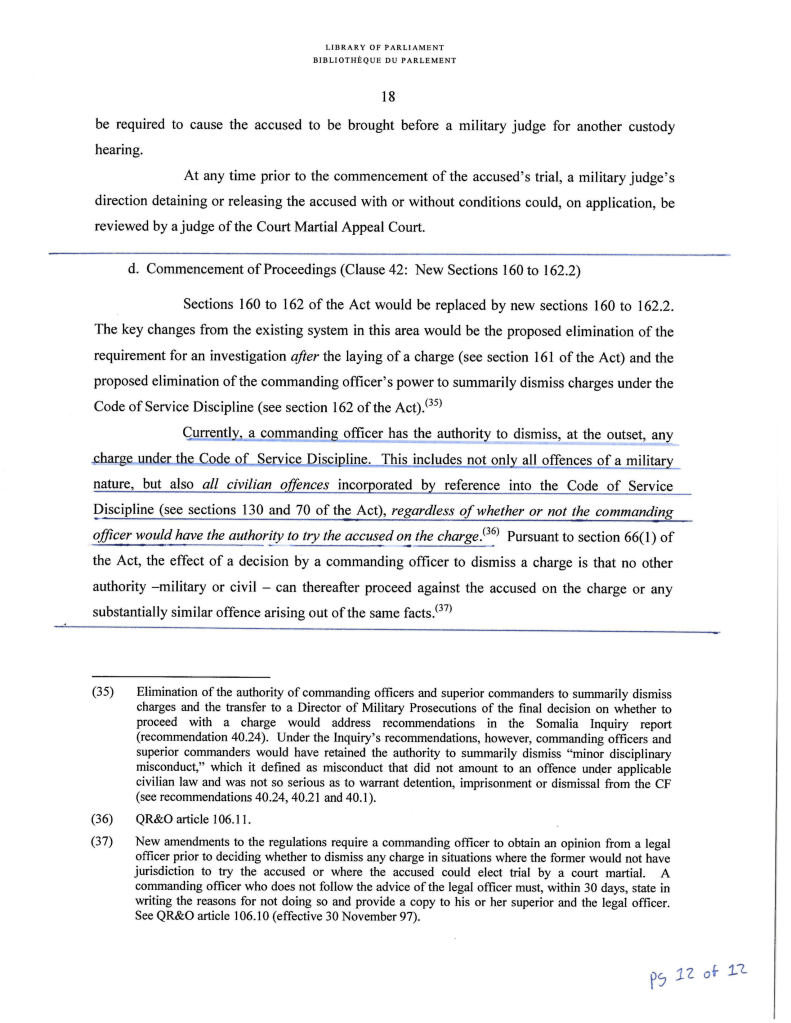
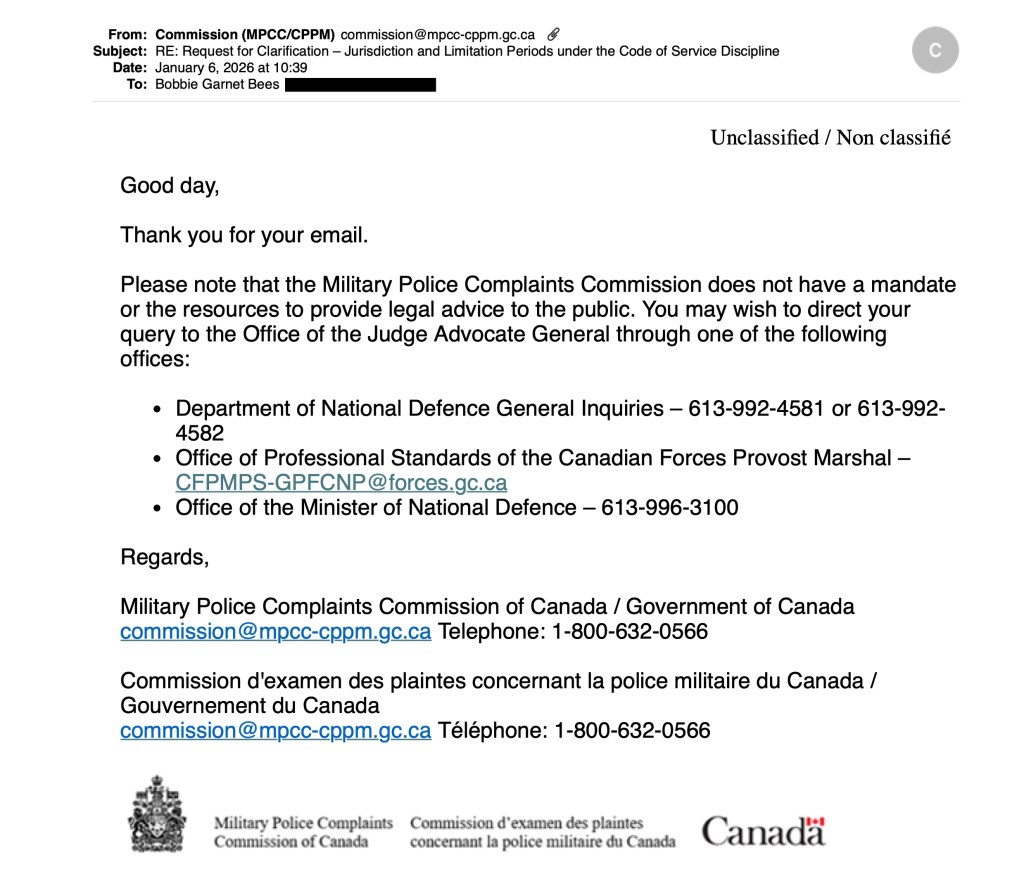
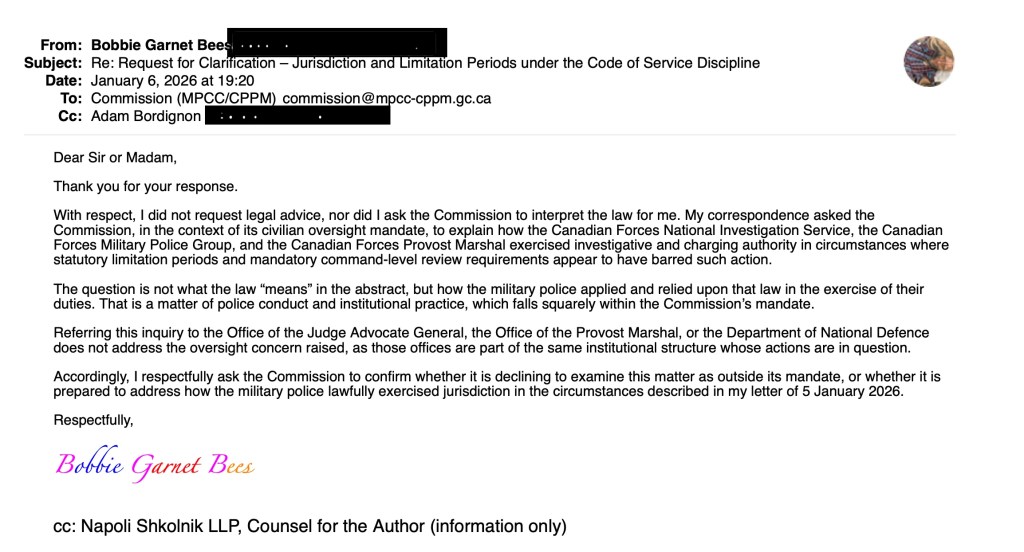
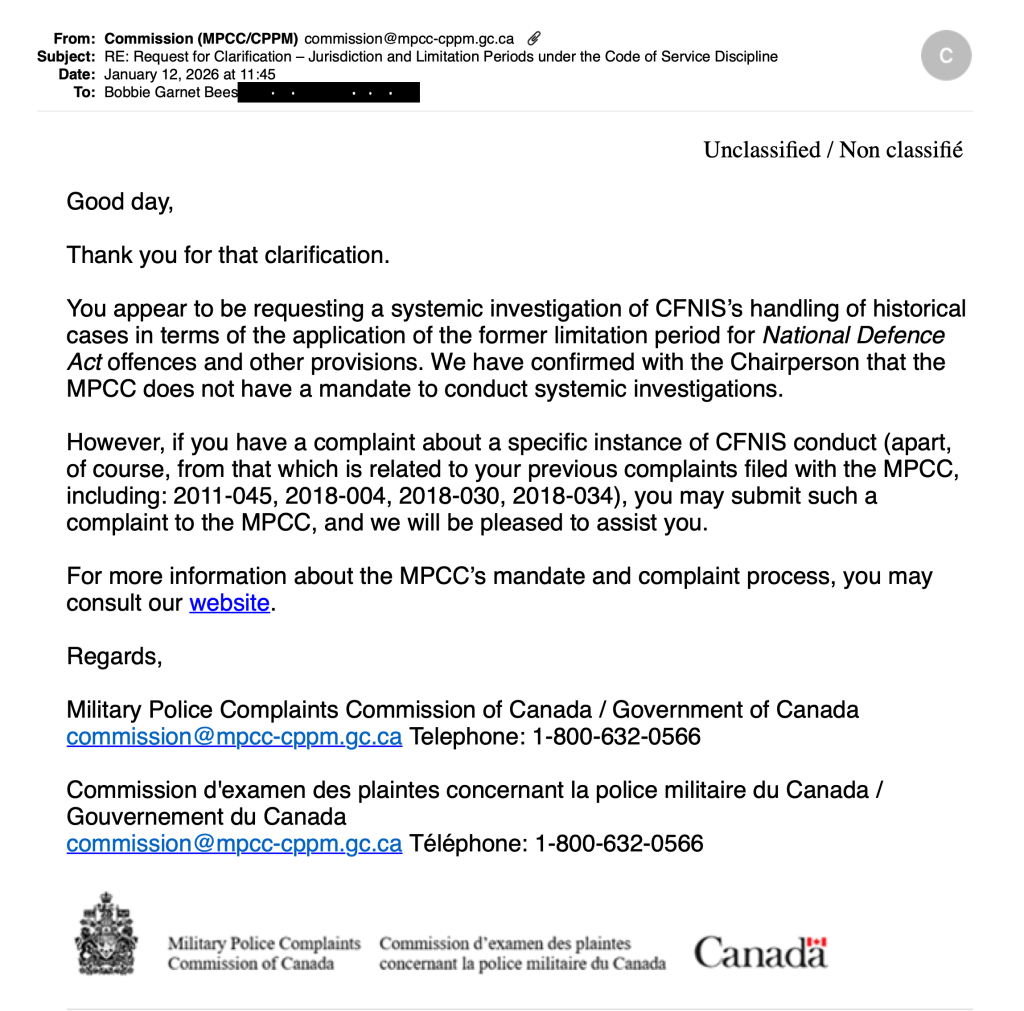
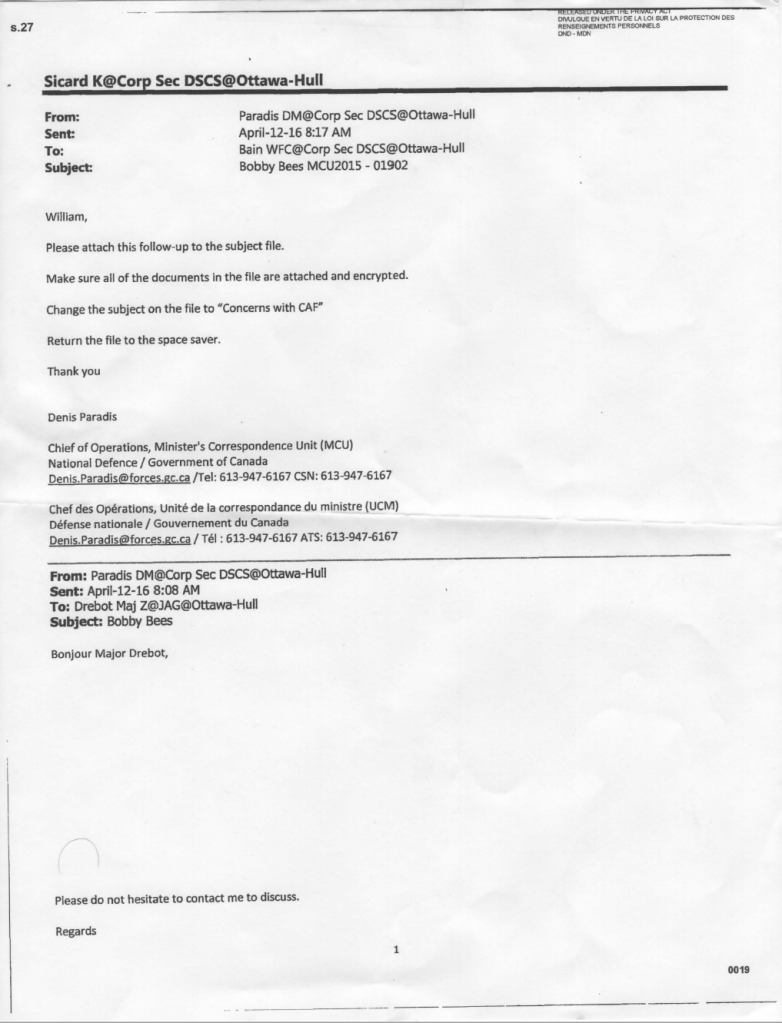
 Beeshive