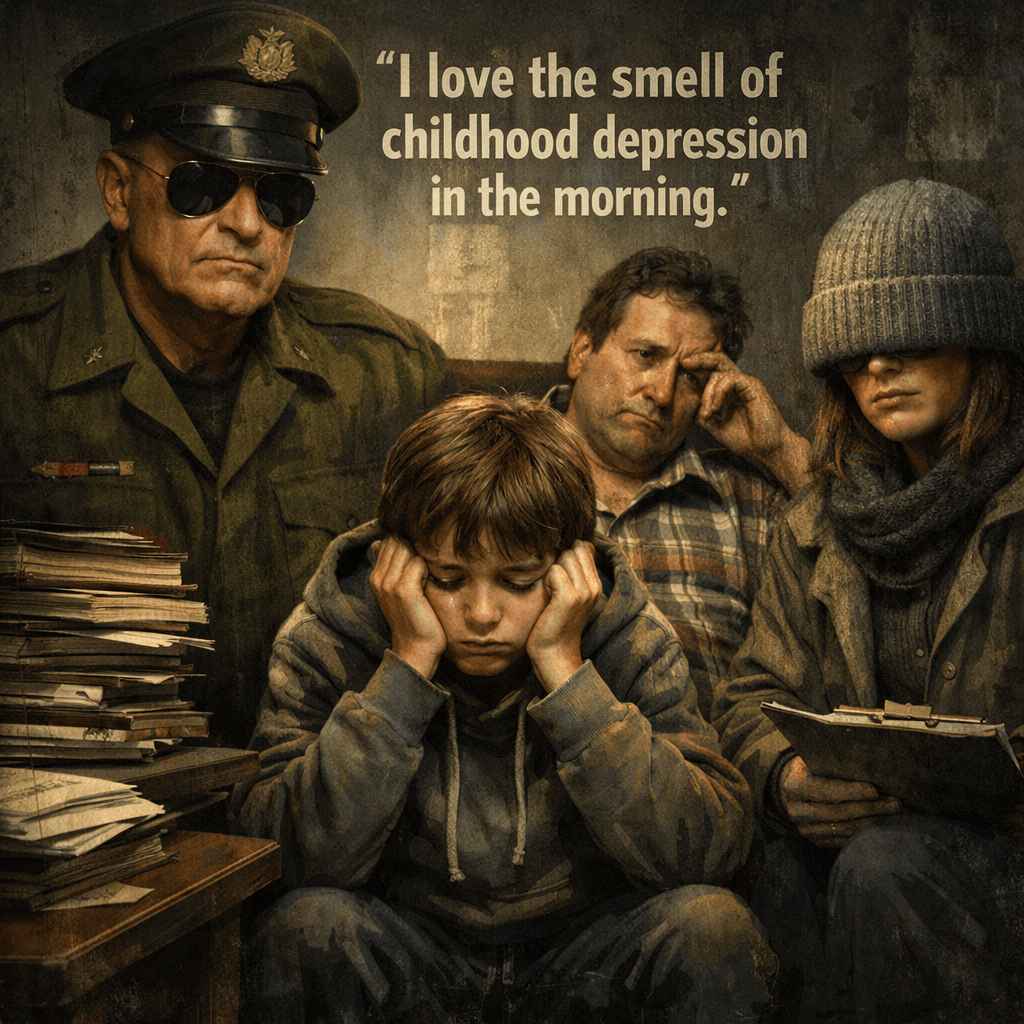
There is a peculiar kind of childhood that doesn’t exist in storybooks, therapy pamphlets, or nostalgic retrospectives about growing up on military bases.
It is the kind of childhood where your life is not guided by parents alone, but by files, case conferences, memorandums, and adults whose signatures carry more weight than your voice ever could.
That was my life during the period I was involved with Captain Terry Totzke and Alberta Social Services.
On paper, it looked like “family support.”
In reality, it felt like being trapped between three competing worlds.
Not two.
Three.
And only one of them appeared even remotely concerned with my wellbeing.
World One: Home — Where the Narrative Was Controlled
At home, the official story was simple:
Nothing was wrong.
Everything was exaggerated.
The professionals were overreacting.
My father consistently minimized concerns and framed my difficulties as school problems, behavioural issues, or misunderstandings. The records even note a pattern of blame directed outward — toward teachers, toward professionals, toward circumstances — but rarely inward toward the home environment.
Meanwhile, my lived experience was something entirely different.
Unpredictable anger.
Fear-based discipline.
Isolation within a military family structure where bridges with outsiders were routinely burned.
I was not growing up in a neutral environment.
I was growing up in a controlled one.
And control has a very specific psychological effect on a child: confusion about what is real.
World Two: The Military Social Worker — Chain of Command Reality
Enter Captain Terry Totzke.
Not a civilian therapist.
Not an independent advocate.
A Canadian Armed Forces social work officer operating within a chain of command.
That distinction matters more than most people realize.
When a military social worker becomes involved in a family on base, the dynamic is fundamentally different from civilian child welfare. Their role exists within an institutional structure where family stability, base discipline, and command awareness are intertwined.
The documents show repeated contact between:
- Captain Totzke
- school officials
- Alberta Social Services
- and military authorities
Files were transferred through military channels.
Referrals were coordinated through defence structures.
Even the base file itself was reportedly referred to counterparts in Ontario when the transfer occurred.
In other words: my case was not just a family issue.
It was an institutional one.
World Three: Alberta Social Services — The Only System Asking Hard Questions
Then there were the civilian social workers.
Aviva Desjardins.
Pat Moffat.
Teachers.
Program staff at McArthur.
Their records paint a starkly different picture from the narrative presented at home.
They observed:
- emotional instability
- fear responses
- regression after stress
- behavioural struggles linked to inconsistent parental support
- a bright child burdened by emotional unrest stemming from family dysfunction
They repeatedly recommended family counselling.
They repeatedly documented lack of parental commitment.
They repeatedly tried to engage my father.
And repeatedly, those efforts failed.
Not because the problems disappeared.
But because cooperation did not.
The Psychological Crossfire
Imagine being a child in that environment.
One adult authority says:
Everything is fine. The issue is the school.
Another system documents:
Family dysfunction and emotional unrest are central factors.
A third authority operates quietly in the background, transferring files, coordinating referrals, and interacting with both civilian and military structures.
Now add one more variable:
You are exceptionally bright, emotionally aware, and fully conscious that something is deeply wrong — but no one gives you the full truth.
That is not just stressful.
That is psychologically disorienting.
The Transfer: A Suspicious Turning Point
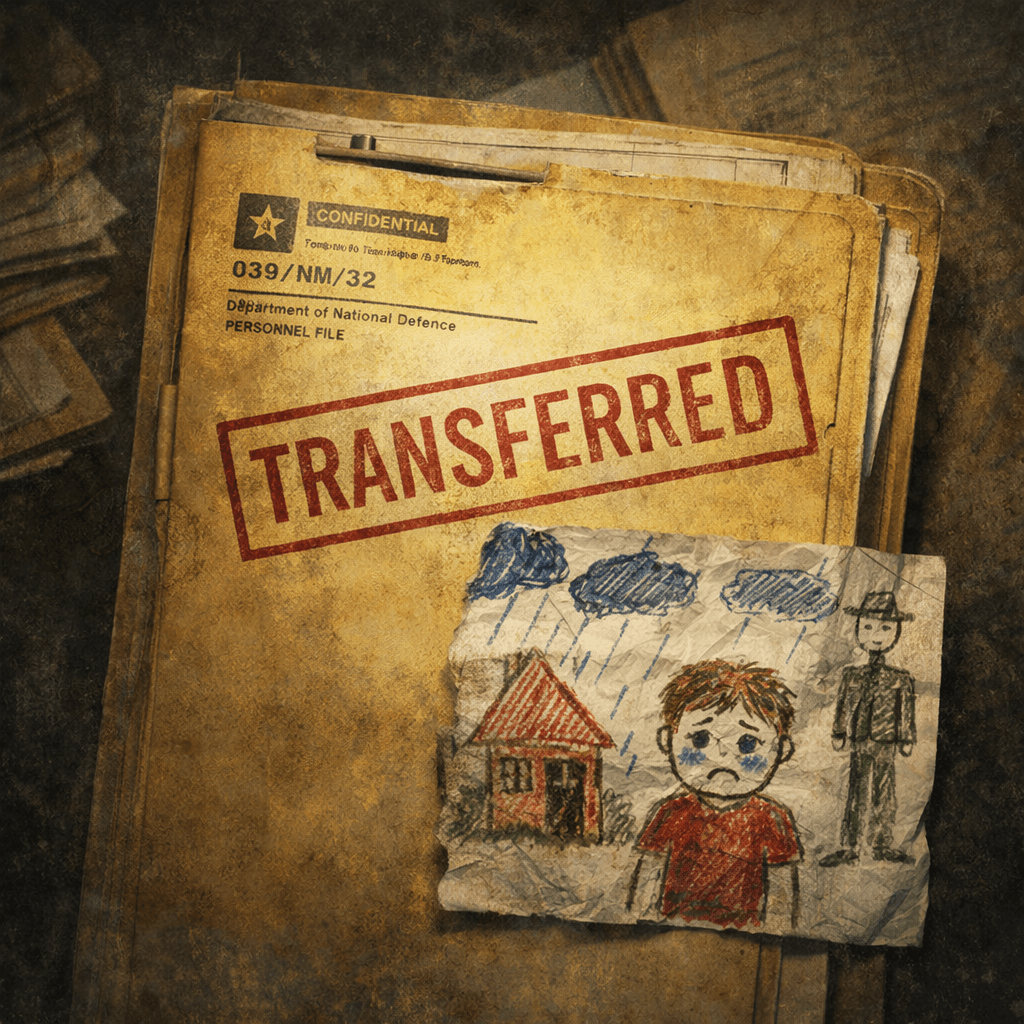
Then came the relocation.
Not gradual preparation.
Not transparent communication.
Not therapeutic transition planning.
Instead:
- I was not properly informed of the move
- professionals were pleading with my father to tell me
- my behaviour deteriorated as uncertainty increased
- and suddenly the family transferred out of Alberta jurisdiction
Alberta Social Services closed the file as services were to be “provided elsewhere.”
Except they weren’t.
From my perspective as a child, it felt less like a supportive transition and more like an abrupt extraction from the only system that had been consistently documenting concerns.
One day I was in a structured day program.
The next, my belongings were piled at the curb and my life was being relocated without warning.
The Custody Shadow No One Challenged
There is another uncomfortable factor that hovered over everything: custody.
My father claimed legal custody.
Professionals appear to have accepted that claim at face value.
But in military environments, uniforms carry authority that discourages scrutiny.
A service member’s word can be treated as administrative fact.
If no one asks to see custody orders, the narrative becomes reality.
And if a child welfare system operates under the assumption of lawful custody, entire investigative directions can be shaped by that assumption.
The Child in the Middle
Where was I in all of this?
In assessments, I described my world as:
- harsh
- threatening
- unstable
I expressed fear, helplessness, and frustration.
I openly discussed my home environment when finally given the chance.
And the response from adults?
Case conferences.
Memorandums.
Program placements.
File transfers.
But never a unified agenda.
Three Agendas, One Child
Looking back, the structure becomes disturbingly clear:
- My father’s agenda: control of narrative and household authority
- The military system’s agenda: management within institutional channels
- Alberta Social Services’ agenda: intervention, monitoring, and therapeutic support
Only one of these agendas consistently documented my emotional state and attempted structured help.
Only one system pushed for counselling.
Only one system noted family dysfunction.
Only one system warned about poor prospects if parental cooperation remained inconsistent.
And that system lost jurisdiction when the family transferred.
The Lasting Impact
People often ask why some children from military environments struggle long after the events themselves.
The answer is not always a single traumatic event.
Sometimes it is something far more complex:
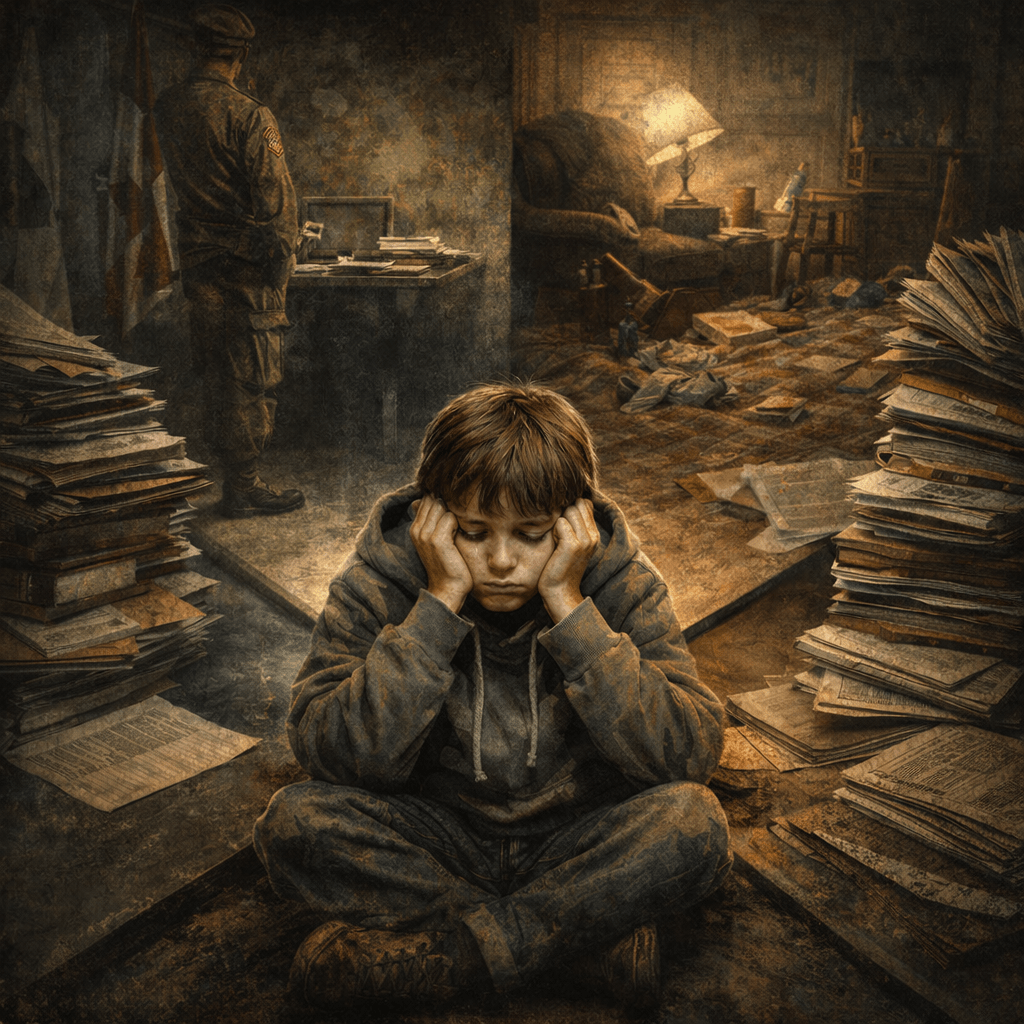
Growing up inside overlapping systems where adults with power disagree about reality — while you, the child, are expected to function normally within the chaos.
I was not just dealing with a difficult home life.
I was living between two worlds:
A civilian welfare framework trying to help,
and a military structure operating under its own logic.
And in the space between those worlds, there was a file number.
And that file number was me.


 Beeshive