
July 22nd, 1969 was 94 days prior to the worst peace time disaster in the Canadian Navy.
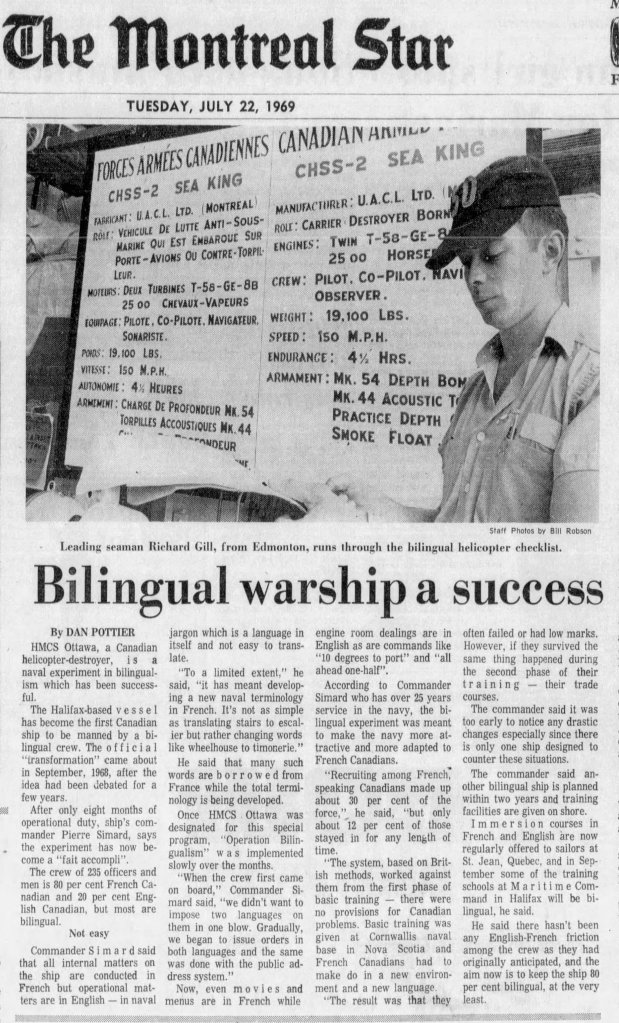
July 22nd, 1969 was when my father was photographed aboard Canada’s only French helicopter destroyer, the HMCS Ottawa.
He was a half Cree / half Irish boy from Fort McMurray.
He was born in Peterborough Ontario.
His father, Arthur Herman Gill abandoned grandma, so grandma packed up and moved back to Fort McMurray with Richard and his younger brother Doug in tow.
Richard attended a single room school house in Fort MacMurray.
Two of his three maternal uncles had been members of the Royal Canadian Army during WWII.
Jimmy Waniandy
Johnny Waniandy
George Waniandy
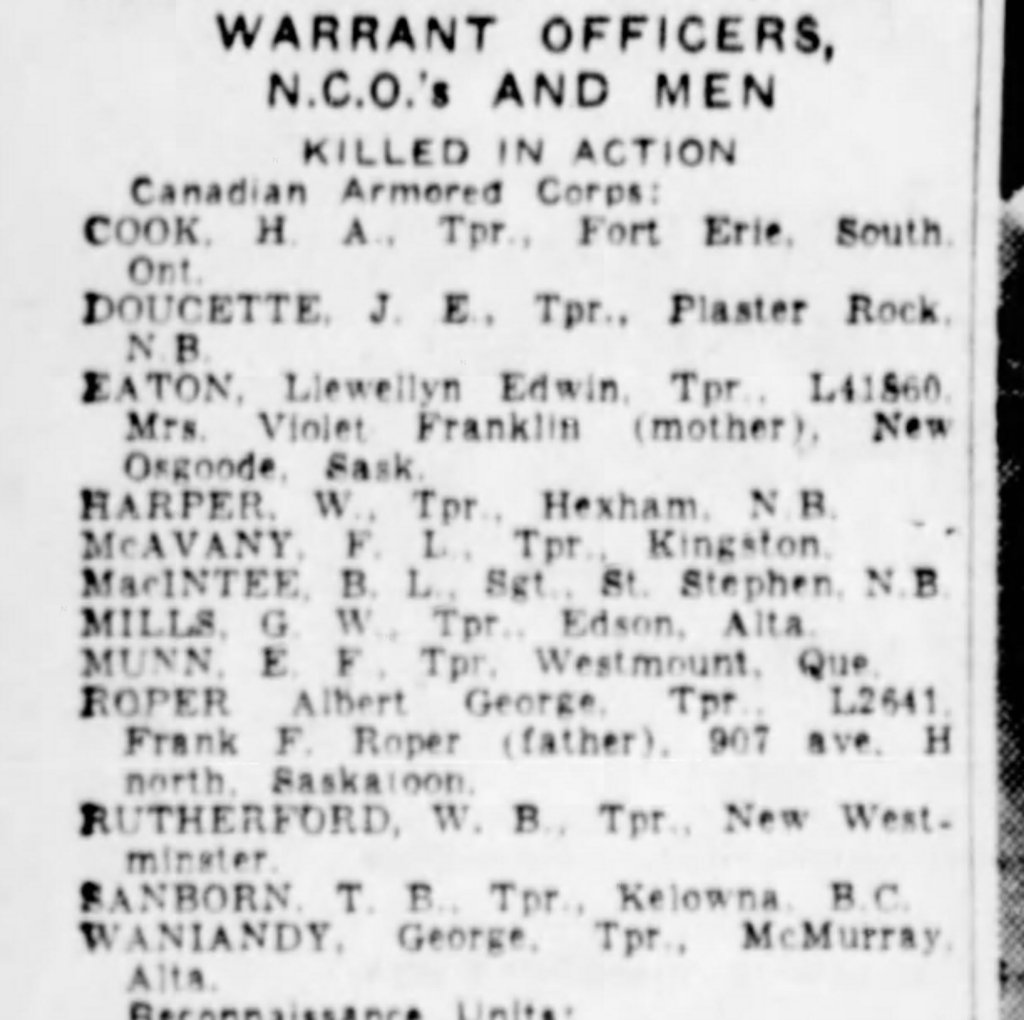
Trooper George Waniandy died in WWII in Italy. His brother John had been wounded in Italy as well.

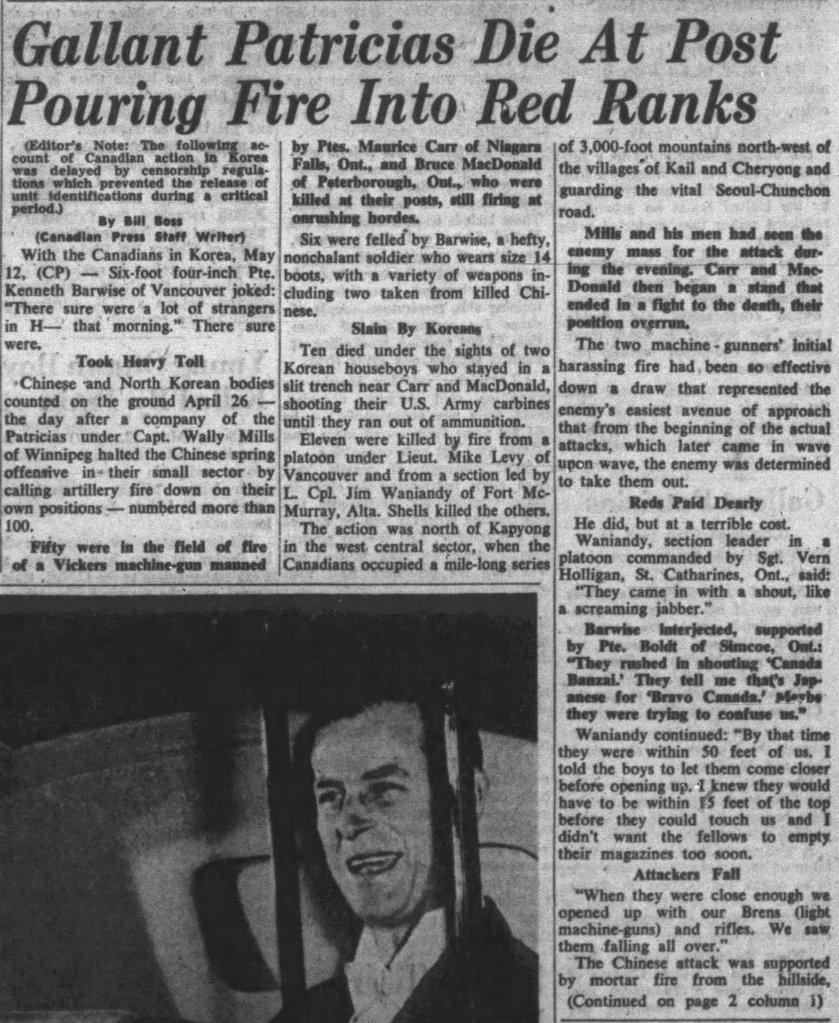
Lance Corporal Jimmy Waniandy, a section commander, had been interviewed during the Korean war and been involved in stopping an attack.
Richard obviously had some pretty big shoes to fill.
As grandma lived with us from 1977 until 1981 I knew that she was an overbearing and domineering person.
In 1980, I had mentioned to a psychiatrist that I had been sent to for evaluation by military social worker Captain Terry Totzke that “my brain says that I’m going to kill myself unless grandma leaves the house”. My father would later tell Alberta Social Services that he blamed his mother for the issues my brother and I were having as she was “extremely cruel to his children, especially when she was intoxicated, which was frequent”.
I could see him volunteering to serve aboard the HMCS Ottawa to prove to his mother that he was just as good as George, Jimmy, and Johnny.
Just after the unification of the separate branches of the Canadian military into the Canadian Forces in 1968 he moved from the ships to the Sea King squadron on CFB Shearwater. The HMCS Ottawa was one of the Restigouche class destroyers that were converted to have a helicopter hangar. Richard could go to sea with his former shipmates on the HMCS Kootenay, but he would go with the prestigious submarine hunting Sea Kings. And even though he was with the Sea Kings, he could still go hit the local pubs and get shitfaced with his former navy buddies when the ships pulled into port.
And wouldn’t his mother ever be impressed with his ability to learn French? Learning French might also endear him to his wife who was part of the Dagenais clan from Province Quebec.
But, fast forward to October 23rd, 1969.
The HMCS Ottawa, HMCS Kootenay, HMCS Bonaventure, HMCS Saguenay, were amongst 10 ships that had sailed to the United Kingdom a few weeks prior as part of naval exercises and they were on their way back to Canada.
The HMCS Kootenay has just been instructed to fire its boilers up to full steam and the turbines had been ordered to full throttle.
Unfortunately the HMCS Kootenay had the original version of the Restigouche class reduction gearbox. This gearbox required that the bearings for the gear shafts to be installed in a particular direction to receive lubrication. The second version of the reduction gearbox allowed the bearings to be installed in either direction.
One bearing had been installed backwards and had starved for oil and was overheating. The stress of the full speed run didn’t help the situation.
The gears in those gearboxes were of the herringbone type. This design minimizes the axial loading on the shafts and gears, but leads to a large amount of oil shear which causes a large amount of vapourized / atomized oil.
This oil vapour came in contact with the red hot bearing and caused the vapour to ignite and then explode.
Three of the eight men killed in the explosion were friends of my father that he had served with.
The Sea Kings were called in to remove the injured off the Kootenay. This of course included the Sea King from the HMCS Ottawa.
It’s of no doubt that the HMCS Kootenay incident cooked my father’s noodle.
I can also see the Kootenay incident as sparking my father’s life long hatred of French. And I don’t mean he just didn’t want to speak French. Whenever the topic of French was brought up in the house, his full hatred came out. Even when I tried to practice French at home for school he would ridicule me for trying to learn French because French was, in his opinion, a complete fucking waste of time. Only fucking frogs spoke French was his constant refrain.
I can see his superiors on the HMCS Ottawa insisting to the point of complete idiocy that French and only French be spoken.
While my father’s drinking buddies were burning to death on the Kootenay I can see my father’s superiors yelling and gesticulating wildly “Arrêtez de parler anglais Gill! Nous parlons en Français sur ce navire”.
If that’s the one thing that I know about my father, he didn’t entertain “silly decisions by silly fuckers”.
Nothing screams Canadian Armed Forces like adhering to the “rules” during times of disaster, especially if the rules are petty and useless.
In 2014 I had returned to Halifax, Nova Scotia for the first time in my life since my father was posted to from CFB Shearwater to CFB Summerside in 1976. I met a man named Chris LeGier out by the HMCS Kootenay memorial at Point Pleasant.
He said something that stuck with me all these years later.
The Canadian Armed Forces turned their backs on everyone that was involved.
The military stuck to the rules regarding PMQs on the base in that the housing could only be rented to serving members of the military, not their spouses. Accordingly non-serving spouses were told to move out of the PMQs.
Members that had been traumatized by the events were ignored by the military. And this makes perfect sense because back in the day mental health issues were pretty well a one way ticket to civvy street.
According to Chris, it wasn’t unheard of for traumatized members of the HMCS Kootenay event to hit the bottle, use heroin, or even cocaine. And no, drug use in the Canadian Armed Forces wasn’t unheard of. And he said that it wasn’t just the members on the Kootenay that suffered. CFB Shearwater and CFB Halifax were a tight knit community and they all knew each other.
 Beeshive